
Best Natural Hand Soap: A Practical Buyer's Guide
“Natural” doesn't automatically mean cleaner hands, gentler skin, or a better product. Plain soap and water can remove transient microbes effectively, while antibacterial claims often add more marketing confidence than real-world value, as summarized in the NCBI hand-hygiene review.
The better question is practical: Does the soap clean without leaving your hands tight, does your household enjoy using it, can you refill it without friction, and does the company make choices that match your values? After testing natural soaps and refill systems at kitchen sinks, bathroom basins, and guest bathrooms, I've found that those criteria reveal more than a label promising “clean,” “green,” or “plant-based.”
The natural category is expanding inside a substantial everyday market. One recent hand soap market report estimates the overall category at USD 25.76 billion in 2025, projected to reach USD 33.93 billion by 2031, while natural and organic formulations are projected to grow at a faster 5.86% CAGR through 2031. Conventional and synthetic formulations still held 86.17% of revenue share in 2025, so natural soap remains a minority segment, but it's no longer a fringe preference.
| Natural hand soap format | Best for | Skin feel | Waste reduction | Convenience |
|---|---|---|---|---|
| Bar | Minimal packaging and guest bathrooms | Can feel clean and slightly dry, depending on formula | Strong when sold without a box or sleeve | Simple, but can leave a wet dish or shared bar |
| Liquid | Kitchens, families, and frequent washing | Easy to tailor with moisturizers and mild surfactants | Moderate in standard bottles | Familiar pump use and easy portioning |
| Foam | Children and fast handwashing | Light, airy, sometimes less emollient | Good when made from concentrate or diluted refill | Very easy to spread, with less rubbing effort |
| Refill | Households committed to lower waste | Depends on the liquid inside | Strongest when packaging is reused or returned | Excellent when reordering and pouring are straightforward |
Table of Contents
- Why Natural Hand Soap Is More Than an Ingredient List
- The Technical Criteria That Separate Good Soap From Great Soap
- Comparing Natural Hand Soap Formats for Real Households
- How to Read Ingredient Labels Without Getting Lost in Fear
- Why Refill Convenience and Company Values Matter Most
- Choosing the Right Natural Hand Soap for Your Household
- The Bigger Impact of Small Purchasing Shifts
Why Natural Hand Soap Is More Than an Ingredient List
The popular advice is to find the shortest, most botanical ingredient list and assume the hygiene decision is finished. That shortcut fails in both directions. A soap can contain recognizable plant oils and still leave skin dry, clog a pump, smell overpowering, or become so inconvenient that someone in the household reaches for a conventional bottle instead.
Plain soap's main job is mechanical. It loosens oils, soil, and transient microbes so rinsing can remove them. The NCBI review of hand hygiene notes that plain soap has minimal antimicrobial activity but can remove transient microbes effectively, while older comparisons found only small differences between antimicrobial and nonantimicrobial soaps in real-use settings. That makes “natural antibacterial” a weak starting point for choosing the best natural hand soap.
What matters at the sink
I pay attention to four sensations during repeated use:
- Initial spread: Does the soap cover the hands quickly, or do you need several pumps?
- Rinse behavior: Does it disappear cleanly, or leave a waxy or slippery film?
- After-feel: Do hands feel comfortable, or tight and squeaky?
- Routine fit: Can children operate the pump, can a cook use it with messy hands, and can guests understand the dispenser immediately?
A luxurious lather isn't proof of better cleansing. Some effective low-waste formulas produce a modest foam but rinse thoroughly, while highly foaming products can still feel stripping. The best product is the one that delivers a satisfying clean without encouraging people to shorten handwashing because their skin feels uncomfortable.
Practical rule: Treat “natural” as a starting claim, not a performance test.
Hygiene, skin comfort, and values belong together
Frequent handwashing changes the buying decision. A harsh soap used repeatedly can make hands feel rough, which may lead people to wash less thoroughly or avoid the product. A gentler formula with a pleasant texture, a sensible pump, and a refill path is more likely to stay in use.
Company behavior matters, too. A product's real footprint includes its bottle, shipping format, refill design, return system, and transparency about ingredients. Supporting good companies who care means looking for evidence in those details, not just trusting earthy colors, leaf illustrations, or the word “clean.”
Natural formulations are gaining momentum, but the wider market remains dominated by conventional products, according to the market analysis of hand soap ingredients and formats. That competitive reality gives shoppers a useful standard: natural products need to earn their place through comfort, usability, documented performance, and responsible packaging.
The Technical Criteria That Separate Good Soap From Great Soap
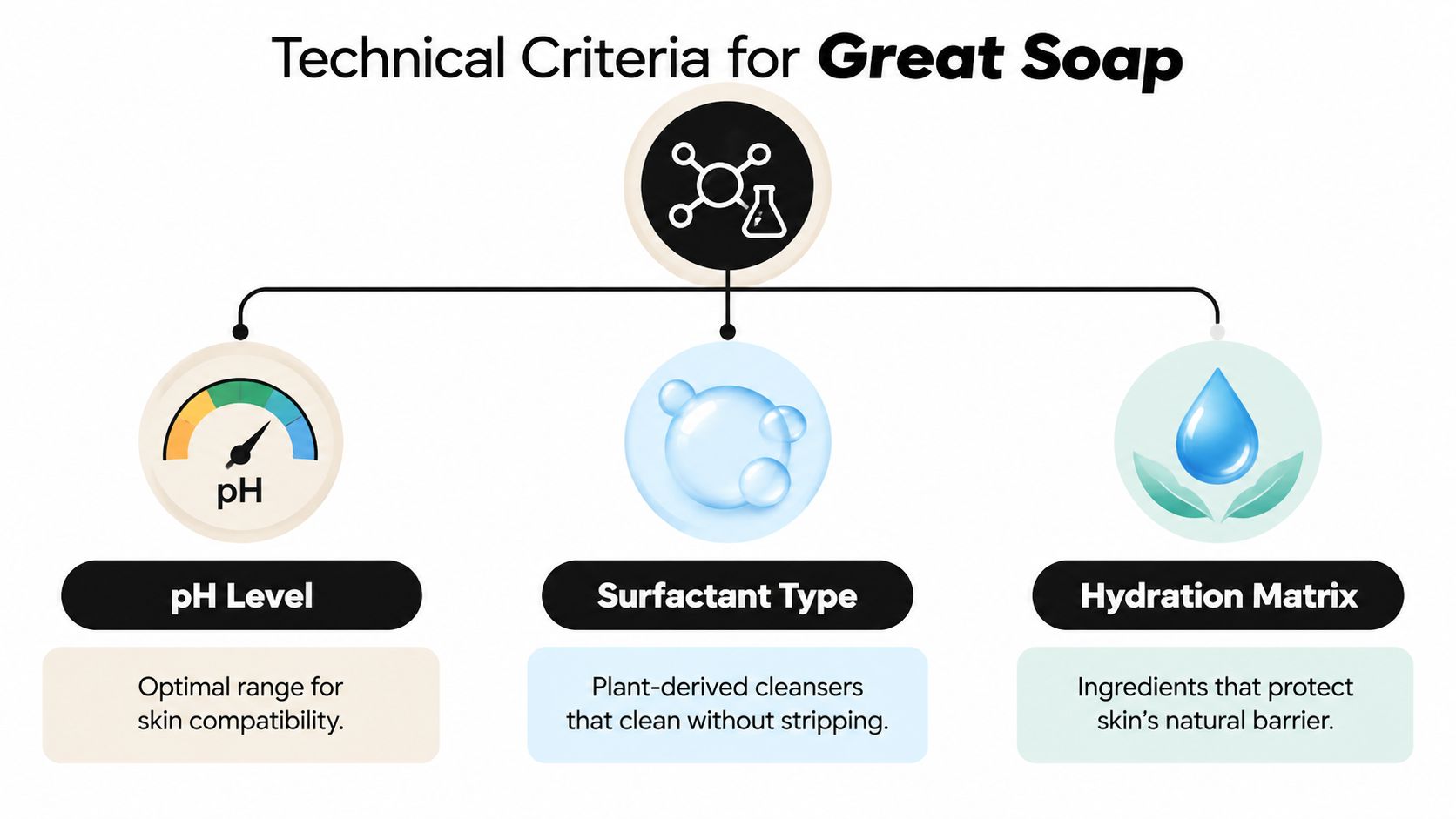
A natural hand soap doesn't need an intimidating laboratory profile, but it should have a coherent formulation. The most useful technical signals are pH, surfactant system, surface behavior, and verified antimicrobial testing. These reveal more than a front label promising purity.
pH and surfactant balance
Liquid hand soap sits directly against the skin's outer barrier, so pH can affect both tolerance and cleansing behavior. An independent optimization study identified pH 5.5 as the best compromise between measured performance and human-skin tolerance. Its optimized blend contained 5.4 wt% anionic surfactant, 1 wt% amphoteric surfactant, and 4 wt% sodium chloride, with reported density of 1.0387 g/cm3, viscosity of 1654 mm2/s, surface tension of 37.7 mN/m, and a critical micelle concentration of 0.48. These findings come from the liquid hand soap optimization study.
You don't need to demand those exact values from every brand. Use them as a comparison framework. A formula near skin pH, with a modest surfactant load and low surface tension, has a rational chance of cleaning efficiently without the harsher feel associated with some high-pH systems.
Botanical claims need performance evidence
A plant extract can be useful, but “contains botanicals” doesn't establish antimicrobial performance. In one natural liquid hand soap study using pomelo peel and papaya leaf extracts, formulations inhibited Escherichia coli with inhibition zones of 17 to 19 mm. The highest-scoring formula reached a mean sensory acceptability score of 4.79 and was rated highly acceptable for cleansing, foaming, fragrance, lathering, and moisturizing, according to the natural liquid hand soap testing record.
A separate formulation using Plectranthus scutellarioides extract reported a mean inhibition zone of 24.5 mm against Staphylococcus aureus at a 25% extract concentration. Those results don't prove that every botanical soap will work similarly. They show why extract type, concentration, target organism, and base formula all matter.
When a brand makes antimicrobial claims, look for:
- Named organisms, rather than “kills germs” without detail.
- Inhibition-zone measurements or other test results.
- Testing conditions, including extract concentration and formula.
- Skin and sensory information, because a product that irritates or feels unpleasant won't perform well in daily life.
For more context on plant-derived antimicrobial approaches, compare the discussion of natural antibacterial agents in hand soap. The practical lesson is simple: good natural soap combines a sensible base with evidence, rather than treating an ingredient name as proof of efficacy.
Comparing Natural Hand Soap Formats for Real Households
Format changes how often a soap gets used, how much packaging enters the home, and whether the sink stays tidy. A bar may be the lowest-packaging choice, but a refillable liquid can work better for a busy family that needs a clean, predictable pump. Foam can help children dispense a manageable amount, while concentrated refills make the most sense when someone in the household is willing to maintain the system.
Bar soap
Bar soap works particularly well in a guest bathroom or a household that already has a dry, ventilated soap dish. It avoids a pump and can arrive with minimal packaging. The trade-off is shared contact, a wet underside, and the possibility of residue on the basin.
For a kitchen sink, bars can be less convenient when hands are covered in flour, oil, or food residue. A pump keeps the soap accessible without asking someone to pick up a slippery block.
Liquid soap
Liquid remains the most adaptable format. It can carry moisturizers, essential oils, or fragrance-free formulations, and it suits standard dispensers. The weakness is packaging. Buying a new bottle each time creates a repeated plastic burden, especially in homes with several sinks.
The North America liquid hand soap market forecast places the category at USD 4.8 billion in 2025, projected to reach USD 6.63 billion by 2031, with a projected 5.53% CAGR from 2026 to 2031. The same source estimates organic and natural ingredient-based hand soaps at 16.9% of the hand soap market, growing at 7.4% CAGR, compared with 4.3% CAGR for conventional products. That scale explains why refillable liquid deserves serious attention rather than being treated as a niche format.
Foam and refill systems
Foam dispensers can feel efficient because the product arrives aerated, but they depend on a compatible pump and a correctly diluted formula. They're useful near children's sinks and in offices, where quick dispensing matters.
Refill systems win when they're simple. The 2024 packaging industry summary reports that 57% of consumers are willing to buy hand soap in a carton refill pack, while 54% prefer pre-filled refill packs over bringing their own bottle to a store. It also reports that 91% value reducing plastic and 75% emphasize lowering their carbon footprint.
A refill only reduces waste if the household uses it. A complicated return process, awkward pouch, or hard-to-clean dispenser can cancel out good intentions.
How to Read Ingredient Labels Without Getting Lost in Fear
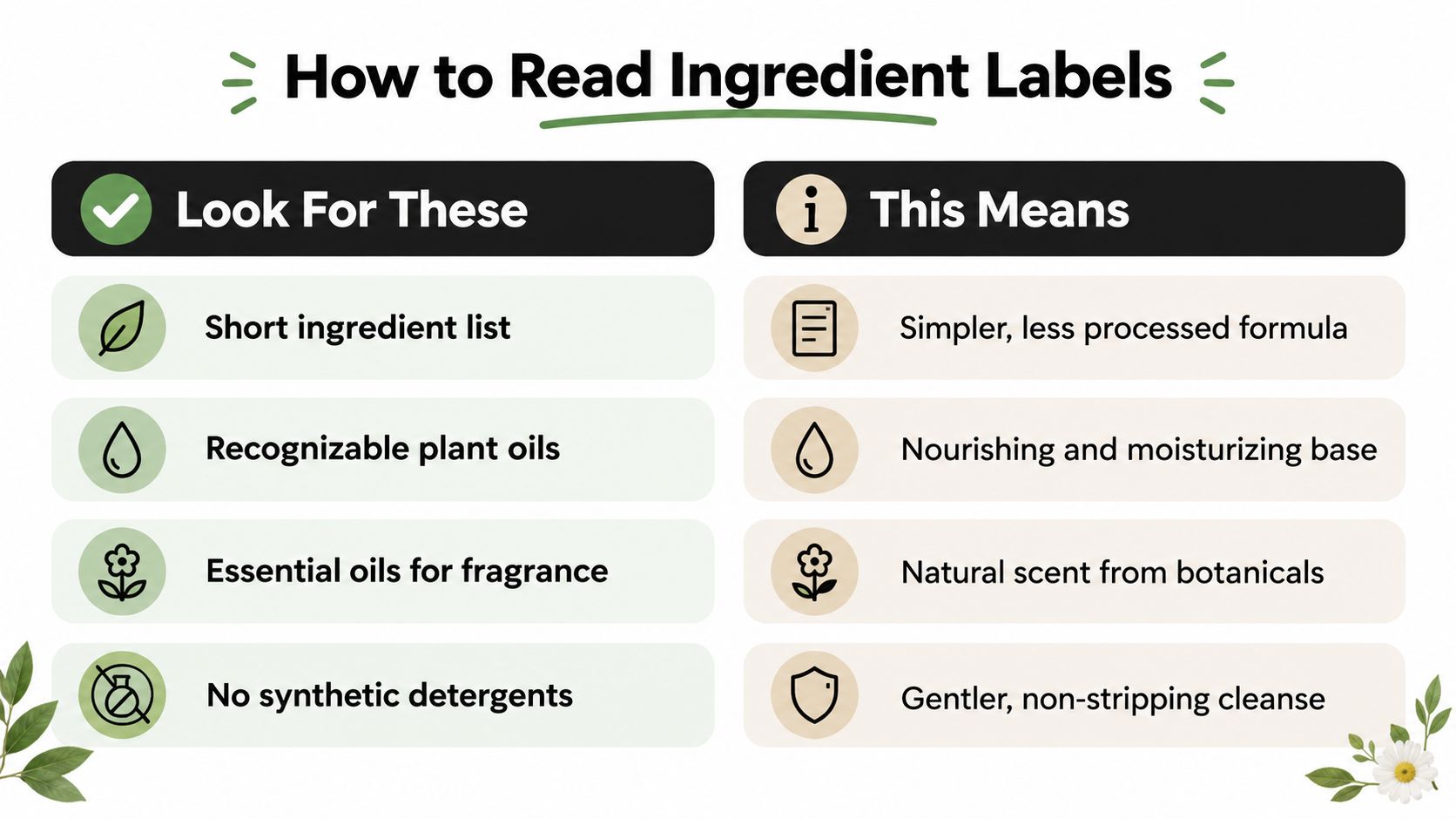
Ingredient labels deserve attention, but fear-based shopping creates its own problems. A long list isn't automatically dangerous, and a short list isn't automatically gentle. Sensitive skin usually benefits from focusing on a few practical categories rather than trying to reject every unfamiliar word.
Start with fragrance
“Fragrance” or “parfum” can represent a mixture of undisclosed components. If your hands itch, sting, or become rough after washing, try a fragrance-free product before assuming every plant-derived ingredient is the culprit.
Essential oils can provide a recognizable botanical scent, but they aren't universally tolerated. For highly reactive skin, fragrance-free is usually a more useful filter than choosing between lavender, citrus, or peppermint.
Check preservatives and surfactants
Preservatives keep water-based products safe from microbial contamination, so their presence isn't a flaw. The concern is whether a formula uses ingredients associated with irritation or sensitization, particularly for people with a history of contact dermatitis. The ingredient-focused hand soap guide specifically highlights MI/MCI and BIT as preservatives linked to irritation and sensitization, and it discusses how surfactant choices can influence dermatitis risk.
A plant-based label doesn't answer those questions. Read the full ingredient panel and consider the product's actual feel after several washes.
A useful shopping checklist
- Choose fragrance-free first for reactive skin: This removes one common source of unnecessary exposure.
- Look for a disclosed preservative system: Water-based soap needs protection, and transparency is more useful than a blanket “chemical-free” promise.
- Assess the surfactants as a group: A mild-feeling formula may be a better choice than one selected only because every ingredient sounds familiar.
- Treat “plant-based” as descriptive, not diagnostic: It tells you something about sourcing, but not automatically about pH, irritation, or performance.
- Check the whole label: Marketing claims on the front rarely reveal the complete formula.
The practical guide to non-toxic hand soap is useful as a companion perspective, but your own skin response still matters. If a product burns, causes persistent redness, or worsens dermatitis, stop using it and seek clinical advice rather than trying to push through a “natural” claim.
Why Refill Convenience and Company Values Matter Most
A refill system succeeds at the sink, not in a sustainability manifesto. If the box is difficult to store, the spout drips, or reordering requires too much effort, households return to single-use bottles. Convenience isn't a soft benefit. It determines whether a lower-waste habit survives a busy month.
A 2026 Trellis article reports that more than half of U.S. consumers rank convenience as the strongest motivator for using refillable products, with 55% ranking it above cost savings or sustainability. It also reports that 65% have used refillable hand or dish soap before, making these among the most familiar refill categories. See the Trellis analysis of refill adoption for the consumer behavior context.
What a workable system looks like
A useful refill setup answers basic household questions clearly:
- Where do I store the reserve?
- How do I pour without spilling?
- Can I refill the existing pump?
- What happens to the empty packaging?
- Can I reorder before the bottle runs dry?
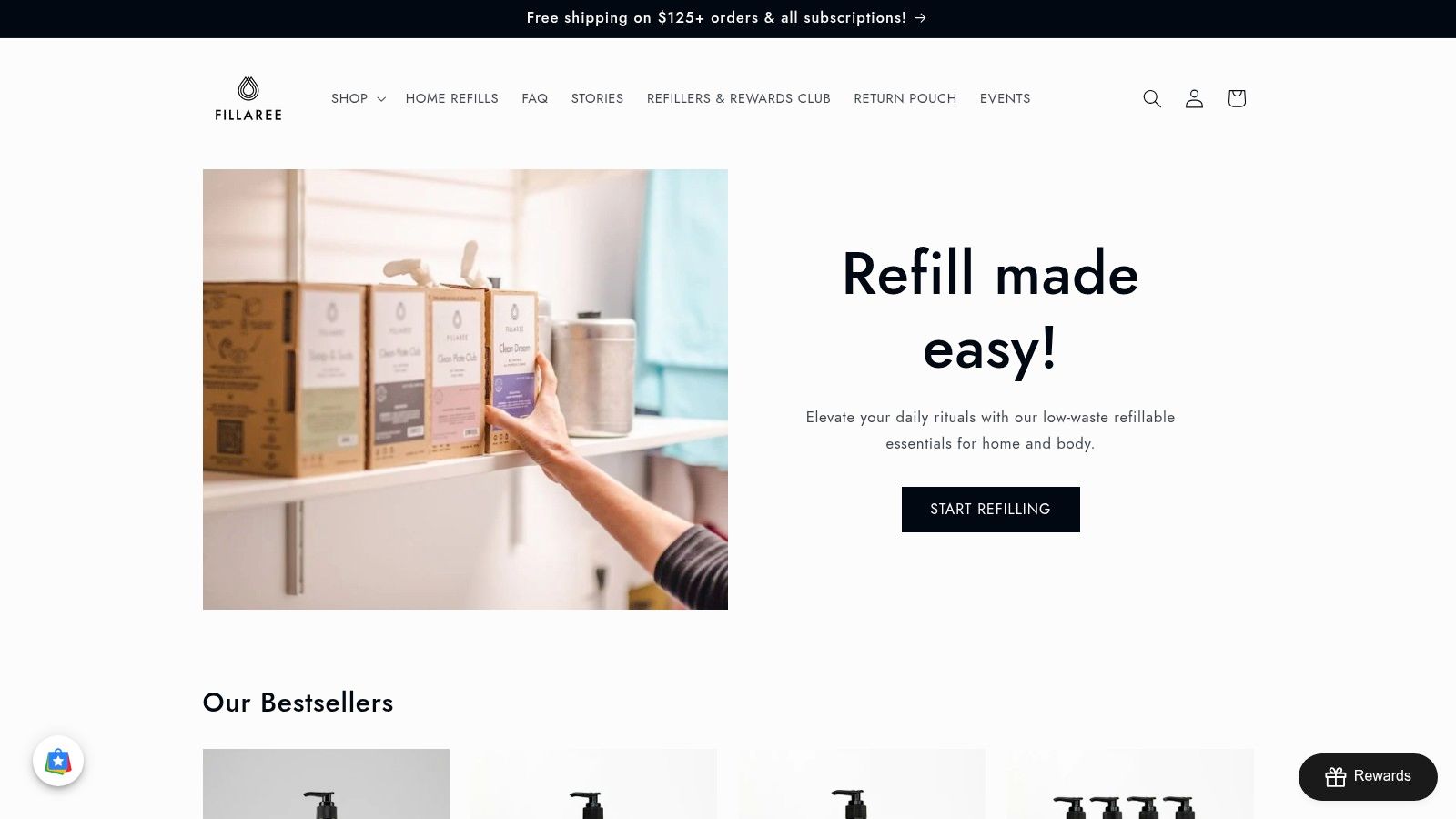
Fillaree offers refillable soaps through 0.5-gallon boxes, refill stations at 70+ partner locations, and a take-back system for used refill bags. The company washes and sanitizes returned bags for reuse, while its Durham, North Carolina operation connects the product to a women-owned, community-focused manufacturing model. Those details matter because they turn values into a physical process.
The company's refillable hand soap dispenser information is most relevant to shoppers who want a standard bottle at the sink with bulk supply stored elsewhere. The strongest refill brands reduce the number of decisions required from the customer. They make the low-waste option feel ordinary.
Packaging deserves its own score
A 2024 Dr. Bronner's press release states that its 32 oz Pure-Castile Liquid Soap Refill Carton reduces plastic use by 82% compared with the company's 32 oz post-consumer recycled plastic bottle. The carton consists of 69% FSC-certified paper, 5% aluminum, and 26% polyethylene with a polypropylene cap, according to the company's refill carton announcement.
That example shows why “eco-friendly packaging” is too vague to be useful. Look for material details, reuse instructions, return logistics, and whether the company accepts responsibility after the sale. Supporting good companies who care means supporting systems that make the better choice easier to repeat.
Choosing the Right Natural Hand Soap for Your Household
The best natural hand soap depends on the sink, the skin, and the people using it. Start with the highest-friction problem in your home, then choose the formula and format that solve it without creating another chore.
For sensitive or dry skin
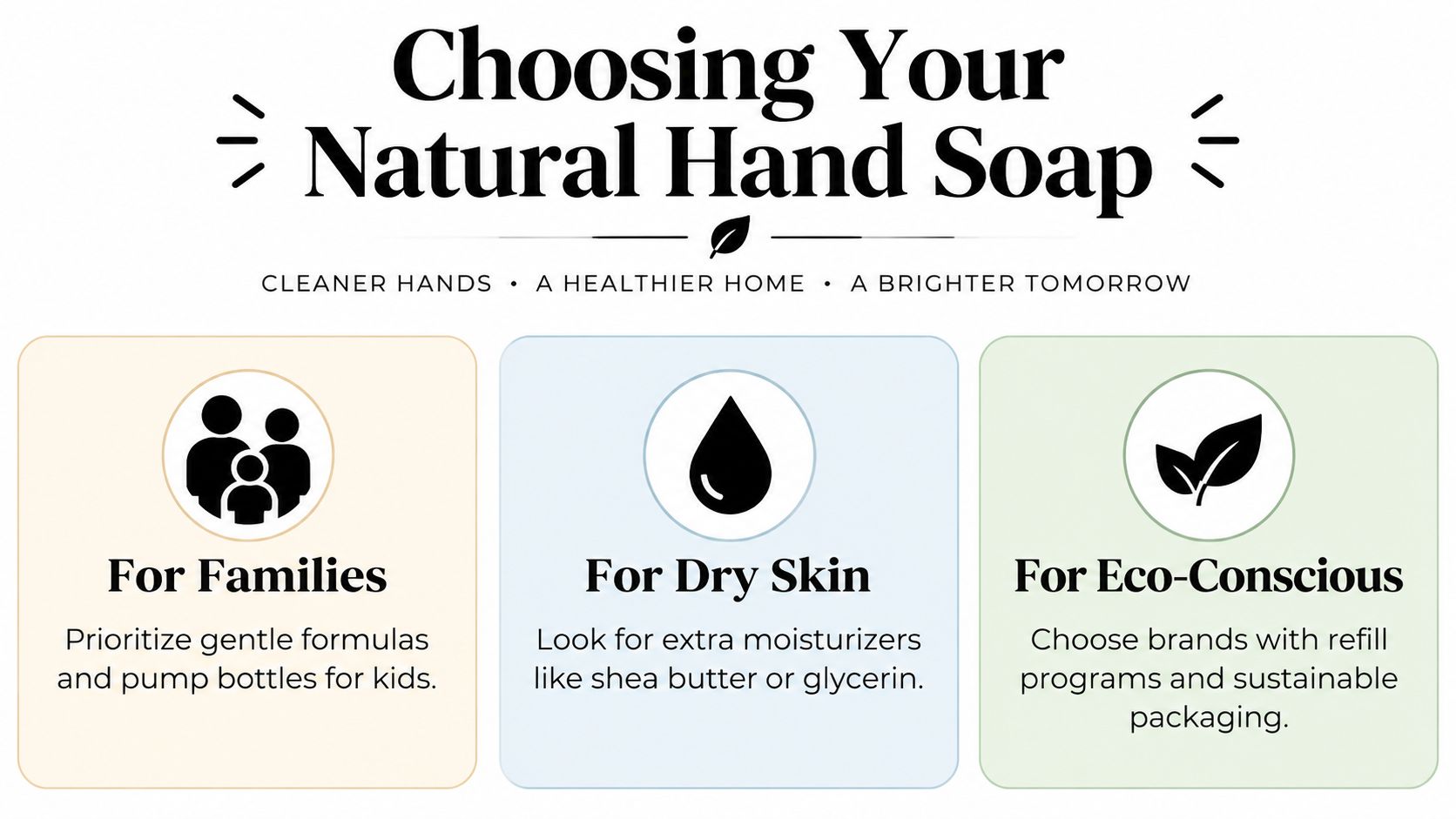
Choose fragrance-free where possible, especially if handwashing already causes tightness or irritation. Look for a comfortable after-feel, modest lather, and a formula that doesn't leave a film. Ingredients such as glycerin or shea butter can support a more emollient experience, but the full formula and your skin's response matter more than any single moisturizing ingredient.
A bar can work for a calm, private bathroom, while a liquid pump is usually easier to control in a household that washes frequently. If irritation persists, simplify the formula and consult a healthcare professional.
For busy families
Pick a pump that children can operate without assistance and a soap that rinses quickly. Foam can be appealing for kids, but don't assume airy lather means superior cleansing. A liquid refill system is often the better family choice when one adult can manage storage and topping up.
Place the reserve near, but not directly beside, the active bottle. That small setup choice prevents the empty-bottle problem that sends people shopping for a replacement at the least convenient moment.
For zero-waste households
Prioritize the entire loop: durable dispenser, bulk or carton refill, minimal shipping material, and a clear end-of-life plan. A product with a refill option isn't automatically low waste if every refill arrives in a disposable package that the brand can't recover.
A 2025 market summary reports that 64% of shoppers actively consider packaging sustainability when selecting personal-care products, up from 42% in 2020. It also reports that refill formats reduce plastic packaging by approximately 75%, lower total packaging material consumption by 60% to 70%, and can produce a 45% lower carbon footprint across manufacturing, transport, and end-of-life phases. Review the hand soap refill market summary for those packaging and lifecycle findings.
For values-driven shoppers
Compare ownership, manufacturing location, worker commitments, refill infrastructure, and community investment alongside ingredients. Fillaree, for example, makes refillable home and body products, offers home refills and station-based refills, and operates as a women-owned manufacturing company in Durham. Other companies may lead on different measures, such as carton design, return shipping, organic sourcing, or certification.
For cost-per-use, avoid judging only by the checkout price. Divide the total purchase by the usable volume or number of refills, then include shipping and the value of a dispenser you can keep using. A higher upfront purchase can make sense when it replaces repeated bottles, but only if the refill arrives reliably and the household finishes it.
The Bigger Impact of Small Purchasing Shifts
Hand soap is a small purchase, but it repeats across every sink and every washing routine. That repetition gives packaging decisions more significance than a one-time novelty product. A durable dispenser paired with a refill you can store and reorder can replace many ordinary bottle purchases over its useful life.
The environmental case is strongest when the numbers describe the whole system. The refill market summary cited above reports a 45% lower carbon footprint for refill-based soap consumption across manufacturing, transportation, and end-of-life disposal phases. It also reports substantial reductions in plastic packaging and total material use, which supports a practical conclusion: packaging design can matter as much as the ingredient story.
Social impact follows the same logic. Choosing a women-owned, community-focused manufacturer or a company with transparent take-back practices directs part of your routine spending toward businesses building systems around reuse, local work, and responsible production. No single bottle fixes the waste problem, but repeated household choices can make circular models easier for companies to maintain and expand.
The most aligned purchase is rarely the one with the loudest claim. It's the soap that feels good enough to use consistently, cleans without unnecessary harshness, arrives in packaging with a credible plan, and comes from a company whose actions support its message.
Fillaree offers refillable hand soaps, home refills, partner refill stations, and a take-back system designed for lower-waste routines. Visit Fillaree to compare its soap options and choose a refill setup that fits your household, your sink, and your values.