
Best Non Toxic Bathroom Cleaner That Actually Works
You're halfway through scrubbing a bathtub when the bathroom starts smelling like a chemistry lab. Your eyes sting, the window is open even though it's cold outside, and you're left wondering whether a product that removes soap scum should make the room unpleasant to breathe in.
That question sits behind the search for the best non toxic bathroom cleaner. A useful answer isn't merely the product with the most natural-looking label. It's the cleaner that matches the job, discloses what's inside, avoids unnecessary exposure, and comes from a company whose packaging and business practices fit the kind of home and world you want to support.
Table of Contents
- Why Your Search for a Better Bathroom Cleaner Matters
- Decoding What Non Toxic Really Means
- Comparing Popular Green Bathroom Cleaners
- Looking Beyond the Bottle to Company Values
- Why Fillaree Is a Top Choice for a Nontoxic Home
- Practical Guide to Tackling Bathroom Messes Safely
Why Your Search for a Better Bathroom Cleaner Matters
Bathrooms are unusually demanding spaces. They collect soap residue, body oils, mineral deposits, moisture, and unpleasant odors, often on surfaces that people touch with bare hands. Cleaning products are also used directly on showers, tubs, sinks, toilets, and fixtures, so formula choices matter more than a vague promise of “green” ingredients.
One European consumer survey found that 71% of people cleaned their bathroom weekly, with products applied directly to showers, tubs, and sinks. That high-frequency, high-contact use makes it reasonable to look for formulas designed to reduce exposure to harsh ingredients, especially in a small, enclosed room. (European consumer survey data)
A cleaner home starts with better choices
I don't think a safer bathroom requires perfection. It requires replacing the products you use most often with options that perform well and create fewer avoidable concerns. That might mean choosing a fragrance-free spray, keeping a refillable bottle in rotation, or using an acidic formula for mineral deposits instead of reaching automatically for a heavy-duty product.
The goal is also larger than avoiding a harsh smell. Every purchase supports a formulation philosophy, a packaging system, and a set of company priorities. Buying from businesses that disclose ingredients, reduce single-use plastic, and treat workers and waterways as part of the equation turns an ordinary household purchase into a practical form of voting with your dollar.
Practical rule: Choose the mildest product that can complete the task, then use technique, dwell time, and mechanical scrubbing to improve results.
Bathroom design plays a role, too. Smooth, repairable surfaces and thoughtful ventilation can reduce the need for aggressive cleaning. If you're planning a larger project, guidance on sustainable bathroom renovations in Dublin can help connect material choices, water use, durability, and maintenance from the beginning.
The best cleaner, then, isn't universal. It's the one that removes the soil you have, carries credible safety information, and aligns with how you want to manage waste at home.
Decoding What Non Toxic Really Means
“Non-toxic” sounds reassuring, but it isn't a precise performance category on its own. A product can have a botanical scent and still leave shoppers guessing about its ingredients, intended use, or disinfection claims. I use a more practical test built around transparency, task fit, exposure reduction, and credible standards.
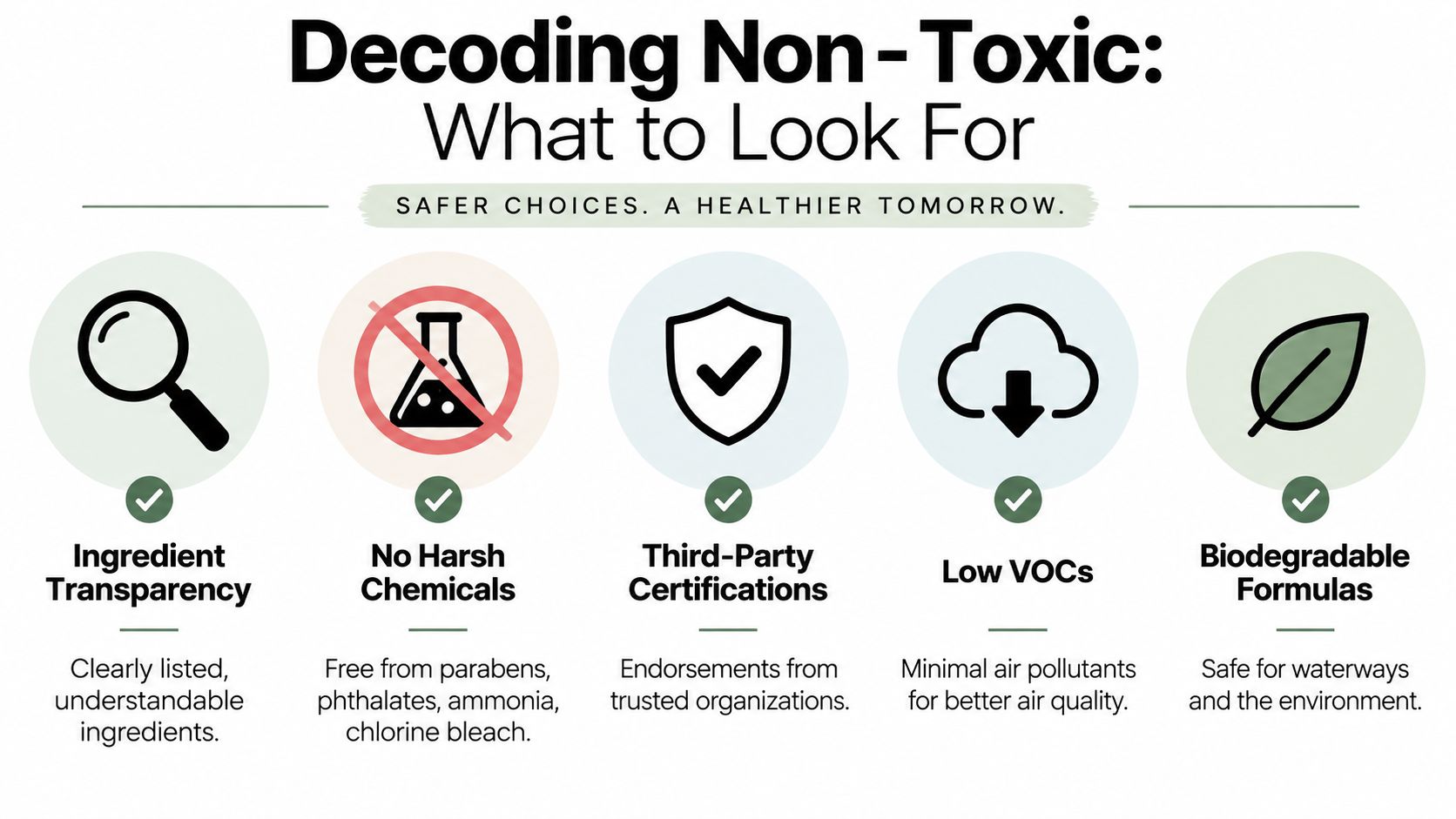
Start with the label
Look for a complete ingredient list written in terms a shopper can understand. Be cautious when a label relies on broad wording without explaining the components of fragrance, preservatives, or cleaning agents. A short list isn't automatically safer, but transparency lets you make an informed decision.
Many eco-conscious shoppers also choose to avoid phthalates, ammonia, and chlorine bleach, particularly in frequently used bathroom products. Low-VOC formulas can be preferable in enclosed spaces because they aim to limit air pollutants, while biodegradable ingredients can reduce concern about what travels down the drain. These preferences don't eliminate the need to follow directions, ventilate the room, or protect sensitive skin.
A helpful related resource is this guide to natural antibacterial agents, which can help clarify the difference between naturally derived ingredients and a product legally labeled as a disinfectant.
Use certification as a filter
The U.S. EPA's Safer Choice program offers a concrete benchmark. EPA scientists screen every ingredient for potential human-health and environmental effects. For products designed for direct release into waterways, the program also restricts ingredients with high aquatic toxicity, and its standards address concerns including carcinogenicity, reproductive and developmental toxicity, aquatic life, and environmental persistence. (EPA Safer Choice standards)
Certification doesn't mean a product can be used carelessly. It means the formula has passed a defined review rather than relying only on an unregulated “natural” claim. You can also consult the EPA's searchable Safer Choice product database when you want a third-party standard instead of attractive packaging alone.
Cleaning isn't disinfecting
This distinction prevents most shopping mistakes. Cleaning removes soil, such as soap scum, body oils, dust, and mineral residue. Disinfecting reduces or destroys specified microorganisms under controlled label directions. A cleaner can leave a sink visibly bright without being a disinfectant.
Safer Choice isn't a disinfectant program. If you need a sanitizing or disinfecting claim, look for an EPA-registered product, its registration number, and the required dwell time on the label. For routine bathroom maintenance, a capable cleaner may be all you need. For a higher-risk situation, use the product category designed and registered for that purpose.
If you're researching low-impact home finishes at the same time, information about eco-friendly painting options can help you evaluate indoor materials alongside cleaning products.
Comparing Popular Green Bathroom Cleaners
A bathroom cleaner should match the mess you need to remove. Vinegar or citric acid can help with mineral deposits, a gentle abrasive can loosen stuck-on residue, and a plant-based surfactant formula can handle routine soil. None should be treated as a universal disinfectant without the appropriate label and registration.
Use the table as a shopping framework, not a declaration that one brand suits every bathroom. Labels, formulas, packaging, and certifications can change, so check the current product information before buying. I look at three practical measures together: ingredient safety, performance for the intended job, and the waste created by the delivery system.
Non-Toxic Bathroom Cleaner Comparison
| Brand | Key Ingredients | Performance Focus | Packaging Type | Certifications |
|---|---|---|---|---|
| Blueland | Tablet-based, plant-derived cleaning ingredients | Routine surface cleaning and low-waste storage | Reusable bottles with dissolvable refills | Brand-reported third-party and sustainability credentials should be checked on the current product page |
| Branch Basics | Concentrated plant-based formula | Flexible all-purpose cleaning, including bathroom surfaces | Reusable bottles with concentrate refills | Verify current certification details on the label |
| Attitude | Plant-derived cleaning ingredients | Everyday bathroom soil and streak reduction | Liquid bottles and refill-oriented options | EWG Verified on products described by the brand and retailer materials |
| Fillaree Soap & Suds Scrub Cleaner | Plant-based cleaning ingredients | Scrubbing bathroom surfaces and routine soil removal | Refillable system with reusable containers and home refills | Check the current product label and certification information |
How the trade-offs show up in real use
Tablet systems reduce the need to ship water and make storage easier, but the tablet must dissolve properly and the bottle needs regular cleaning. Concentrates reduce bulky ready-to-use packaging, though dilution adds a step that some households may skip. Ready-made sprays are convenient for quick wipe-downs, while their bottle materials and shipping format deserve closer inspection.
The surface and the soil determine whether a formula performs well. A laboratory comparison of household bathroom and kitchen products found that commercial bathroom cleaners and vinegar performed strongly for microbial reduction, while a commercial cleaner without disinfectant performed best for soil removal. The practical lesson is clear: microbial reduction and soil removal are different metrics. (Independent hard-surface cleaner comparison)
For a refill-friendly formula that can serve several rooms, review this guide to an eco-friendly all-purpose cleaner. A bathroom product still needs to suit the surfaces in your home, including porcelain, glass, grout, stone, and metal. Good choices support a healthier home while reducing avoidable waste.
Looking Beyond the Bottle to Company Values
A cleaner can have a thoughtful ingredient list and still create unnecessary waste. The bottle may be difficult to recycle, the formula may be mostly transported water, or the brand may offer no practical way to keep containers in use. For households trying to reduce impact, packaging is part of product performance.
Refill systems are especially useful when they fit your routine. A durable bottle paired with concentrated refills, bulk containers, or local refill stations can prevent the repeated purchase of another disposable spray bottle. The system must be convenient enough that you'll use it, and the refill packaging should be clearly explained rather than hidden behind vague sustainability language.
Questions I ask before supporting a brand
- Can I refill the container? Look for local stations, returnable packaging, concentrates, or home refill options.
- What happens after use? Check whether the bottle, cap, pouch, and label can be reused, recycled, returned, or collected by the company.
- Does the company disclose its standards? Look for specific certifications, ingredient information, and accountability practices.
- Does the business reflect my values? Ownership, worker treatment, community investment, and environmental responsibility may matter as much as the formula.
B Corp certification offers one way to identify companies assessed against standards for social and environmental performance, accountability, and transparency. The B Corp directory includes women-led and environmentally focused cleaning businesses, giving values-driven shoppers a more concrete signal than a green leaf printed on a label. (B Corp cleaning company profiles)
This doesn't mean certification is the only measure of a good company. Small businesses may be building responsible systems without pursuing every available credential. It does mean shoppers should ask for evidence. A brand that explains its refill process, materials, testing, and limitations earns more trust than one that asserts it is clean.
Supporting good companies also creates demand for better defaults. When customers consistently choose refillable packaging, ingredient transparency, and responsible operations, those features become easier for other households to find.
Why Fillaree Is a Top Choice for a Nontoxic Home
Fillaree fits the framework because it connects formula, function, packaging, and company values rather than treating them as separate decisions. Its bathroom-relevant products include Clean Dream Spray, an all-purpose cleaner described for nonporous surfaces such as countertops, porcelain, and bathroom fixtures. Fillaree also offers Soap & Suds Scrub Cleaner for jobs where a scrub is more appropriate than a light spray.
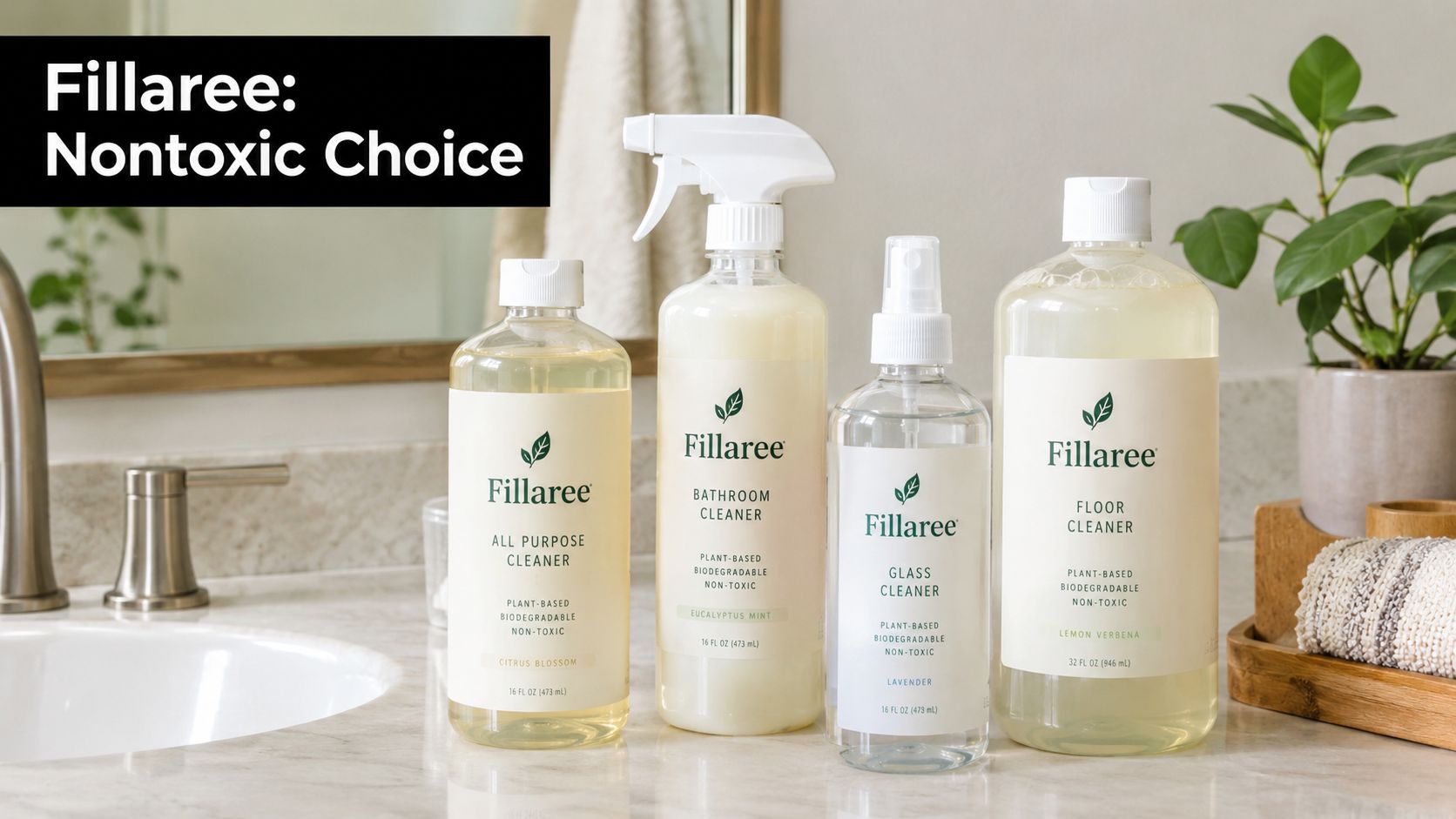
The product and the system matter together
Fillaree is a women-owned manufacturing company based in Durham, North Carolina. Since 2014, it has made refillable home and body essentials designed to reduce single-use plastic through a circular refill system.
The company states that its formulas are third-party certified to kill harmful bacteria while remaining safe for waterways. That information still needs to be interpreted correctly. A product with bacterial-killing credentials isn't automatically the right choice for every surface or every disinfection scenario, so follow the current label and use the appropriate product for the task.
A refill model designed for repetition
Fillaree supports refilling through partner stations across the United States, a Durham storefront, and home refills in larger boxes. The company also takes back used refill bags, washes and sanitizes them, and reuses them at no cost to the customer. That take-back step is important because it addresses the full life of the packaging instead of stopping at the initial sale.
I value this kind of model because bathroom cleaning is repetitive by nature. A refill system only becomes meaningful when it works for the tenth or twentieth restock, not just the first purchase. Fillaree's subscriptions, bundles, rewards, and wholesale options are designed to make continued low-waste use more manageable for households and small businesses.
The brand's packaging choices, including reusable bags, U.S.-made cardboard boxes, and recyclable stickers, support the same mission. Fillaree isn't a substitute for matching cleaner chemistry to the job, but it offers a practical route for shoppers who want a gentle home-care routine and a company committed to reducing disposable packaging.
Practical Guide to Tackling Bathroom Messes Safely
When a bathroom needs attention, the bottle is only one part of the solution. Apply enough cleaner to wet the surface, respect the label's contact time, choose a microfiber cloth or suitable brush, and rinse whenever the surface or directions require it. Never mix products, particularly acids with chlorine bleach or ammonia-containing formulas.
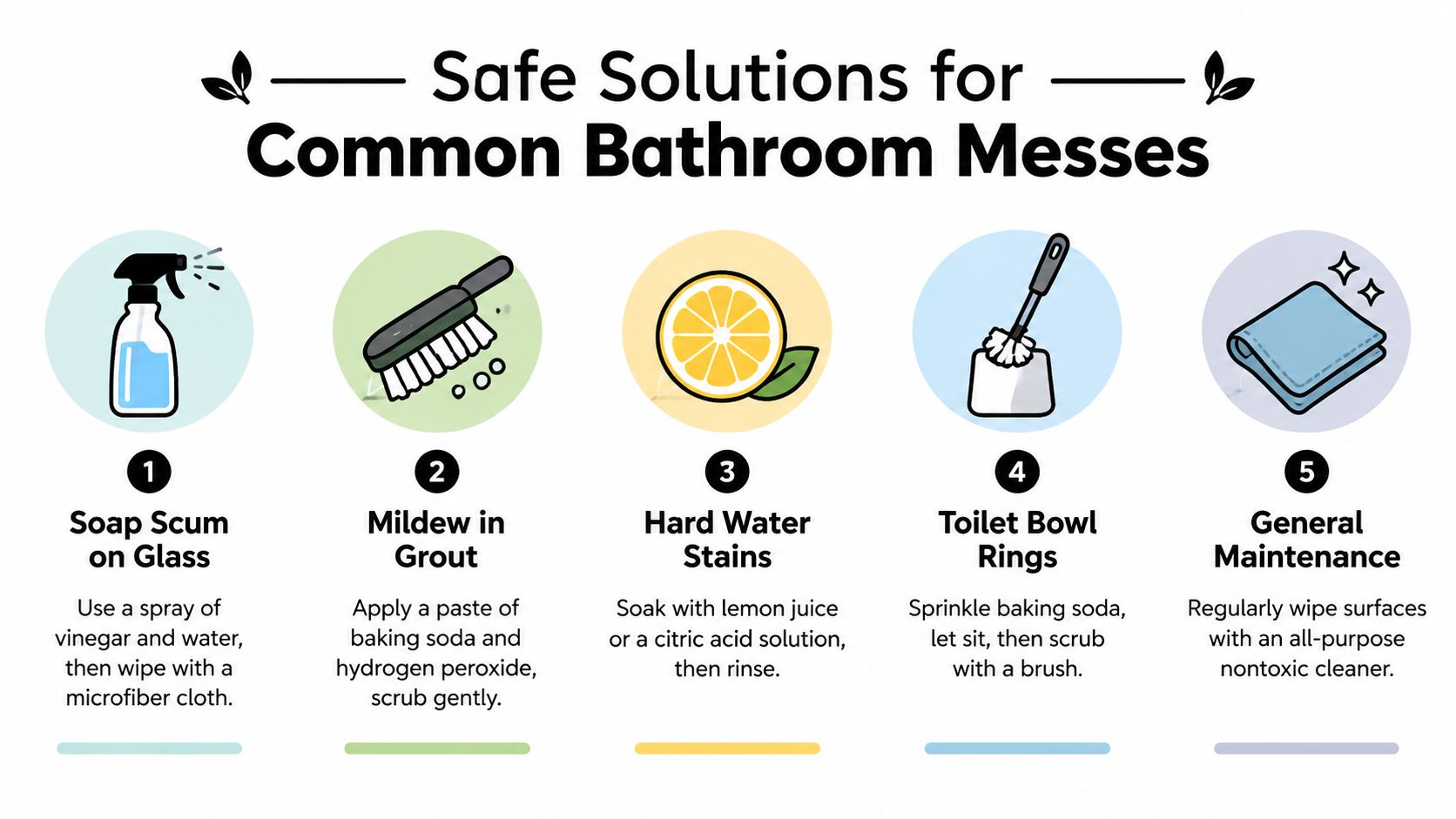
Match the method to the mess
Soap scum on glass doors usually responds to an acidic spray, such as diluted vinegar, followed by a microfiber wipe. Test the solution on a hidden area first, keep vinegar away from natural stone, and remove loosened residue before it dries onto the glass again.
Mildew in grout calls for controlled moisture and gentle agitation. Apply a targeted paste of baking soda and hydrogen peroxide, scrub lightly, and rinse thoroughly. Porous grout may require repeated care. Ongoing growth can also point to poor ventilation or excess moisture, rather than an unsuitable cleaner.
Hard-water stains on fixtures need an acid, such as lemon juice or a citric acid solution. Give the solution time to soften the mineral deposit, then rinse and dry the fixture. Check the manufacturer's guidance first, because acids can damage some natural stones and delicate finishes.
Toilet bowl rings can often be loosened with baking soda and mechanical scrubbing. Use a toilet brush for the physical work. If the buildup remains, select a toilet-specific product that suits the bowl material and follow its directions.
Regular upkeep reduces the need for aggressive treatment. Wipe sinks, faucets, shower walls, and counters with an all-purpose nontoxic cleaner before residue builds up. This guide to all-purpose cleaner uses shows how one suitable product can handle more routine tasks without crowding the cabinet with rarely used formulas.
Know when cleaning isn't enough
No single formula performs equally well on every bathroom problem. Some non-disinfecting commercial cleaners remove soil effectively, while vinegar can reduce microbes under particular test conditions. Use that distinction to match the product to the task. A natural cleaner should not be treated as a disinfectant unless its label makes that regulated claim.
For sanitizing or disinfecting, choose an EPA-registered product and follow the label, including its required dwell time. A lower-toxicity daily routine still has a place, but it should not replace the product or process required for a specific hygiene task.
Move-out work and heavily neglected bathrooms may need more time, equipment, and labor than a normal maintenance routine. A service offering reliable vacate cleaning can handle that workload while you keep gentler products for everyday care.
Start with one high-use product, read its label, and keep separate tools for areas where hygiene matters. A healthier home comes from consistent habits, appropriate formulas, and choices that reduce unnecessary packaging. No single bottle handles every job safely.
Fillaree offers refillable home-care products, including bathroom-suitable sprays and scrub cleaners, through a circular system designed to reduce single-use packaging. Visit Fillaree to explore its cleaning range, refill options, and practical ways to build a lower-waste bathroom routine.