
Floor Cleaner Concentrate: A Low-Waste Guide
You're standing in the cleaning aisle with a bulky bottle in one hand and a refillable mop bucket at home. The bottle looks convenient, but most of what you're paying to carry home is water. Then you remember the crowded cupboard under the sink, the half-used products, and the steady stream of plastic containers heading to the bin.
A floor cleaner concentrate offers a simpler alternative. You keep a small amount of active cleaning formula, add water when you're ready to mop, and reuse a durable bottle instead of repeatedly buying a new water-filled container. The change can support a lower-waste routine, but it only works well when you understand dilution, floor finishes, drying time, and the packaging system behind the product.
Table of Contents
- Rethinking Your Cleaning Closet
- Concentrates Versus Ready to Use Cleaners
- Dilution Ratios for Every Floor Type
- Safe Mopping Techniques and Pet Care
- The Environmental Impact of Refill Systems
- Choosing Brands with Aligned Values
- Frequently Asked Questions About Concentrates
Rethinking Your Cleaning Closet
A typical cleaning cupboard becomes cluttered one bottle at a time. There's a ready-to-use floor cleaner for tile, another spray for counters, perhaps a specialty product for wood, and several containers that seemed useful when purchased but rarely earn their space. Each one occupies storage room before it ever reaches the mop.
A concentrate changes the question from “Which bottle do I need?” to “How much cleaning solution should I make?” The formula arrives with much of the excess water removed, while your tap or filtered water supplies the volume at home. You can store the concentrate in a smaller container and prepare only what your routine requires.
The practical upgrade
Suppose you clean a small kitchen after dinner. With a ready-to-use product, you reach for a full bottle, spray or pour the solution, and eventually replace the entire container. With concentrate, you measure the recommended amount into a reusable bottle or bucket, add water, and put the original container back into storage.
That shift helps in several ways:
- Less cupboard clutter: A compact concentrate takes up less room than repeated full-size bottles.
- More flexible preparation: You can mix a smaller batch for a quick spot clean or a larger batch for a full mopping session.
- Reusable equipment: A refillable bottle, washable microfiber mop, and measuring tool become the center of the routine.
- More intentional purchasing: You're buying cleaning power rather than repeatedly buying transported water and packaging.
The environmental case depends on more than the word “concentrate.” A small bottle in a single-use package still creates waste, while a refill system can keep the durable bottle in use and reduce the need for new packaging. That's why a low-waste floor-care routine should evaluate the formula, the dosing instructions, and the container together.
Concentration isn't the same as harshness
A concentrated product isn't automatically stronger in a way that makes it better for every floor. It contains less added water before use. The final solution depends on the formula and the amount you dilute.
Technical disclosures describe neutral-style concentrates designed to remain near neutral after dilution. One formulation uses nonionic surfactants at 5–15% and has a concentrate pH of about 9, dropping to roughly 8.5 at use dilution. The same disclosure gives working dilutions around 1:320 for routine cleaning and 1:160 for heavier soil, showing why accurate dosing matters for both cleaning and residue control (technical disclosure on neutral floor-cleaner concentrates).
You don't need a chemistry background to make the switch. You need a reliable measuring method, a product label that identifies the correct dilution, and a willingness to use less product when the floor doesn't need more.
Concentrates Versus Ready to Use Cleaners
Picture a cleaning day with a nearly empty bottle, a full bucket, and no desire to carry home another large container. A ready-to-use cleaner feels convenient because the manufacturer has already added the water. A concentrate requires measuring, yet it lets you prepare only what the task requires while storing far less finished liquid.
The useful comparison is not the shelf price of one bottle. Compare the usable cleaning solution produced, the container left behind, and the habits required to dose safely. Concentrates work like a small pantry staple: a compact formula becomes a working solution when you add water at home.
| Feature | Ready-to-Use (RTU) | Floor Cleaner Concentrate |
|---|---|---|
| Preparation | Ready for the mop or spray bottle | Requires measured dilution |
| Storage | Bulky bottles filled with finished solution | Smaller formula container plus reusable bottle |
| Packaging pattern | A new primary container is typically purchased with each replacement | Refill, returnable, or recyclable systems can reduce new packaging |
| Dosing control | Fixed by the manufacturer's bottle format | Adjustable within the label's instructions |
| Risk | Little mixing effort, but the product may be over-applied | Incorrect dosing can create foam, residue, or weak cleaning |
| Transport | Finished solution includes the water used in the product | Concentrated formula can avoid transporting some added water |
| Best fit | Maximum convenience with no preparation | Households willing to measure and reuse equipment |
Where the savings can appear
A concentrate may have a higher purchase price because one container is intended to make several batches. Judge it by the label's stated yield and the cost of each prepared bottle or bucket, not by the number printed on the shelf tag.
Use the routine-cleaning dilution for ordinary dust and footprints. Keep the stronger mix for heavier soil. Adding extra concentrate “just to be safe” can waste product, leave a tacky film, and increase the environmental burden without improving the result.
Refilling also changes the shopping rhythm. You keep a durable bottle and replace only the formula when it runs low. That approach can reduce new packaging and helps low-waste, women-owned businesses such as Fillaree build a circular model around refills, reuse, and more intentional purchasing. The environmental benefit comes from the whole system, formula, dosing, container, and refill method, rather than from concentration alone.
The tradeoff is accuracy
Ready-to-use cleaners remove the measuring step, but they also give you one fixed amount for every task. Concentrates reward a simple routine: use a marked measuring spoon, dosing cap, or small kitchen scale dedicated to cleaning, then record the ratio that works for your home. Accurate dosing protects the floor as well as the budget. Too much product can leave residue, while too little may fail to remove soil and tempt you to scrub harder.
The category is established enough to evaluate as a distinct format rather than a novelty. One industry report values the global concentrated floor cleaner market at USD 3.2 billion in 2024 and projects USD 5.1 billion by 2033, with a 6.5% CAGR over the 2026–2033 period (Verified Market Reports analysis of the concentrated floor cleaner market). A separate estimate places the wider global floor-cleaner market at USD 5.49 billion in 2024 and projects USD 9.41 billion by 2033, at a 6.2% CAGR.
The practical choice depends on your priorities. RTU suits households that want immediate use. Concentrate suits people willing to measure, reuse equipment, and let the tap provide water at the point of cleaning.
Dilution Ratios for Every Floor Type
If one bottle of concentrate serves several floor types, the label is your starting point, not a suggestion. Formulas differ, so a ratio suited to one product can leave another surface overly wet, sticky, or exposed to unnecessary ingredients. Check both the product directions and the flooring manufacturer's care instructions before trying a new combination.
Use a clean bucket or bottle. Add water first, then measure the concentrate. This order limits splashing and helps the formula spread through the water instead of collecting as a foamy pocket at the bottom. Accurate dosing also supports the low-waste value of refills: one reusable container works only when each batch is mixed consistently.
Match the solution to the surface
Keep delicate finishes lightly damp. Extra concentrate cannot replace removing grit or giving the solution enough contact time.
- Sealed hardwood: Choose a cleaner labeled for finished wood, apply it to the mop rather than flooding the boards, and keep moisture low. Oil-finished and wax-finished wood may require different care, so confirm compatibility first.
- Laminate: Use a damp, well-wrung mop. Water can enter seams, so clean manageable areas and dry patches that remain visibly wet.
- Tile and vinyl: A routine diluted cleaner may suit these surfaces, but glossy finishes can reveal residue when the mixture is too strong. Rinse or buff only when the label or surface instructions recommend it.
- Natural stone: Verify compatibility before use. Porous or acid-sensitive stone needs particular care, and a neutral cleaner is generally a cautious choice compared with an acidic or strongly alkaline product.
A disclosed neutral concentrate formulation describes routine cleaning at 1:320 and heavier soil at 1:160. Those ratios apply to that formulation only, so do not transfer them automatically to another bottle (neutral concentrate dilution information).
Why pH and surfactants matter
Surfactants loosen oily soil and keep dirt suspended until the mop lifts it away. Their balance affects cleaning strength, residue, and surface compatibility. Formulation data describes surfactant systems in the 7–16% range, an alkaline concentrate pH above 9, and a preferred pH of 11.5–12.0. It also connects non-filming performance with a surfactant HLB around 10.5–12.5 and total surfactants around 15–30% (Swadesh International floor cleaner formulation data).
For home care, the practical rule is simple: follow the label, measure rather than pour by eye, and test an unseen area when the finish is unfamiliar. A refill system reduces packaging only when the formula is used safely and the container is reused for its intended purpose.
For ideas on adapting cleaner use across household tasks, see Fillaree's guide to all-purpose cleaner uses. Fillaree's low-waste, women-owned business model shows how practical reuse can connect everyday cleaning with a more circular economy.
Safe Mopping Techniques and Pet Care
The way you mop affects the result as much as the formula. A well-diluted solution can still leave residue if the mop is overloaded, the floor is saturated, or dirty water is spread across the room instead of being changed or rinsed.
Start by removing loose grit with a vacuum, dust mop, or soft broom. Fine particles can scratch some finishes when they move under a wet mop, especially on polished or coated surfaces.
A calm, repeatable routine
- Add water first. Fill the bucket or bottle with the required amount of cool or room-temperature water.
- Measure the concentrate. Use the cap, dosing tool, or a dedicated measuring spoon. Don't pour by eye.
- Mix gently. Stir or swirl without whipping the solution into unnecessary foam.
- Work in small areas. Mop from the far side of the room toward the exit so you don't walk across wet flooring.
- Wring thoroughly. The mop should be damp, not dripping, especially on laminate, engineered wood, and finished hardwood.
- Dry problem areas. Use a clean towel on puddles, seams, corners, or any place that remains visibly wet.
Independent floor-care guidance recommends measuring household concentrates carefully, adding water first, and avoiding hot water because misuse can increase foaming or residue (floor-cleaner concentrate usage guidance).
Practical rule: If the floor feels sticky after it dries, don't automatically scrub harder. Recheck the dilution, use less concentrate, and make sure the mop has been rinsed properly.
Keep animals and children out until dry
A pet may cross a freshly mopped room before the surface has dried, then lick its paws. Toddlers may crawl over the same area with their hands. Keep both away until the floor is fully dry, and follow the product label for any additional ventilation or contact guidance.
Store the undiluted concentrate in its original, clearly labeled container. Keep it closed and out of reach of children and animals. Don't transfer it into a drink bottle or an unmarked spray container, since a clear label is part of safe household storage.
Porcelain and other hard surfaces can also benefit from technique adjustments such as removing loose soil first, using an appropriate mop, and avoiding excess water. For additional surface-specific advice, see these pro cleaning tips from Tiles Mate from Tiles Mate Pty Ltd. For a related low-toxicity household routine, Fillaree's guide to non-toxic cleaning spray offers another useful reference point.
The Environmental Impact of Refill Systems
Concentrate reduces the amount of water you purchase and store, but the strongest circular-economy benefit appears when the container is designed for repeated use. A durable bottle paired with a refill pouch, carton, return program, or refill station can keep packaging in circulation instead of following a one-way path from shelf to disposal.
That system has several parts. The bottle must be durable enough to reuse. The refill must use less material or support a recovery process. The customer needs clear instructions and a convenient way to return, recycle, or refill the package.
What the model can change
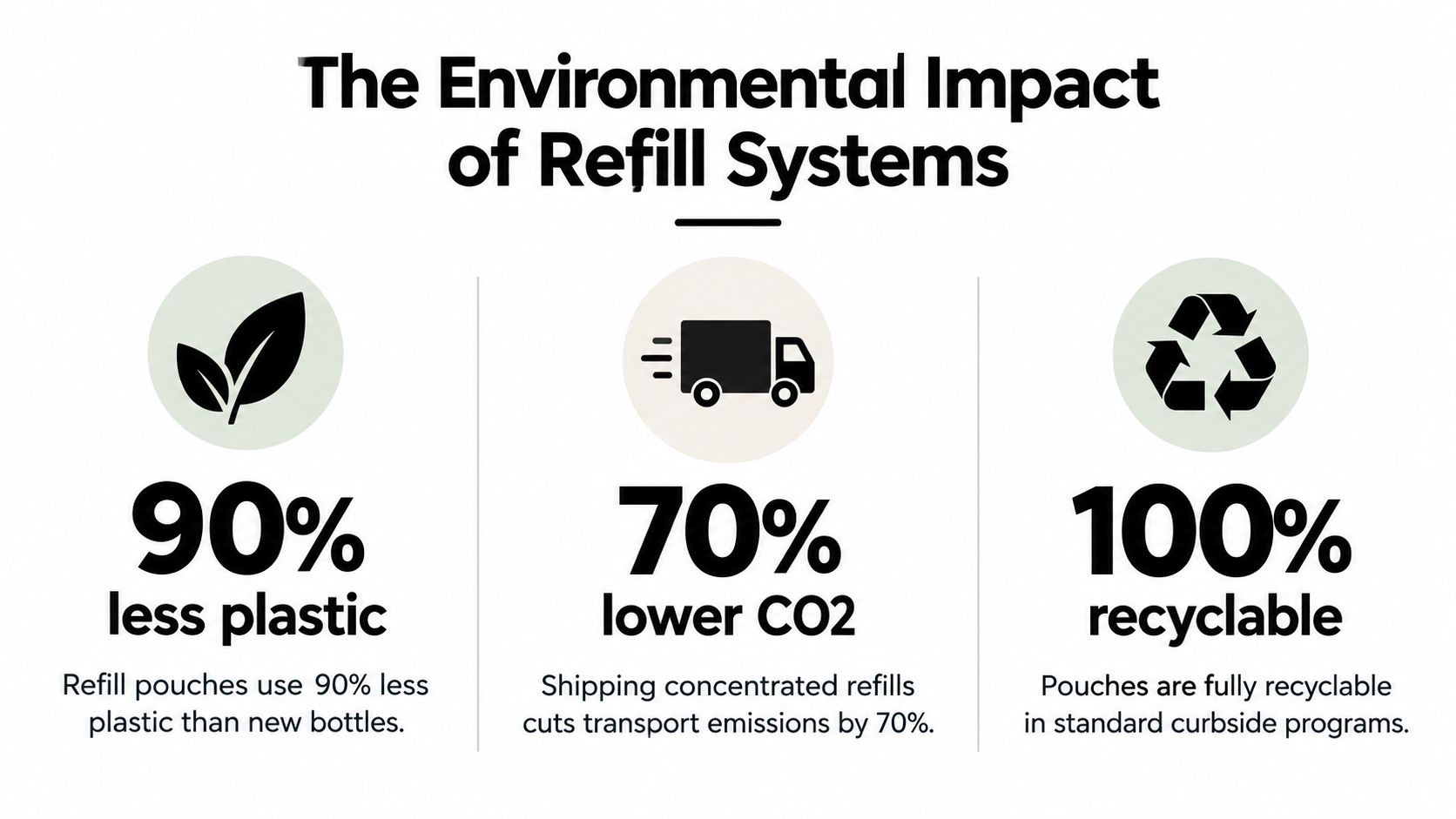
The Ellen MacArthur Foundation's discussion of Replenish describes a smart refill system in which concentrated liquids replace single-use products. In that example, one pod is equivalent to six bottles, and the design cuts plastic packaging by 90%. The same source says refill systems like this can reduce energy use, plastic waste, and carbon dioxide emissions by 80–90% compared with one-use bottles (Ellen MacArthur Foundation material on smart refill systems).
These figures describe the cited system, not every floor cleaner refill. Still, the mechanics apply clearly to water-heavy cleaning products. When a household adds water at home, a brand can ship less finished liquid, and the customer can keep using the primary bottle.
A refill also avoids transporting water over long distances, which can make the product architecture more efficient. The environmental result depends on the complete system, including manufacturing, shipping, reuse, recovery, and what customers do with the empty package.
Packaging tells part of the story
A UK and German consumer study discussed in a 2024 Elopak whitepaper found that 58% of respondents said they'd be happy to buy floor cleaner packaged primarily in cartons (Elopak whitepaper on cartons for home and personal care products). The same source reports that 22% of UK consumers use pre-fill packs for surface cleaner, suggesting that refill-adjacent habits already exist beyond specialist zero-waste shoppers.
Concentration is the formula decision. Circularity is the packaging and recovery decision.
Look for companies that explain what happens after purchase. A recyclable package may be useful where the local system accepts it, while a returnable package requires collection and sanitation. Neither claim should stand alone. Ask whether the brand provides clear disposal instructions, designs for reuse, or operates a take-back process.
For a practical example of refill infrastructure and waste recovery, explore Fillaree's refill station and zero-waste approach.
Choosing Brands with Aligned Values
A good concentrate needs more than an attractive sustainability label. It should clean effectively at a clear dilution, identify compatible surfaces, explain storage and safety, and arrive in packaging that supports the environmental promise.
Start with the formula. Look for transparent ingredient information, directions that distinguish routine cleaning from heavy soil, and warnings for finishes that need special care. A brand that tells you where its product shouldn't be used is often giving you more useful information than one that promises universal compatibility.
Evaluate the whole product system
Use this checklist before buying:
- Formula clarity: Can you find the dilution instructions, pH information where relevant, and surface limitations?
- Material choices: Is the primary bottle reusable, and does the refill avoid unnecessary packaging?
- Recovery plan: Does the company explain whether packaging is returnable, recyclable, washable, or reused?
- Third-party assurance: Are safety, sanitation, or environmental claims supported by recognizable certifications or testing?
- Community commitments: Does the business show how it treats workers, customers, suppliers, and local partners?
- Practical access: Can you refill through a nearby station, delivery program, storefront, or dependable mail system?
Sustainability is part of how shoppers judge the product, not an afterthought. A 2024 L.E.K. Consulting article says consumers evaluate home-care sustainability through packaging characteristics such as recycled, biodegradable, refillable, and reusable designs, and it recommends refillable or biodegradable models to reinforce environmental credentials (L.E.K. Consulting analysis of sustainable home-care products).
A 2023 conference paper on sustainable packaging indicators for household chemicals identifies returnability and recyclability as important indicators for both green and mainstream customers. It also identifies refillability, recycled materials, and eco-labeling as meaningful factors, which supports a broader view of aligned purchasing (conference paper on sustainable packaging indicators).
Why business ownership can matter
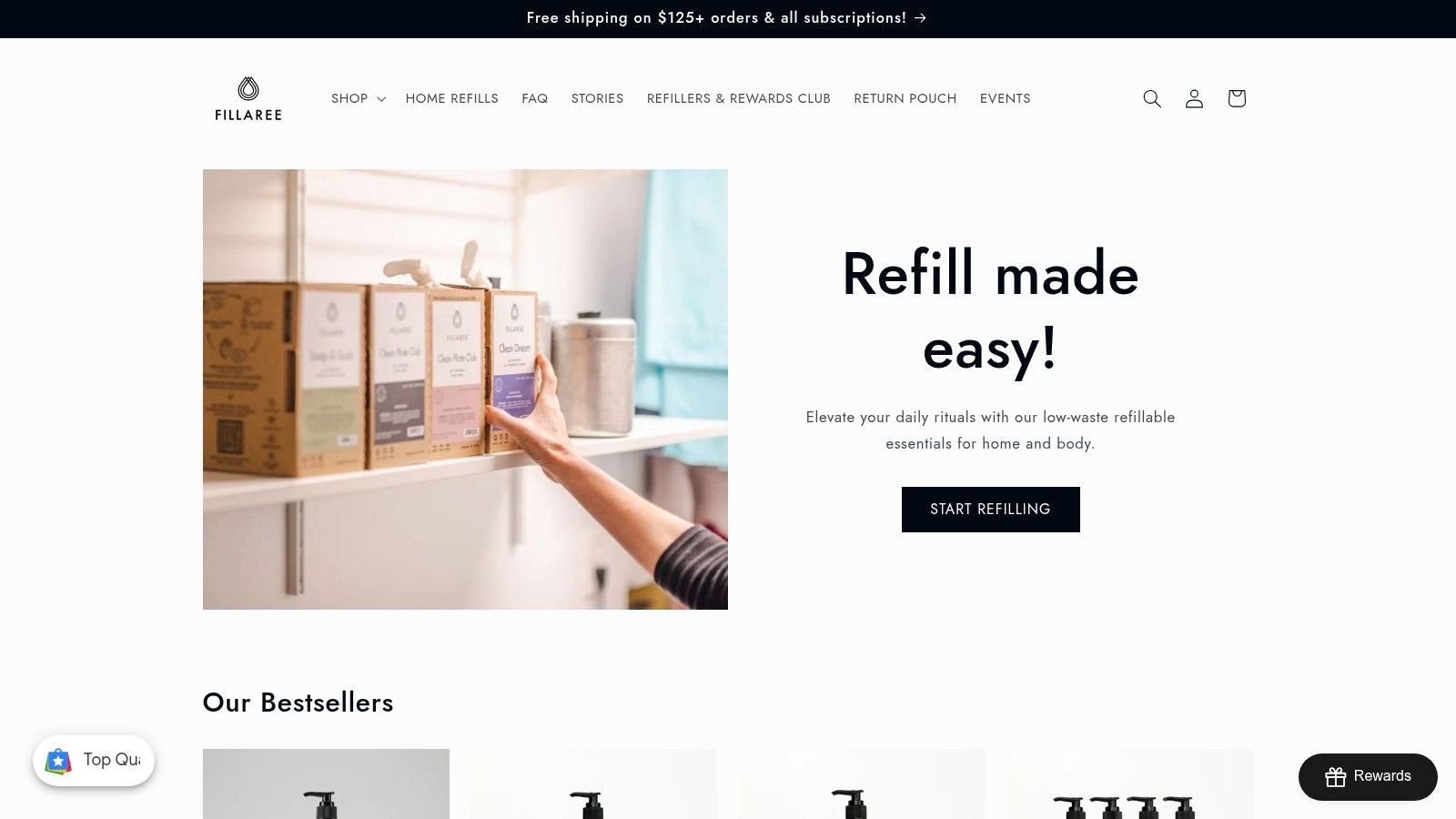
Supporting good companies who care means looking beyond the product's ingredients. A women-owned manufacturer such as Fillaree offers a practical example of how ownership, local production, refill access, and community participation can connect within one business model. The point isn't to treat ownership as proof that every product is automatically better. It's to recognize that your purchase can support the kind of company structure and community investment you want to see more often.
The same principle applies to any brand. Read its policies, inspect its refill process, and judge whether the system makes low-waste behavior easy rather than placing every responsibility on the customer. Aligned values become credible when the company turns them into repeatable operations.
Frequently Asked Questions About Concentrates
Does a concentrate expire?
Check the product's packaging for its shelf-life guidance, batch information, and storage requirements. Keep the undiluted formula sealed, away from excessive heat and direct sunlight, and in its original container. Once you dilute it, treat the prepared solution according to the label rather than assuming it has the same shelf life as the concentrate.
Can hard water cause residue?
It can. Minerals in water may combine with cleaning ingredients or remain behind as deposits, especially on glossy tile, glassy finishes, or surfaces that already show streaks. If your floor looks hazy after cleaning, test a smaller batch with filtered or distilled water, use the label's recommended dilution, rinse the mop thoroughly, and buff the surface dry.
Don't solve mineral residue by adding more concentrate. More product can create a second film on top of the first problem. A clean mop head and a correctly diluted batch usually matter more than a stronger mixture.
Is a concentrate safe for every wood floor?
No. Sealed or coated wood may tolerate a properly diluted neutral cleaner, but oil-finished and wax-finished wood can react differently. One FAQ source notes that concentrates may be suitable for laminate and varnished hardwood but not wax- or oil-finished wood, and it emphasizes following the flooring finish's care requirements (hard-floor cleaning and concentrate FAQ).
Test an inconspicuous area first, use minimal moisture, and follow the flooring manufacturer's instructions. If the finish is unknown, choose the most conservative method, a barely damp mop and a product specifically approved for that surface.
Can every cleaner be diluted?
No. Some ready-to-use products aren't intended for dilution unless the label explicitly identifies them as concentrates. Diluting the wrong product can change its performance, preservation, foaming, or surface behavior.
A concentrate fits a low-waste routine best when the manufacturer provides precise instructions and the packaging system supports reuse. That combination gives you control without asking you to guess.
Fillaree offers refillable, low-waste home essentials, including cleaners, through refill stations, home bulk refills, and a circular packaging approach. Visit Fillaree to explore options that make careful floor care part of a practical system supporting a women-owned company and a more responsible household economy.