
Fragrance Free Soap: A Practical Guide for Sensitive Skin
You've just finished a workout, your hands feel dry and itchy, and the soap at the sink leaves behind a strong floral smell. You turn the bar over, looking for a simple answer. Is “unscented” the same as fragrance free? And can a soap be gentle on reactive skin without creating another plastic bottle?
The short answer is no, those labels aren't interchangeable. A good fragrance free soap should remove intentionally added scent, while a thoughtful low-waste choice should also offer a formula and refill system that suit your skin and your household. The details are on the ingredient list, the packaging, and the company's explanation of both.
Table of Contents
- What Fragrance Free Soap Actually Means
- Why Fragrance Triggers Sensitive Skin
- Fragrance Free Does Not Always Mean Gentle
- How to Read the Label Like a Formulator
- Three Real Fragrance Free Soaps Compared
- Choosing a Low Waste Fragrance Free Soap
- Refill Habits and Common Questions
- A Simple Way to Put It All Together
What Fragrance Free Soap Actually Means
Fragrance free soap is a cleanser made without intentionally added scent ingredients. That excludes synthetic perfume oils, essential oils added for aroma, and masking fragrances designed to cover the natural smell of raw materials.
A bar may still have a faint scent. Olive oil, shea butter, tallow, and other base ingredients have their own aromas, and those natural smells don't automatically mean perfume has been added. The useful question is whether the manufacturer deliberately included aromatic ingredients to make the product smell a certain way.
Practical rule: A mild raw-material aroma can be compatible with fragrance-free labeling. “Parfum,” “fragrance,” perfume blends, and essential oils added for scent deserve closer attention.
The bigger source of confusion is unscented. An unscented product may contain fragrance ingredients that neutralize or hide the odor of the formula without creating an obvious perfume smell. In the United States, brands generally don't have to disclose every individual component inside the umbrella term “fragrance” or “parfum,” so the wording alone doesn't tell you everything a reactive shopper needs to know.
In the European Union, disclosure rules require individual labeling of 26 fragrance allergens when they exceed 0.01% in rinse-off products, as explained by this overview of fragrance-free labeling. That requirement helps consumers identify named allergens, but it still makes the product description and full ingredient list worth reading together.
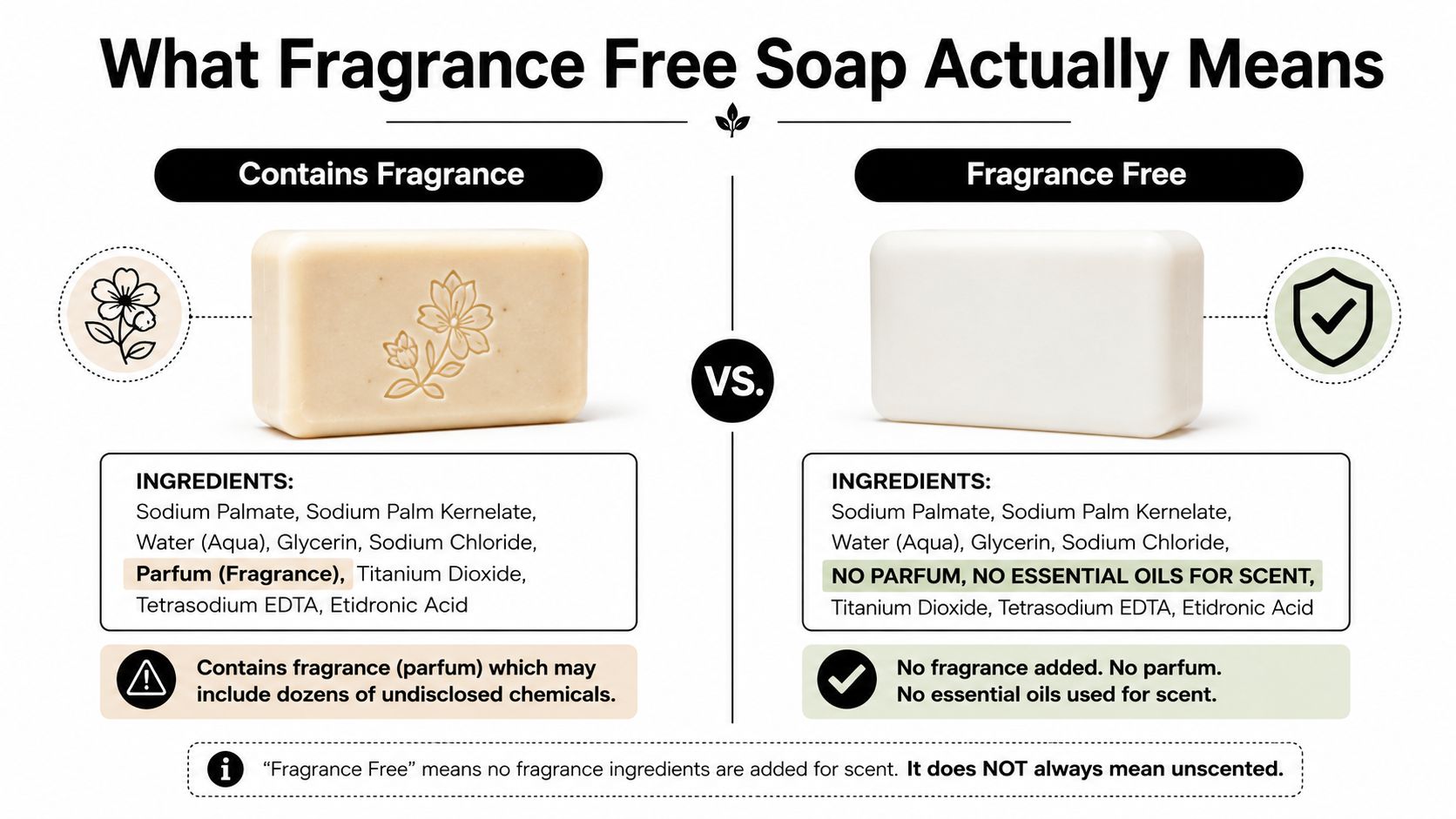
At the sink, use a simple sequence:
- Look for fragrance free, not only unscented.
- Scan for parfum, fragrance, perfume, and essential oils.
- Check whether the brand explains natural aroma from its base ingredients.
- Keep the packaging or product page available if you develop a reaction.
That approach won't predict every skin response, but it gives you a more reliable starting point than scent alone.
Why Fragrance Triggers Sensitive Skin
Fragrance matters because the skin can treat certain scent molecules as allergens. After sensitization, the immune system may recognize an ingredient during a later exposure and produce allergic contact dermatitis. The result can be itching, redness, dryness, or a rash that appears after the product has already been rinsed away.
European Commission reviews estimate that fragrance contact allergy affects about 1% to 3% of the general population and around 16% of people with eczema, according to the European Commission scientific review. A later review found 4.5% prevalence in Europe when broader fragrance markers were used in general-population patch testing, so the measured figure depends partly on which allergens and testing methods researchers use.
| Statistic | Figure |
|---|---|
| Fragrance contact allergy in the general population | About 1% to 3% |
| Fragrance sensitization among eczema patients | Around 16% |
| Broader fragrance-marker prevalence in Europe | 4.5% |
| Participants reacting to at least one of 21 analyzed allergens in one daily-life exposure study | 7.2% |
The clinical literature gives another reason to take the label seriously. A review found positive patch-test reactions to fragrance mix in about 10% of tested eczema patients, while general-population sensitization to fragrance-mix ingredients ranged from 1.7% to 4.1% in the studies examined. The same review reported that known fragrance allergens appeared in 15% to 100% of cosmetic products studied, including soaps and deodorants, as described in the clinical review on fragrance allergy.
Soap also creates repeated exposure. A person may encounter scent ingredients in hand cleanser, body wash, lotion, shampoo, laundry detergent, and other products throughout the day. Removing fragrance from one product won't resolve every possible trigger, but hand soap is a practical place to start because it touches the skin frequently.
A patch test is the safest way to investigate a persistent or recurring rash. A dermatologist or allergy specialist can test specific ingredients rather than asking you to guess from marketing language.
Fragrance Free Does Not Always Mean Gentle
Removing perfume is a strong first filter, but it isn't a complete safety verdict. A fragrance free soap can still contain cleansing agents, preservatives, dyes, or a traditional alkaline bar base that leaves reactive skin tight and uncomfortable.
Surfactants do the cleaning, and their behavior matters. Sodium lauryl sulfate, often shortened to SLS, is a familiar detergent that can feel powerful and foamy, but some sensitive users find it drying or irritating. The formulation guidance on hand soap ingredients recommends screening beyond scent and considering sulfates, dyes, alcohol, and the overall length of the ingredient list.
A bar soap's chemistry also differs from a milder soap-free cleanser. Traditional alkaline bases can disturb the skin's surface environment, while stronger detergents may remove more of the oils that help the barrier hold moisture. If your hands feel squeaky, tight, or rough immediately after washing, the formula may be too aggressive even if it contains no fragrance.
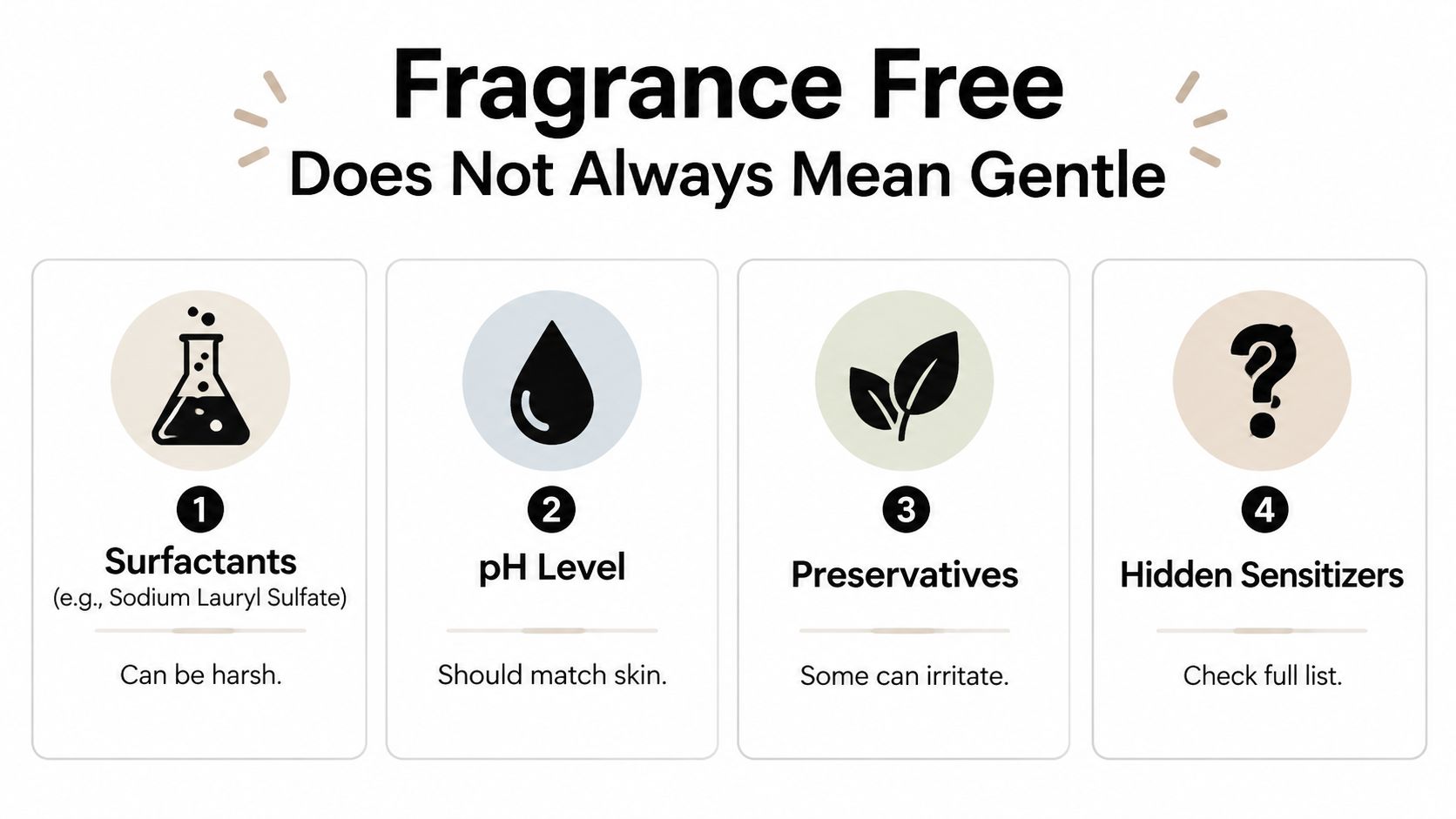
Check these areas before buying:
- Cleansers: Look for the surfactant system, not just the front label. Sodium lauryl sulfate may be less comfortable for some reactive users.
- Preservatives: Preservatives protect liquid products from contamination, but certain systems can irritate or sensitize particular people.
- Colorants: Artificial dyes add appearance, not washing performance.
- Other sensitizers: Essential oils, botanical extracts, and “natural” aromatic ingredients can still cause problems.
A fragrance free label also doesn't guarantee that a product suits babies, eczema-prone skin, or everyone in a household. This guide to fragrance-free bar soap for sensitive skin is useful as a reminder to assess the whole formulation.
Start with fragrance removal, then evaluate cleansing strength, preservation, color, texture, and your own response. If the skin problem continues, stop experimenting and ask a clinician for individualized advice.
How to Read the Label Like a Formulator
Treat the ingredient list as a map. You don't need to memorize every INCI name. You need to identify what cleans, what supports the after-wash feel, what preserves the formula, and what might be unnecessary for your skin.
Start with the cleaning system
Surfactants usually appear near the beginning because they make up much of a liquid cleanser. Examples include sodium cocoyl isethionate, decyl glucoside, coco-glucoside, and sodium lauroyl sarcosinate. These names don't provide a complete irritation forecast on their own, but they show you which ingredients are responsible for lifting oils and debris.
Bar formulas may list sodium palmate, sodium oleate, sodium stearate, or sodium lauroyl isethionate. Their presence tells you more about the bar's structure and cleansing style than the word “sensitive” on the carton.
Then look for comfort ingredients
Glycerin is a humectant that helps attract water. Shea butter, squalane, and certain fatty ingredients can improve the skin feel after washing. Colloidal oatmeal, allantoin, panthenol, ceramides, and niacinamide are additions some shoppers may want to consider, although any ingredient can bother an individual user.
Preservatives often appear farther down the list because the formula needs less of them than its main cleansing ingredients. Potassium sorbate and phenoxyethanol are examples found in personal-care formulas. Their presence doesn't automatically make a product unsuitable, but a person with a known preservative allergy should follow professional guidance.
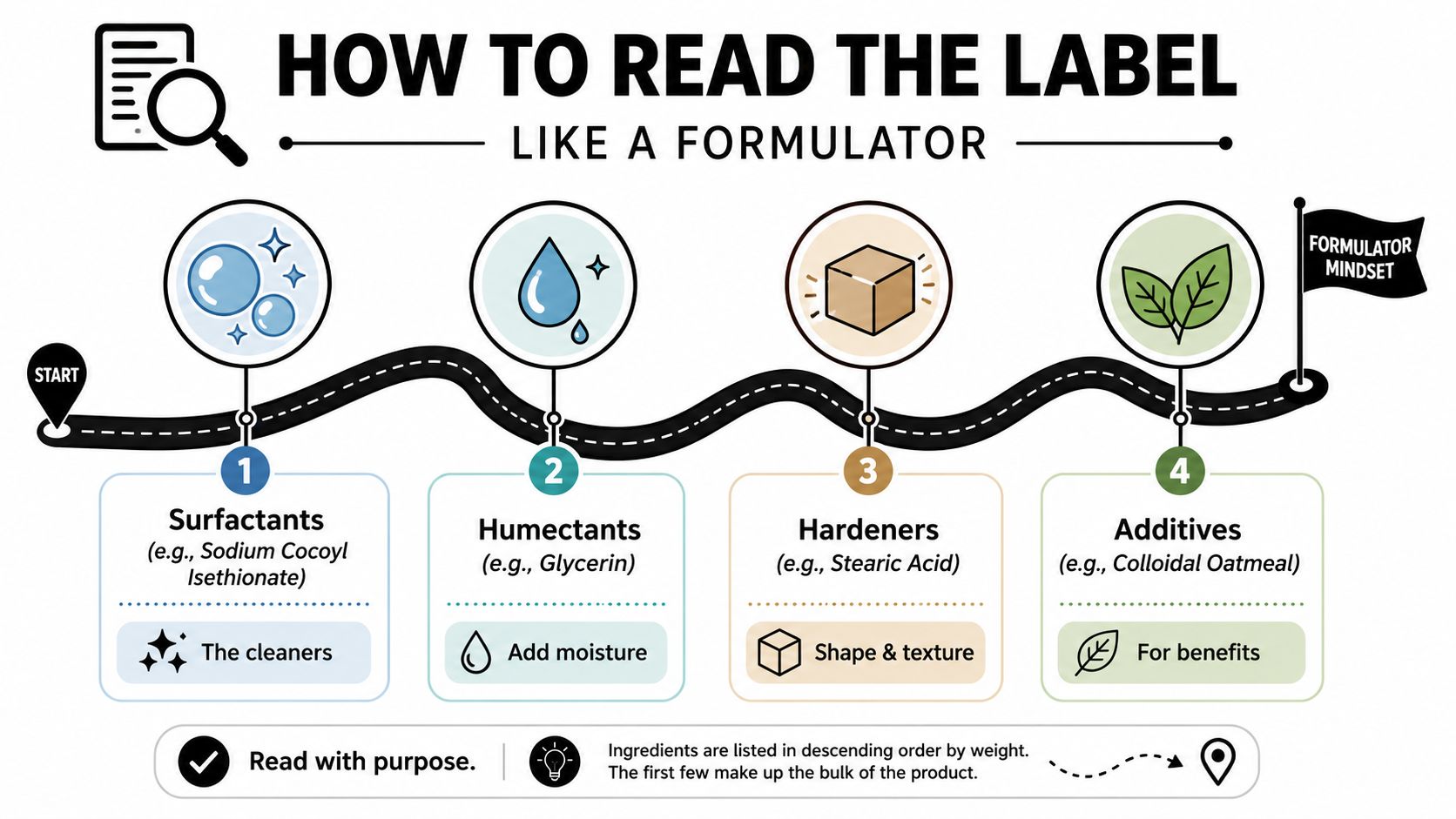
Keep this phone-friendly checklist:
- Scent: No parfum, fragrance, perfume, or essential oils added for aroma.
- Cleansers: Identify the surfactants and consider whether your skin tolerates them.
- Support ingredients: Look for glycerin, colloidal oatmeal, ceramides, or other desired additions.
- Potential irritants: Screen for SLS, methylisothiazolinone, dyes, and formaldehyde-releasing preservatives if those concern you.
- Order: Ingredients near the top generally make up more of the formula than ingredients near the bottom, though labeling rules have exceptions.
- Patch test: Try a small area before making the product your everyday cleanser.
A fragrance-free routine often includes more than soap. If washing leaves your skin dry, you may also want a fragrance free moisturizer for sensitive skin, chosen with the same label-reading care.
Three Real Fragrance Free Soaps Compared
Real formulas make the distinction clearer than broad claims. Ecover ZERO Hand Soap is a liquid example with water, sodium lauryl sulfate, coco-glucoside, lauryl glucoside, sodium chloride, sodium lauroyl sarcosinate, sodium benzoate, and citric acid, according to the manufacturer's ingredient list. It shows why fragrance free doesn't mean ingredient free. The formula contains multiple cleansers and a preservative system.
The up&up Sensitive Skin Bar Soap and Dove Beauty Sensitive Skin Moisturizing Fragrance-Free Beauty Bar are both bar-format examples. Their published ingredient lists contain cleansing and structural ingredients such as sodium lauroyl isethionate, stearic acid, sodium oleate, sodium stearate, glycerin, and cocamidopropyl betaine. The up&up product listing identifies an 8-pack of 3.75 oz bars, while the Dove listing identifies a 2-pack of 3.75 oz bars.
| Formula | Surfactant System | Key Emollients | Added Actives | Preservatives | Packaging | Price Per Wash |
|---|---|---|---|---|---|---|
| Ecover ZERO Hand Soap | Sodium lauryl sulfate, coco-glucoside, lauryl glucoside, sodium lauroyl sarcosinate | Not identified as a dedicated emollient system in the listed ingredients | None highlighted in the listed formula | Sodium benzoate | Liquid bottle | Not provided |
| up&up Sensitive Skin Bar Soap | Sodium lauroyl isethionate, sodium oleate, sodium laurate, cocamidopropyl betaine | Glycerin, stearic acid | None highlighted in the listed ingredients | Not separately identified in the listed ingredients | Bar carton | Not provided |
| Dove Beauty Sensitive Skin Moisturizing Fragrance-Free Beauty Bar | Sodium lauroyl isethionate, sodium oleate, sodium laurate, cocamidopropyl betaine | Glycerin, stearic acid | None highlighted in the listed ingredients | Not separately identified in the listed ingredients | Bar carton | Not provided |
These examples fit different sink setups. A liquid bottle may suit a shared handwashing station, while a bar eliminates a pump container. A refillable liquid system can reduce packaging waste when the household already has a dependable refill route. For readers exploring adjacent ingredient topics, this overview of THC-free CBD soap for skincare offers a separate product category to evaluate, but CBD terminology doesn't replace fragrance and irritant screening.
For a refill-oriented liquid option, compare the formula and container system together through unscented liquid Castile soap. The product format matters, but the ingredient list still decides whether the cleanser suits your hands.
Choosing a Low Waste Fragrance Free Soap
Skin sensitivity and sustainability can support the same decision. A shorter, clearly disclosed formula is easier to screen, and a reusable container can reduce the number of single-use packages moving through your home. Neither benefit excuses vague labeling, so assess the product and the refill model separately.
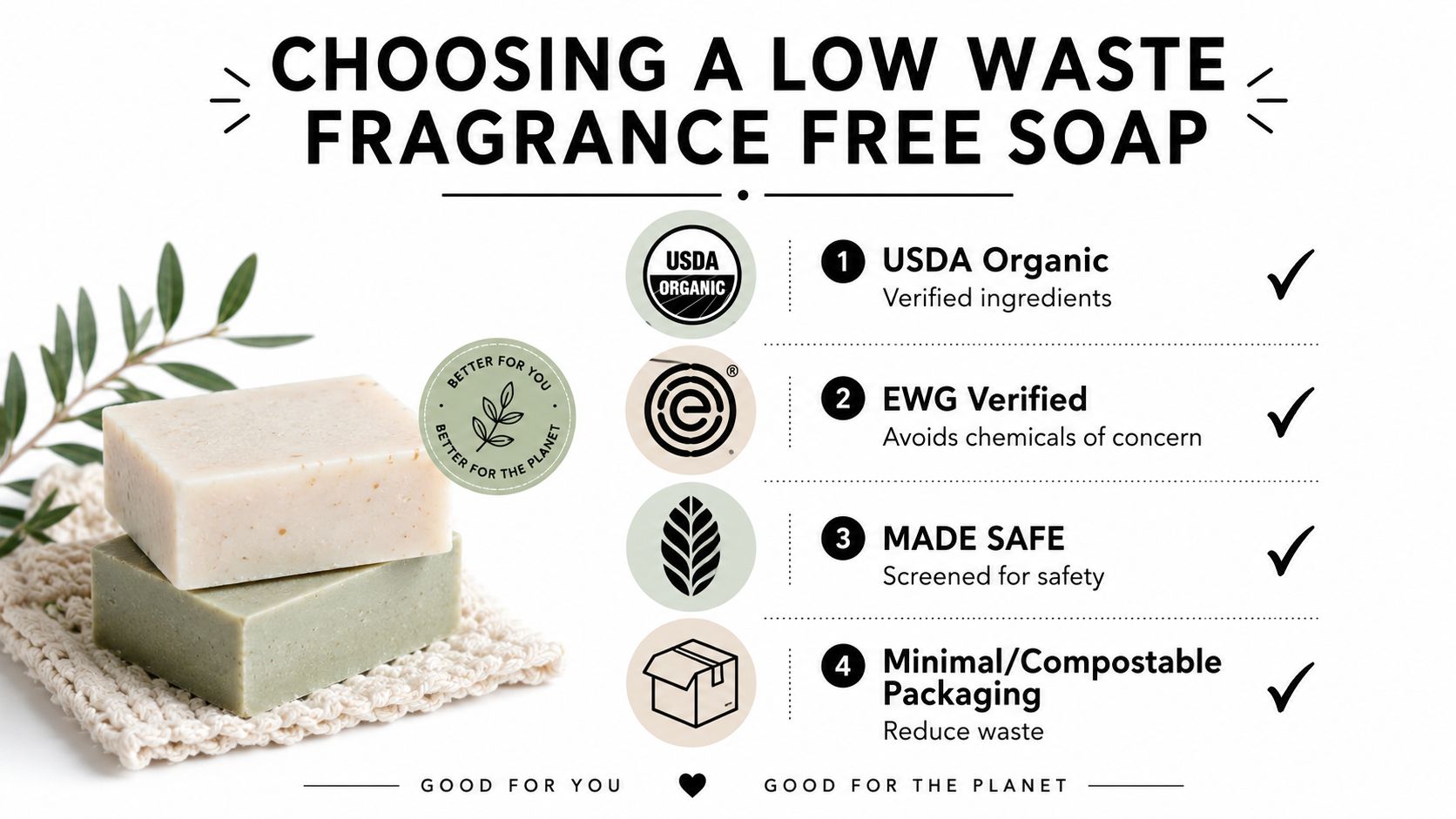
Start with certifications, but read what each one covers:
- USDA Organic: Addresses organic production and ingredient standards where the certification applies. It doesn't automatically mean fragrance free.
- EWG Verified: Signals that the product meets the program's ingredient and transparency requirements. It isn't a universal guarantee that every user will tolerate the formula.
- MADE SAFE: Screens products for certain chemicals of concern under its program criteria.
- Leaping Bunny: Addresses cruelty-free supply-chain commitments, not skin gentleness or packaging waste.
The EWG overview of fragrance-free soap for sensitive skin can help explain why a certification or ingredient screen should complement, rather than replace, label reading.
Match the format to your refill access
A bar can avoid a liquid bottle altogether. Tablets reduce the need to ship water, while concentrated refills in aluminum or glass can work for households that already reuse a dispenser. Solid shampoo-style blocks show the same packaging logic, although they need their own ingredient and scalp assessment.
Look for a company that explains what happens after the first purchase. Useful details include returnable empties, local refill-shop partnerships, home-delivered concentrates, and packaging instructions you can follow. A large bottle isn't automatically a refill program. A subscription that sends new containers without a return pathway may shift the waste problem.
Watch for greenwashing signals:
- Vague scent language: “Plant-based fragrance” still indicates added aroma.
- Botanical camouflage: Lavender, tea tree, citrus aurantium, and similar extracts may matter to scent-sensitive users.
- Unclear refills: A brand that only offers recurring deliveries, with no return or reuse system, deserves closer questions.
- Single-claim packaging: “Natural” or “eco” says little without ingredients, material details, and end-of-life guidance.
If you have eczema, prioritize the formula first. If your household uses a great deal of hand soap, refill access may carry more practical value. If local stations are unavailable, choose a durable dispenser and a delivery format that minimizes new packaging.
Refill Habits and Common Questions
A refill routine is simple when the logistics are clear. Bring a clean bottle to a refill station, follow the station's weighing process, and pay for the amount dispensed. Some households instead order concentrated or bulk refills for home use, while others use a subscription to avoid running out.
A genuine refill system should explain the container loop. Does the brand refill your bottle, sell concentrate for an existing bottle, accept empties, or only ship a larger replacement? Those are different models, and they create different habits.
For a fragrance-sensitive household, start with the label before committing to a large quantity. Unscented hand soap refill can be a useful format to investigate if you want a refillable handwashing setup.
Common questions at the sink
Will fragrance free soap foam and clean well?
Yes, a product can clean without perfume. Foam depends on the surfactant system and dispenser, not on fragrance. A lower-foam cleanser can still remove everyday soil when used with water and thorough hand friction.
Is it suitable for babies or eczema-prone skin?
Fragrance removal may reduce one common trigger, but it doesn't guarantee suitability. Check the rest of the formula, avoid introducing several new products at once, and seek medical advice for a baby's rash or persistent eczema.
How long will a refill bottle last?
There isn't one universal answer. Use depends on dispenser output, household size, washing frequency, and whether the soap is used for hands, body, or other tasks. Track how long your current bottle lasts before choosing a refill volume.
How can I identify a real refill program?
Look for specific instructions about bringing containers, receiving refills, returning packaging, or reusing delivery materials. If the brand only calls a larger disposable bottle a “refill,” the claim may describe bulk packaging rather than a circular system.
The most practical combination is a formula you tolerate and a container you'll reuse consistently. Sustainability works through repetition, not through a package you buy once and abandon.
A Simple Way to Put It All Together
At the sink, the decision can stay small. Choose a fragrance free soap with a readable ingredient list, test it before making it your only cleanser, and notice whether your hands feel comfortable after washing rather than judging the product by its lather or scent.
Then choose a format that fits your actual routine. A bar may work for a small household, while a reusable dispenser and refill supply may suit a busy kitchen or shared bathroom. The gentlest option on paper won't reduce waste if the container system is too inconvenient to maintain.
Use this loop:
- Filter out added scent.
- Review the surfactants, preservatives, dyes, and support ingredients.
- Pick a bar, concentrate, or refill that matches your access and usage.
- Reuse the container and reassess your skin.
You don't need a perfect bathroom cabinet. You need one dependable choice repeated each time the bottle is empty or the bar is finished. Gentle skin care and a lighter packaging footprint can begin with the same straightforward habit.
Fillaree offers unscented refillable essentials for home and body, with refill options through partner stations, its Durham storefront, and home delivery formats. Visit Fillaree to explore a fragrance-conscious soap routine that keeps label clarity and container reuse together.