

Hand Soap Dispenser for Kitchen Sink Compared and Chosen
You're standing at the sink with a knife in one hand, dish scraps in the other, and the soap bottle is doing that annoying little slide toward the drain again. The pump sticks, the bottle leaves a ring, and every refill means fishing under the cabinet for something you should've topped off last week. A hand soap dispenser for kitchen sink stops being decor in that moment, it becomes part of the workflow.
| Type | Best use case | Refill access | Space impact |
|---|---|---|---|
| Countertop pump | Renters, quick swaps, low fuss | Easy, obvious | Takes visible counter space |
| Built-in recessed | Permanent setups, cleaner look | Top-fill or under-sink, depending on model | Keeps the deck clear |
| Wall-mounted | Tight counters, utility-minded kitchens | Usually simple if mounted well | Frees sink deck space |
| Touchless | High-traffic hands-free use | Varies by battery or power setup | Keeps hands off the pump |
If you're choosing a sink setup the way you'd choose a faucet or countertop, the details matter. Even design choices around the kitchen, like the feel of natural stone wardrobe designs, tend to work best when they support how the room gets used, not just how it photographs. Soap should be treated the same way.
Table of Contents
- Why Your Kitchen Sink Deserves a Better Soap Setup
- Hand Soap Dispenser for Kitchen Sink Types at a Glance
- Materials and Build Quality That Last by the Sink
- Installation and Sink Compatibility Made Simple
- Refill Convenience Clog Resistance and Capacity Choices
- Sustainability and Values Aligned Choices for Refillers
- Choosing the Right Dispenser for Your Kitchen and Habits
Why Your Kitchen Sink Deserves a Better Soap Setup
The wrong dispenser shows up in small, daily annoyances. It drips on the counter after every meal, tips over when someone reaches for the sponge, and turns a simple hand wash into another thing to wipe down. In a real kitchen, especially one that sees cooking, baking, and constant cleanup, the soap setup needs to keep up without asking for attention.
A better dispenser changes the rhythm at the sink. A stable pump, a built-in reservoir, or a well-placed wall unit keeps the area calmer and makes the handoff between rinsing, scrubbing, and drying feel smoother. That matters whether you're washing produce, dealing with sticky dough, or cleaning up after a family dinner.
The old story about soap has its own long arc. A U.S. patent for liquid soap dates back to 1865 with William Sheppard, and liquid soap didn't become common in homes until much later, when Minnetonka Corporation brought liquid soap hand pumps into the home market in 1980. The first automatic soap dispenser followed in 1989, which makes today's kitchen sink dispensers part of a long line of practical improvements rather than a passing trend (evolution of soap dispensers).
The best dispenser is the one that disappears into your routine.
For a kitchen that's built around everyday use, the soap choice should match the rest of the room. If your counters already lean clean and intentional, a dispenser that supports that feeling will help more than another object competing for attention. That's the test, not whether it looks nice for five minutes after installation.
Hand Soap Dispenser for Kitchen Sink Types at a Glance
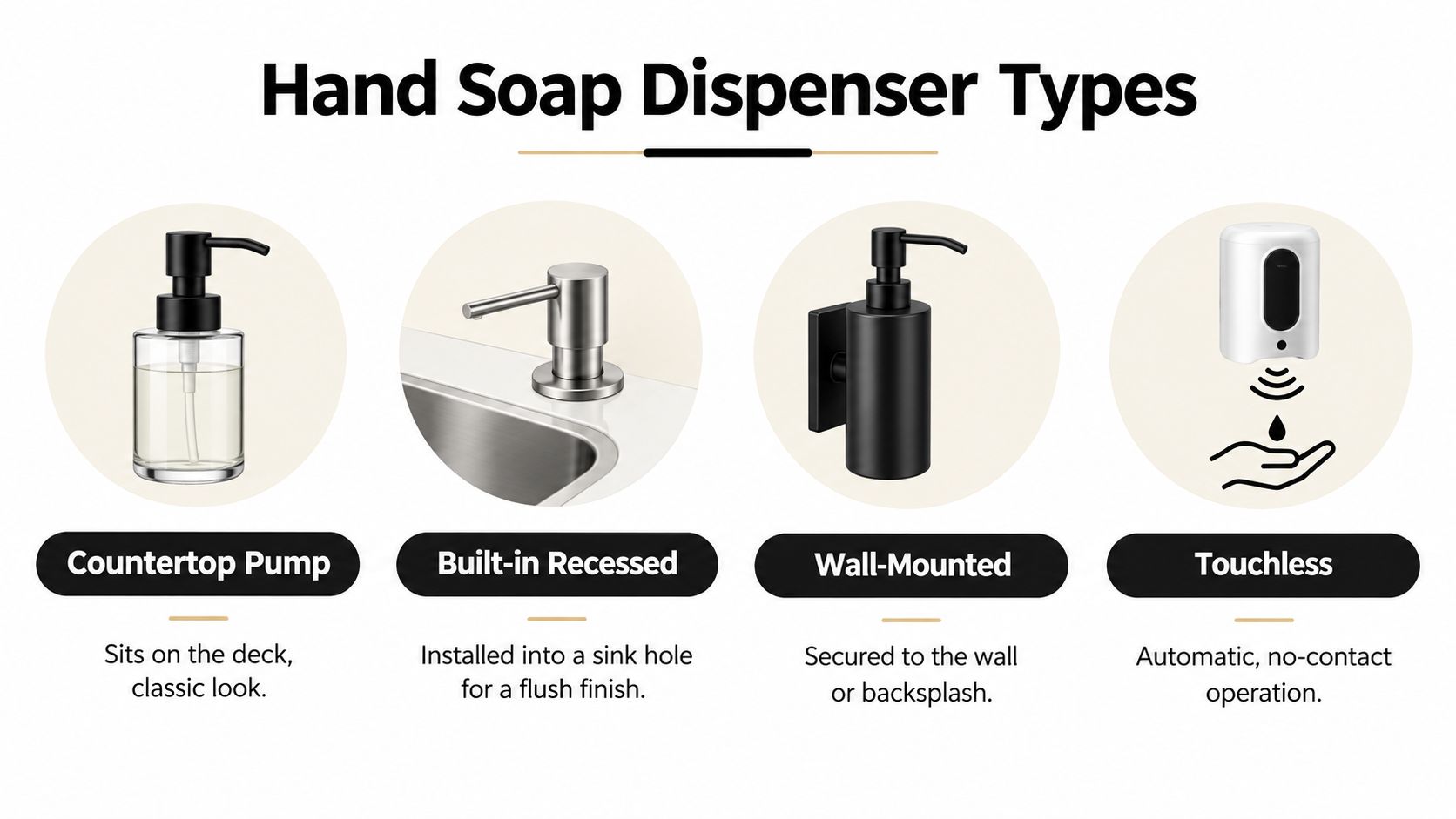
A kitchen soap dispenser usually falls into one of four families, and the right choice depends on how much counter space you have, how often you refill, and whether you want the soap visible or tucked away. The differences are simple once you separate them by how they live around the sink rather than by brand marketing.
A countertop pump is the easiest to understand. It sits on the deck, moves when you move it, and fits renters or anyone who wants to switch soaps without tools. It's the least committed option, which is a strength if you like flexibility.
A built-in recessed dispenser is the tidy one. It mounts through the sink deck or counter, keeps the bottle hidden, and works well when you want a flush, integrated look. For a lot of kitchens, this is the closest thing to “set it and forget it,” as long as the hole, deck thickness, and under-sink space cooperate.
Wall-mounted and touchless units solve different problems. Wall-mounted dispensers free up sink deck space and can work in utility-minded kitchens. Touchless dispensers cut the hand-to-pump contact, which appeals in busy households, though they usually add another layer of maintenance through batteries, charging, or sensor reliability.
Short version: countertop pumps are easiest, built-ins are cleanest, wall-mounted units save deck space, and touchless dispensers reduce contact.
A good design resource can help you think through that fit before you buy, especially if you're choosing alongside other fixtures. The Cabinet Coach's design tips for choosing the right kitchen or bathroom fixture make a useful companion read when you're weighing form against daily use.
For anyone building a low-waste refill routine, the setup matters too. A reusable bottle such as Fillaree's reusable hand soap bottle makes the most sense when the dispenser you choose is easy to refill and easy to live with.
Materials and Build Quality That Last by the Sink
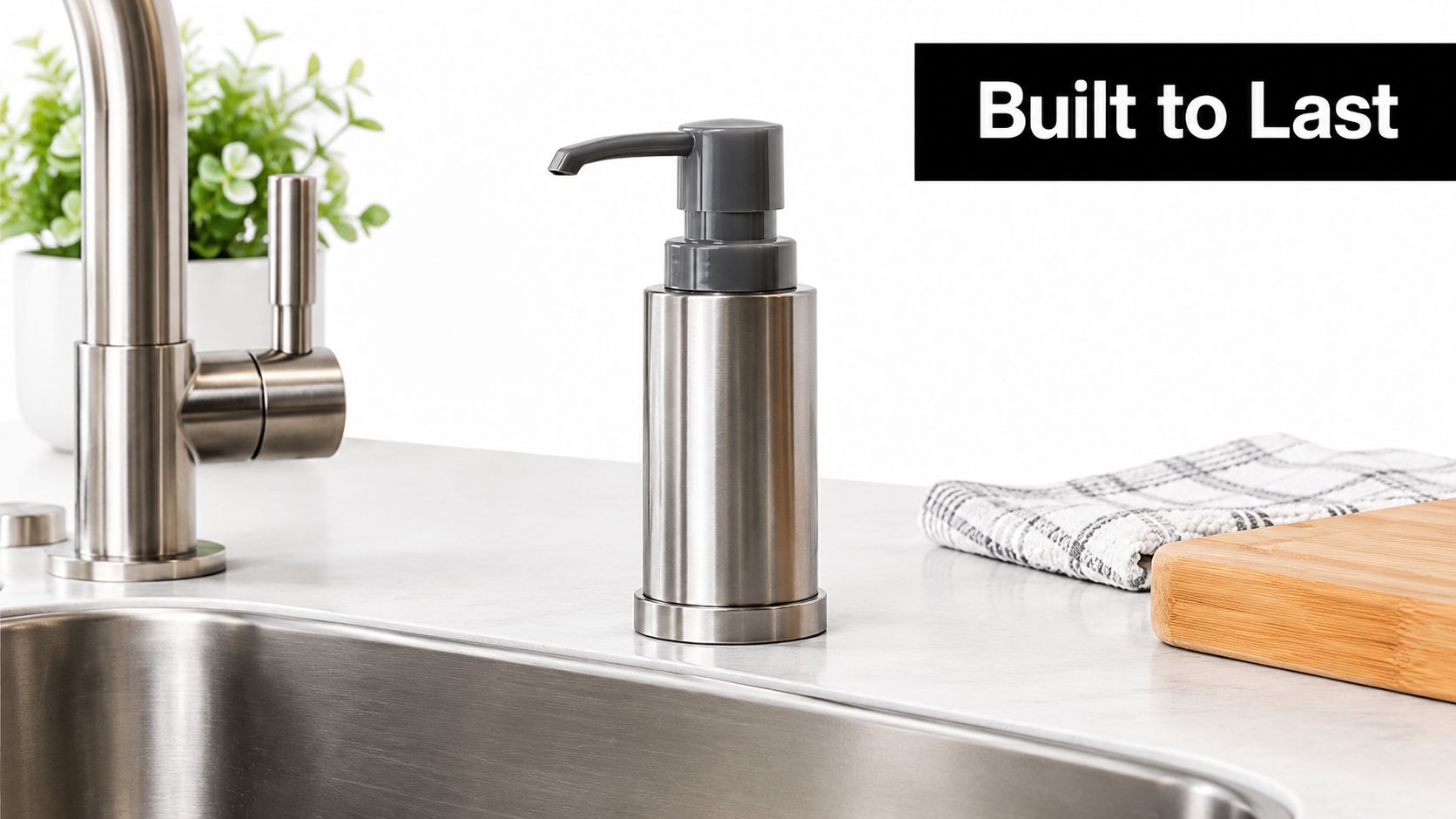
A dispenser beside the sink faces humidity, splashes, soap residue, and repeated pressing every day. Build quality therefore depends on the pump mechanism as much as the finish. ABS/plastic, 304 stainless steel, and hybrid construction each handle those conditions differently.
Plastic pump heads can be a sensible choice where corrosion is a concern. Soap and moisture may wear metal moving parts, while plastic avoids rust in those components. The trade-off is feel and longevity. A dispenser can keep its appearance while the internal spring, seal, or piston becomes stiff because it was not designed for wet, repetitive use.
304 stainless steel offers better rust resistance than lower-grade metals and gives the dispenser a more substantial feel. It suits a busy sink where the exterior is regularly splashed and wiped. Check the specification carefully, though. A stainless shell does not prove that the spring, shaft, or other internal parts use stainless steel, and a weak mechanism will still clog or fail early.
Hybrid construction often balances these concerns well. A stainless exterior provides a wipeable, rust-resistant surface, while PE or ABS internals can keep the moving parts less vulnerable to corrosion. For refillers using thicker soap or concentrate, inspect the pump path and opening as closely as the body material. Easy cleaning and a replaceable or serviceable pump can matter more than a heavy casing (material comparison overview).
Practical rule: judge the pump first, then the bottle and outer finish. A polished dispenser cannot compensate for a narrow, unreliable pump.
A useful durability signal is a published cycle rating. One kitchen dispenser pump is rated for more than 50,000 press cycles, or roughly 13+ years at about 10 dispenses per day (product listing benchmark). Treat that as a benchmark, not a promise. Soap thickness, cleaning habits, water exposure, and replacement-part availability will affect real service life.
For a lightly used sink, a well-made plastic or hybrid unit may be sufficient. A family kitchen or shared space usually justifies a sturdier hybrid or full stainless model. Low-waste use also depends on keeping the pump working, since a durable bottle only reduces waste when it remains convenient to refill rather than getting discarded after a clog.
Installation and Sink Compatibility Made Simple
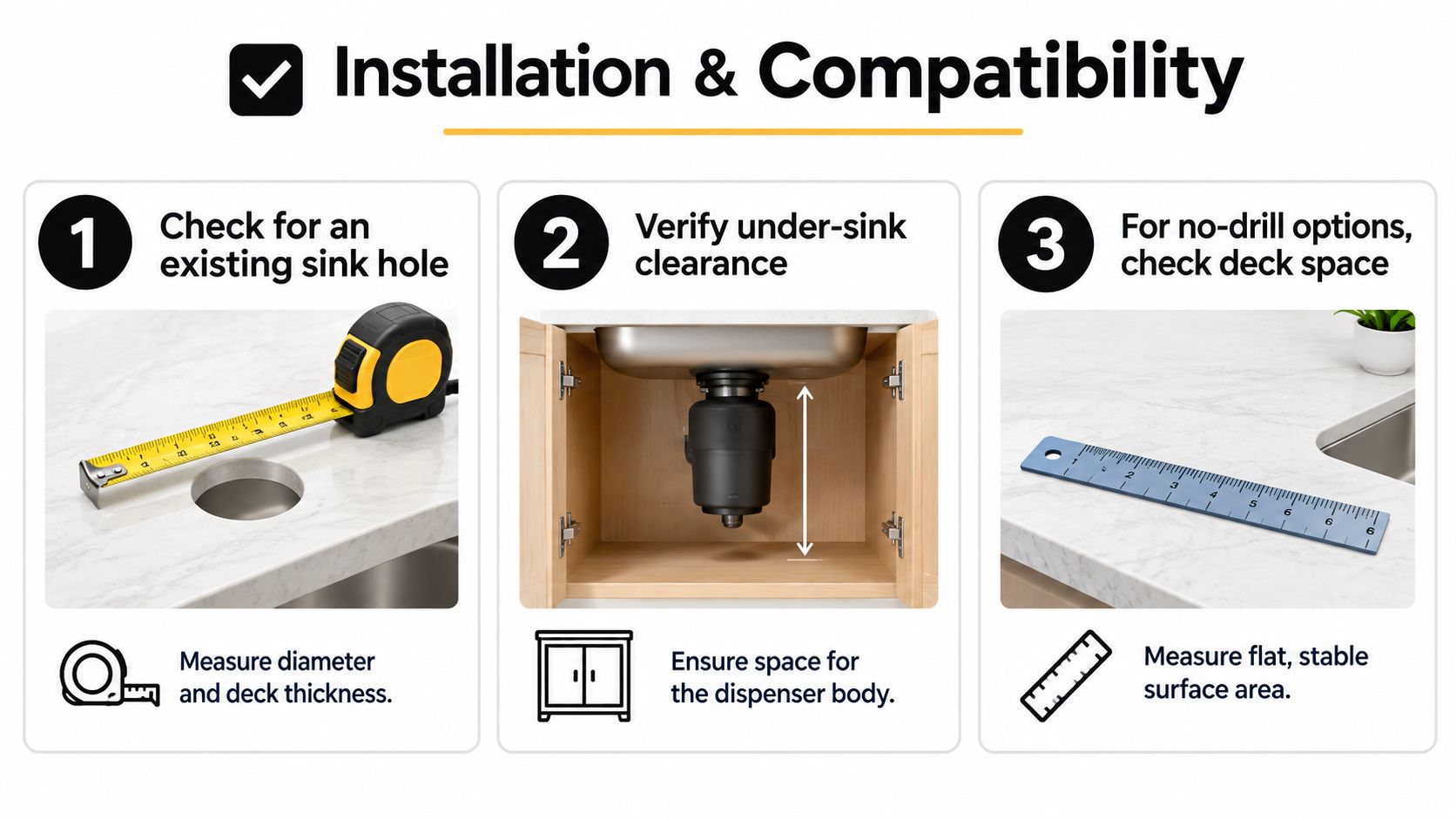
Before choosing a hand soap dispenser for your kitchen sink, check the space it must occupy. A well-made pump can still become a daily nuisance if the sink hole, worktop, or cabinet does not suit it. A quick measurement prevents awkward fitting and makes refilling more practical.
What to measure first
- Existing hole size. Measure the opening and deck thickness rather than assuming a standard fit. Built-in dispensers often suit common sink holes, but worktops vary, especially around older or non-standard sinks.
- Under-sink clearance. Check the space below the deck if the reservoir hangs underneath. Plumbing, the trap, cleaning supplies, or a storage bin can leave too little room for the bottle or its connections.
- A stable surface for no-drill options. Countertop and some wall-mounted dispensers need a firm location that will not wobble, slide, or crowd the tap. Keep the pump within easy reach, too. A dispenser that requires an awkward stretch is less likely to stay in regular use.
Top-fill designs reduce cabinet access and suit busy kitchens. Integrated soap dispensers can often be filled from above and retrofitted to many sinks, so a low reservoir does not turn into a crawling exercise (top-fill retrofit guidance). For Fillaree-style refillers, that access also makes it easier to use refill liquid consistently instead of reaching for a disposable replacement bottle.
If a dispenser makes refilling harder, you'll stop using it the way you meant to.
Extension-tube systems offer another setup choice. They draw soap from a larger container stored under the sink, reducing frequent top-ups at the pump. That can cut packaging waste, but only if the tube reaches the container without sharp bends and remains accessible for cleaning. Check the connector size and routing before installation.
If you like visual walkthroughs, the embedded guide below shows the fit check process in a simple way.
Measure first, favour top-fill access where possible, and confirm the cabinet layout before committing to a built-in model. The right fit keeps refills easy, reduces clog-related frustration, and supports lower-waste habits.
Refill Convenience Clog Resistance and Capacity Choices
A dispenser earns its place beside the sink through the refill routine. If the soap is too thick, the opening is awkward, or the reservoir runs dry quickly, a smart-looking pump becomes a daily irritation. Judge capacity alongside access, formula compatibility, and how easily the pump can be cleared.
| Feature | Typical Spec | What It Means Daily |
|---|---|---|
| Built-in reservoir | Around 17 oz | Fewer refills than a small countertop bottle |
| Extension tube | About 47 inches | Pulls soap from a bulk container under the sink |
| Refill access | Top-fill or under-sink | Top-fill is faster and less annoying |
Standard liquid hand soap and dish soap generally suit these dispensers. Thick gels, gritty scrubs, and heavily loaded formulas can restrict the pump, even when the dispenser itself is well made. Check the soap's consistency before buying, and follow the manufacturer's compatibility guidance (compatibility guidance).
What works in everyday kitchens
Top-fill access saves time because it avoids repeated trips into the cabinet. That matters in a busy kitchen, particularly when several people use the sink throughout the day. A larger reservoir reduces top-ups, but only if the opening is wide enough for clean pouring and easy enough to use without putting it off.
Extension-tube systems suit households that buy soap in bulk. They draw from a larger container beneath the sink, so the pump needs less frequent attention. The trade-off is maintenance: the tube must stay free of sharp bends, and both the connector and container need to remain reachable for rinsing or replacement.
For Fillaree-style refillers, choose a reusable pump bottle that you are happy to keep topped up. A refill habit works when the steps are simple, the soap flows reliably, and the container does not create extra clutter. The practical sequence for how to refill a foam soap dispenser also shows why controlled filling helps prevent mess and keeps the routine repeatable.
Clog rule: choose a straightforward liquid formula for regular use. Avoid thick gels and scrubby products unless the dispenser specifically supports them.
Soap dispensers have spread through homes and commercial spaces as hygiene routines have become part of everyday life (market overview). At the kitchen sink, the useful test is simpler. Can you refill it quickly, keep the pump clear, and return to cooking without creating another small job?
Sustainability and Values Aligned Choices for Refillers
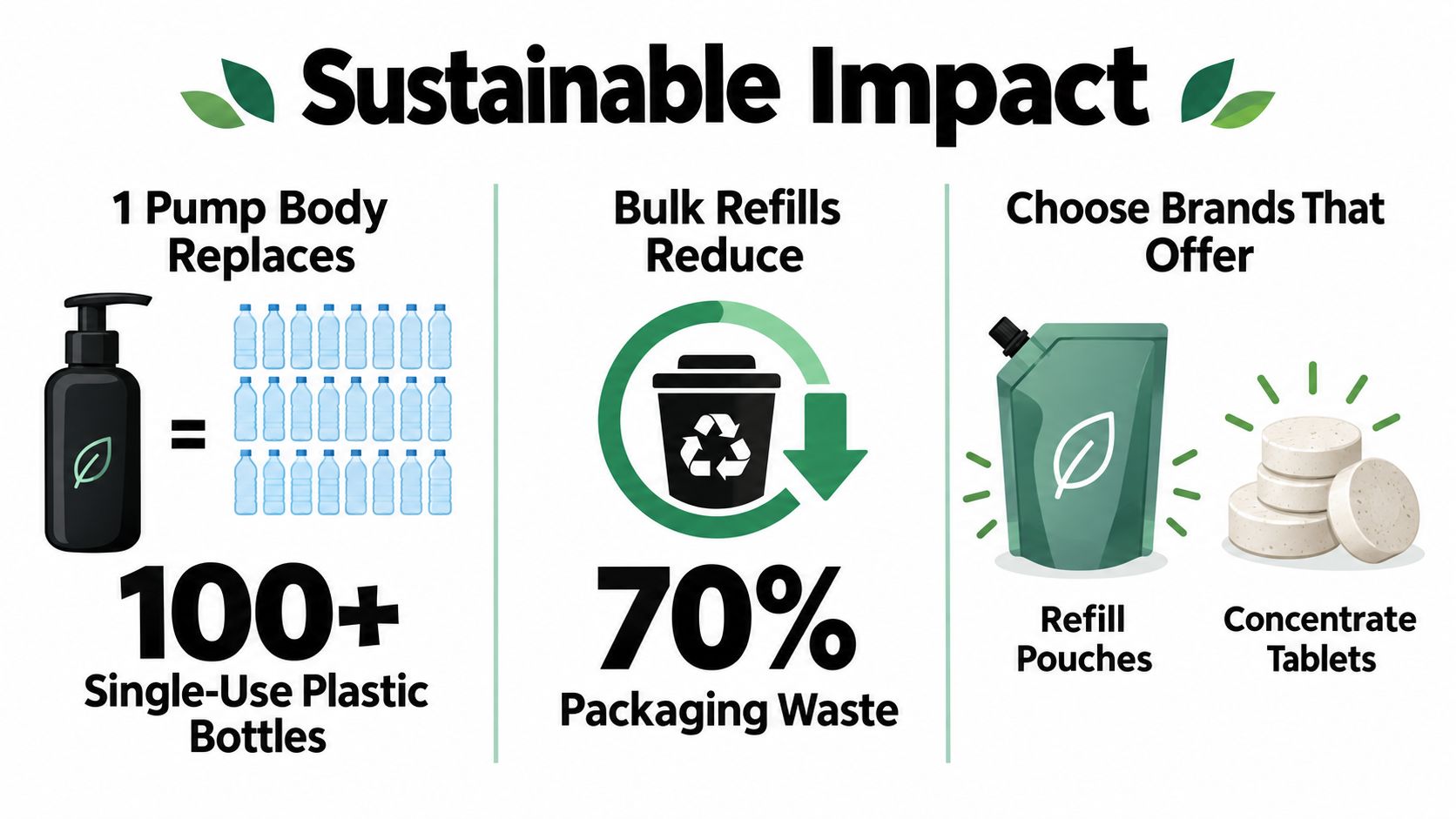
A reusable dispenser earns its place when it changes what happens after the soap runs out. Pairing a durable bottle with bulk refills reduces reliance on single-use packaging and keeps the sink area clearer. The benefit is practical first, environmental second.
One comparison estimates that households may throw away 12 to 18 plastic hand-soap bottles each year, and argues that refillable systems can reduce plastic weight and CO₂e over repeated wash cycles (refillable system comparison). Treat that figure as a broad prompt rather than a fixed household rule. The underlying point remains useful: daily soap use creates a repeated packaging decision.
Values-led buying does not require a perfect system. Choose a dispenser that supports lower waste without adding awkward steps, unreliable pumping, or difficult cleaning. Reusable bottles, bulk soap, and refill stations for zero-waste routines suit households that want reuse built into an ordinary kitchen routine. They also support businesses that design for repeated use rather than regular replacement.
Fillaree's circular refill system follows that approach. The brand provides refill stations and home refill options, then takes back used refill bags for washing and reuse. That return process keeps the packaging in circulation instead of sending it straight to disposal. For a Fillaree-style setup, check that the dispenser accepts the product's consistency, resists clogging, and has an opening you can refill without spills.
Refill choices work best when they're simple enough to repeat on a busy Tuesday night.
Low-waste habits last when the hardware supports them. An awkward bottle, a clog-prone pump, or a messy refill path can push anyone back towards disposable bottles. A sustainable hand soap dispenser for the kitchen sink should make refilling straightforward, keep the pump working, and fit the way the household already uses the sink.
Choosing the Right Dispenser for Your Kitchen and Habits
The right choice depends less on aesthetics than on how you use the sink. A renter who likes flexibility needs a different setup than a family that cooks every night. A design-focused kitchen wants a different footprint than a refill-first household.
| Household type | Best fit | Material cue | Refill setup |
|---|---|---|---|
| Renters | Countertop pump | Plastic or hybrid | Simple top-off bottle |
| Busy families | Built-in recessed | Stainless or hybrid | Top-fill or extension tube |
| Minimalists | Built-in or wall-mounted | Stainless exterior | Bulk refill compatible |
| Design-focused kitchens | Built-in recessed | Brushed stainless | Hidden reservoir |
| Eco-refillers | Reusable pump system | Serviceable hybrid | Bulk soap or refill station |
If you want zero commitment, countertop still wins. If you want the sink deck to stay clear, built-in is the better move. If the cabinet is crowded or the sink zone is small, wall-mounted can solve more problems than it creates.
For households that refill often, I'd prioritize top-fill access and a pump that doesn't care too much about the soap brand. For households that prize finish and permanence, a stainless or hybrid built-in usually looks and performs well in a humid kitchen. For households that care most about waste, choose a reusable setup that works with bulk refills and doesn't make refilling feel like a project.
Fillaree belongs in that last category as one practical option. It's a refill-based soap system that works with a reusable bottle and supports low-waste habits without turning the sink into a single-use bottle graveyard. If that's the kind of routine you want, the next move is simple, check your sink hole, decide on top-fill or countertop, and set up a refill path you'll keep using.
If you want a kitchen soap setup that holds up to real life, Fillaree offers refillable soap options that fit the low-waste routine this guide is built around. Visit Fillaree to look at refill choices and choose the system that makes your sink easier to live with every day.