

Low Waste Household Products That Actually Work
You open the cabinet under the kitchen sink and find three nearly empty dish soap bottles, a half-used spray cleaner, and a stack of single-use wipes you bought for convenience. None of the products looked careless on the shelf. Some carried recycling symbols, some promised natural ingredients, and one came in a pouch marketed as a refill. Yet the bin still fills with packaging faster than the household uses the contents.
That gap matters. Low waste household products only work when the system keeps containers in service, makes refills easy to obtain, and delivers acceptable performance at a reasonable cost per use. After years of working around refill operations, I've learned to look past green imagery and ask harder questions. How many times will this bottle actually circulate? Where does the empty package go? What happens when the nearest refill point is inconvenient? This guide answers those questions with practical examples, honest trade-offs, and a preference for good products from companies that care enough to show how their systems operate.
Table of Contents
- The Kitchen Cabinet Moment That Sparked This Guide
- What Low Waste Household Products Really Mean
- The Categories That Matter Most in Your Home
- How Refill Systems Actually Work
- Choosing Products and Companies Worth Trusting
- A Room-by-Room Transition That Sticks
- When Low Waste Is Worth It and When It Is Not
- Keeping the System Running and Common Questions
The Kitchen Cabinet Moment That Sparked This Guide
The recognition usually arrives during an ordinary chore. You pull out the under-sink bin to make room for a new bottle, then notice that the old containers aren't empty enough to discard and aren't useful enough to keep. A foaming hand soap bottle sits beside a trigger spray, a refill pouch, and wipes that were supposed to simplify cleaning. Instead, they've created a small inventory problem.
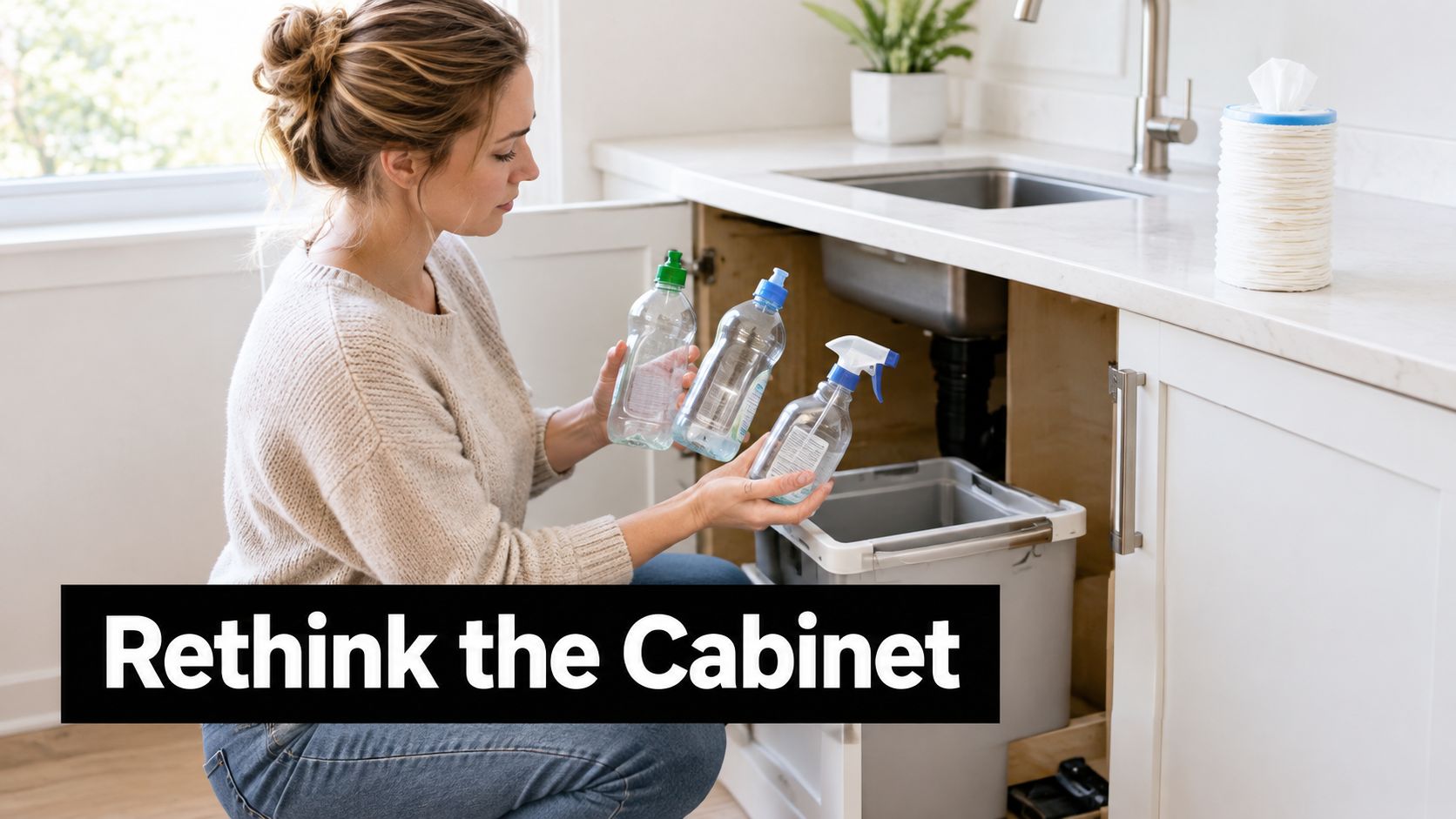
The issue isn't that every plastic container is automatically bad or that every reusable container is automatically good. The issue is whether the household has a functioning next step. A durable bottle without a refill route becomes clutter. A recyclable pouch that local facilities don't accept becomes residual waste. A concentrated tablet that performs poorly in your water means you'll use more product, abandon the system, and return to the familiar bottle.
The question behind the label
Packaging is a major reason household waste feels repetitive. The United Nations Environment Programme says packaging accounts for approximately 36% of plastic produced worldwide, and estimates that 85% of single-use plastic bottles, containers, and packaging ultimately enter landfills or become mismanaged waste. Those figures explain why a product's packaging decision deserves as much attention as its formula. UNEP's overview of the global waste problem provides the wider context.
From inside a refill operation, the useful question isn't “Does this look sustainable?” It's “What will this package do after I finish the product?” The answer might be another fill, a producer return, a local recovery stream, or disposal. Those outcomes aren't interchangeable.
Practical rule: Buy the refill pathway before you buy the container. If you can't explain how the next fill arrives, the system isn't ready for your routine.
What Low Waste Household Products Really Mean
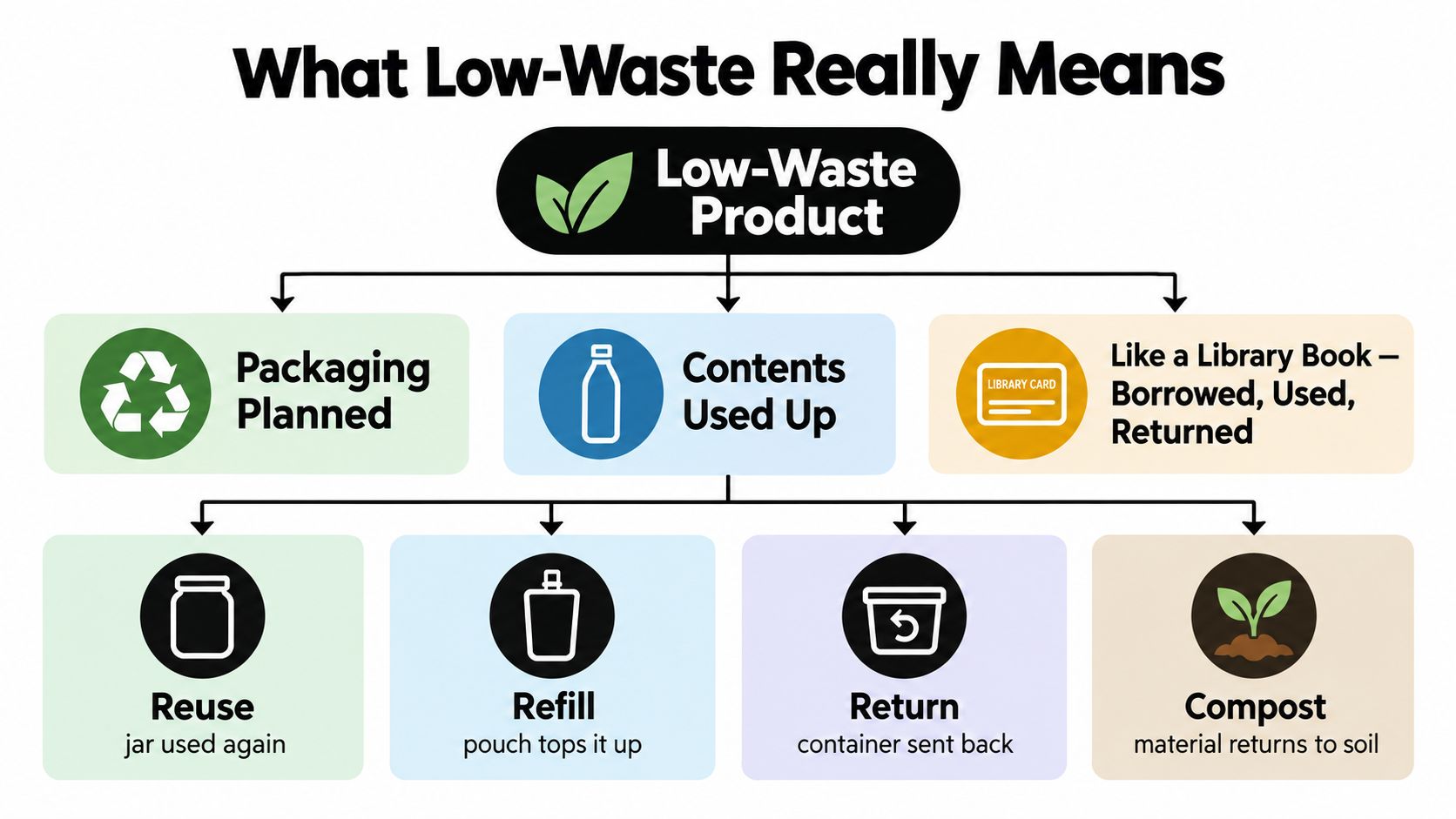
A low-waste household product is designed with the whole use cycle in mind. The contents should work effectively, but the packaging also needs a plan for reuse, refill, return, recovery, or appropriate composting. “Low waste” doesn't mean “zero waste,” and it doesn't promise that one material will outperform every alternative in every home.
A useful analogy is a library and a bookstore. A bookstore gives you a new copy each time you buy a book. A library keeps one copy circulating among many readers. Reuse works in the same way. The primary container remains useful while the household replaces only the contents. A refill adds product to that existing container, while a return program sends the container back through a managed loop.
Place each option on the waste hierarchy
Start with reduction. Concentrated cleaners, powder detergents, and shampoo bars reduce the amount of packaging or water being moved. Next comes reuse, where a bottle, jar, cloth, or dispenser stays in service. Refill extends that reuse by replenishing the contents without replacing the primary package.
Return systems add an operational layer. The producer, retailer, or service collects a container, cleans or processes it, and sends it back into circulation. Composting can be useful for suitable materials, but only when the product is compatible with the available composting conditions. A compostable package isn't automatically home compostable, and commercial processing may be required.
Recycling still has a role, but it sits below prevention and reuse because collection and processing aren't guaranteed. U.S. EPA data show that packaging made up 82.2 million tons of municipal solid waste in 2018, compared with 27.37 million tons in 1960, while plastic packaging had a reported recycling rate of 13.6% in 2018. This summary of EPA packaging data shows why placing a recycling symbol on a package doesn't settle the environmental question.
For practical guidance beyond product labels, this resource on practical Australian home sustainability is useful because it connects household habits with broader systems.
The Categories That Matter Most in Your Home
Not every swap deserves equal attention. Focus first on products you use often, replace regularly, and store in small containers. That usually means hand soap, dish soap, surface cleaner, laundry products, and frequently used body care.
| Category | Common Low-Waste Format | Packaging Type | Refill Pathway | Typical Rotation |
|---|---|---|---|---|
| Body care | Shampoo bars, bar soap, refillable deodorant, toothpaste tablets | Bar, paper, durable bottle, or metal container | Bar formats avoid liquid refills; bottles need a verified refill source | High for daily soap and shampoo, lower for occasional treatments |
| Kitchen | Dish soap refills, produce bags, beeswax wraps, compostable scrubbers | Reusable fabric, durable bottle, paper, or refill pouch | Refill station, home refill, or local recovery depending on product | High for dish soap and cloths, variable for wraps and scrubbers |
| Cleaning | Concentrated tablets, bulk sprays, reusable cloths | Durable spray bottle, tablet carton, textile | Home dilution, bulk station, or producer refill | High when one bottle serves several cleaning tasks |
| Laundry | Detergent strips, powder refills, wool dryer balls | Paper carton, pouch, or reusable textile | Powder refill, subscription, or bulk supply | Frequent detergent rotation, long-lived dryer accessories |
Body care
Bar soap and shampoo bars can remove the bottle entirely, but performance depends on storage and water conditions. A bar that stays wet between uses becomes soft and disappears quickly, so a draining soap dish is part of the low-waste system. Refillable deodorant can work well when replacement cartridges fit securely and are easy to order, while toothpaste tablets suit households willing to change the brushing texture.
Liquid shampoo and conditioner remain reasonable choices when a local refill station or a reliable return program keeps the bottle moving. A recyclable bottle may be simpler than a refill that arrives in an unaccepted multilayer pouch, but the household should check local collection rules rather than assume.
Kitchen and cleaning
Dish soap is a strong starting point because most kitchens use it repeatedly. A refill bottle or a pay-by-weight station can replace repeated small containers without changing the task itself. Beeswax wraps and produce bags can last well when washed and stored properly, but they don't replace every use of a sealed container, especially for wet or messy food.
For cleaning, concentrated tablets and powders reduce storage space and allow the same trigger bottle to remain in use. Vinegar-based formulas can suit light mineral buildup and everyday wiping, while a properly formulated concentrate may perform better on grease. Reusable knitted dishcloths and durable microfiber alternatives can replace paper towels, provided the household washes and dries them consistently. The manufacturing method also matters. Knitted cotton products can be made close to their final shape, reducing cutting waste and producing durable cloths designed for repeated use, as described by Sophie Home's explanation of knitted low-waste textiles.
Laundry
Laundry strips and powder refills reduce the need for liquid bottles, but the practical test is cleaning performance in your machine and water. Wool dryer balls can replace disposable dryer sheets, though they won't solve every static problem in every climate. Keep the product that gets clothes clean with the least rework. A sustainable product that requires a second wash may consume more household resources than its packaging suggests.
How Refill Systems Actually Work
A refill system is only as circular as its routine. Three models appear most often in real homes: walk-in stations, mail-order concentrates or pouches, and returnable packaging managed by the producer.
Walk-in stations
A bulk station usually asks you to bring a clean container, fill it, and pay according to the amount dispensed. This model can have a low ongoing packaging burden and gives you immediate control over quantity. Its weakness is access. If the station is across town, a special trip can make the system harder to maintain than a delivery refill.
Ask whether the station accepts the container you already own, whether staff clean returned containers, and what happens when a dispenser is out of service. A station that fits your normal grocery route has a practical advantage over one that requires a separate journey.
Mail-order refills
Pouches, powders, tablets, and concentrates make home storage easier and can remove water from shipping. They work best when the refill fits a container already used for the product and arrives at a frequency you can adjust. The common failure is subscription surplus. A household receives refills faster than it uses them, then stores extras until the system loses visibility.
A refill bag also needs an end-of-life answer. The FTC says marketers shouldn't make an unqualified “refillable” claim unless they provide an actual way to refill the package, such as a collection system or a separately sold refill product. The FTC's environmental claims guidance gives consumers a useful standard for separating a container from a working refill route.
Returnable and deposit systems
A return scheme can keep packaging in a managed loop, but it depends on collection, cleaning, redistribution, and customer participation. UNEP identifies those systems as essential and recommends approximately 10 to 15 rotations as a minimum benchmark for reusable packaging systems. UNEP's reuse guidance also warns that transport, washing, drying, and product losses belong in the life-cycle assessment.
The metric I track first is rotation count, meaning the number of times a bottle or bag is refilled before replacement. A reusable package that circulates once is a different product from one that circulates repeatedly.
| Pathway | Upfront Container Cost | Per-Use Cost After First Fill | Typical Rotation Count | Failure Mode If Skipped | Verification Question To Ask |
|---|---|---|---|---|---|
| Walk-in station | Usually modest if you bring a container | Depends on product and quantity | Depends on whether the same container stays in service | Household returns to packaged products when the station is inconvenient | “Can I refill this container here, and how is it cleaned?” |
| Mail-order refill | May include a starter bottle or dispenser | Often becomes clearer after the first refill | Depends on container durability and refill availability | Extra refills accumulate or pouches enter ordinary waste | “What happens to the empty refill package?” |
| Returnable or deposit scheme | May include a deposit or dedicated container | Includes return handling where applicable | Depends on actual returns and producer reuse | Containers remain at home or are discarded | “What proportion of containers comes back into circulation?” |
For a closer look at the operational details behind a refill station, see this refill station and zero-waste program overview. Treat vague answers about returns as useful information. If a company can't explain where the empty goes, assume the system ends with you.
Choosing Products and Companies Worth Trusting
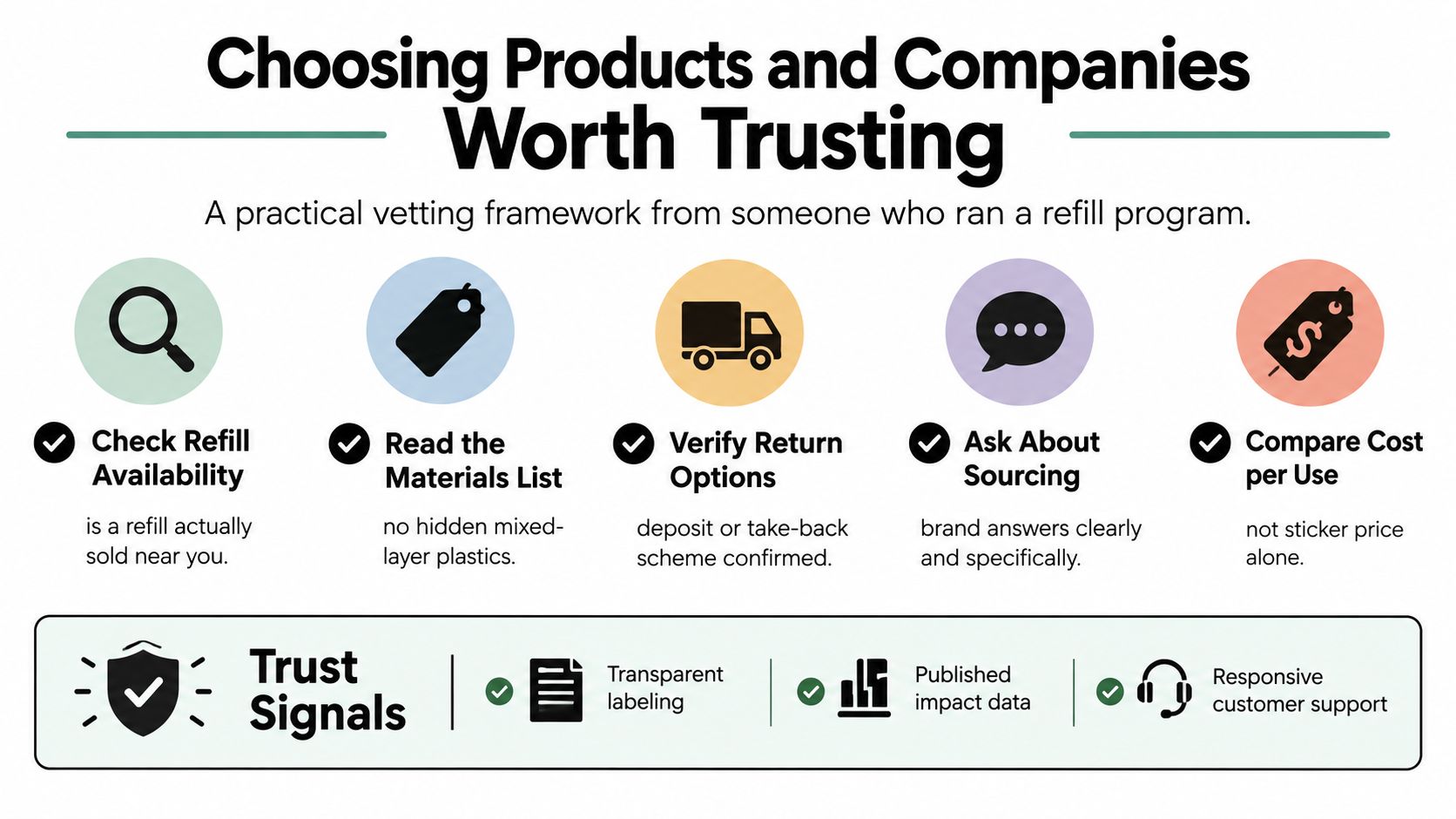
A good label is not a substitute for a good operating system. “Natural,” “green,” and “eco-friendly” can describe a product without explaining its materials, collection route, or durability. I look for evidence that a company has planned what happens before, during, and after the sale.
The signals that deserve attention
Start with availability. A refill should be sold near you, shipped in a format you can use, or supported by a return route that you can realistically follow. Then inspect the materials. Mixed-layer packaging may protect a formula well, but it can be difficult or impossible to process through ordinary curbside recycling.
Check for a published return policy, deposit terms, or take-back guarantee. A named logistics or processing partner adds useful clarity, though the company should still explain what that partner does. Packaging should also be designed for repeated service, not just marketed as durable.
For body care, examine how the bar or cartridge handles moisture, storage, and replacement. For kitchen staples, check whether a pouch is collected or merely labeled recyclable. For cleaning concentrates, confirm dilution instructions, bottle compatibility, and whether the refill point is available beyond a flagship shop.
Ask before ordering: “Where do I return the empty?” “How many refills is the container designed to withstand?” “Which part is recyclable in my area?” “What happens if I stop my subscription?”
What responsible companies disclose
A transparent company explains the product, the package, and the limitation of the claim. The FTC advises that recycled-content claims should identify how much of the product or package contains recycled material when it isn't entirely recycled. It also notes that a recyclable claim depends on whether most purchasers have access to an appropriate recycling program. This FTC consumer guide to environmental claims is a useful reference when a label sounds broader than the evidence.
Good companies also make participation easy. They publish refill locations, explain cleaning practices, respond clearly to questions, and avoid making the customer decode a vague symbol. A company that supports its community and invests in better packaging deserves consideration, but goodwill shouldn't replace verification.
The same standard applies to products reviewed by independent publications. Natural cleaning options such as Blueland, Cleancult, Branch Basics, Dirty Labs, Common Good, and ECOS illustrate different approaches, from tablets and concentrates to refill stations and recyclable packaging. This natural and nontoxic cleaning product review is useful for comparing formats, but you should still verify current availability and local disposal instructions.
For a practical explanation of misleading sustainability language, use this guide to avoiding greenwashing in household product claims.
A Room-by-Room Transition That Sticks
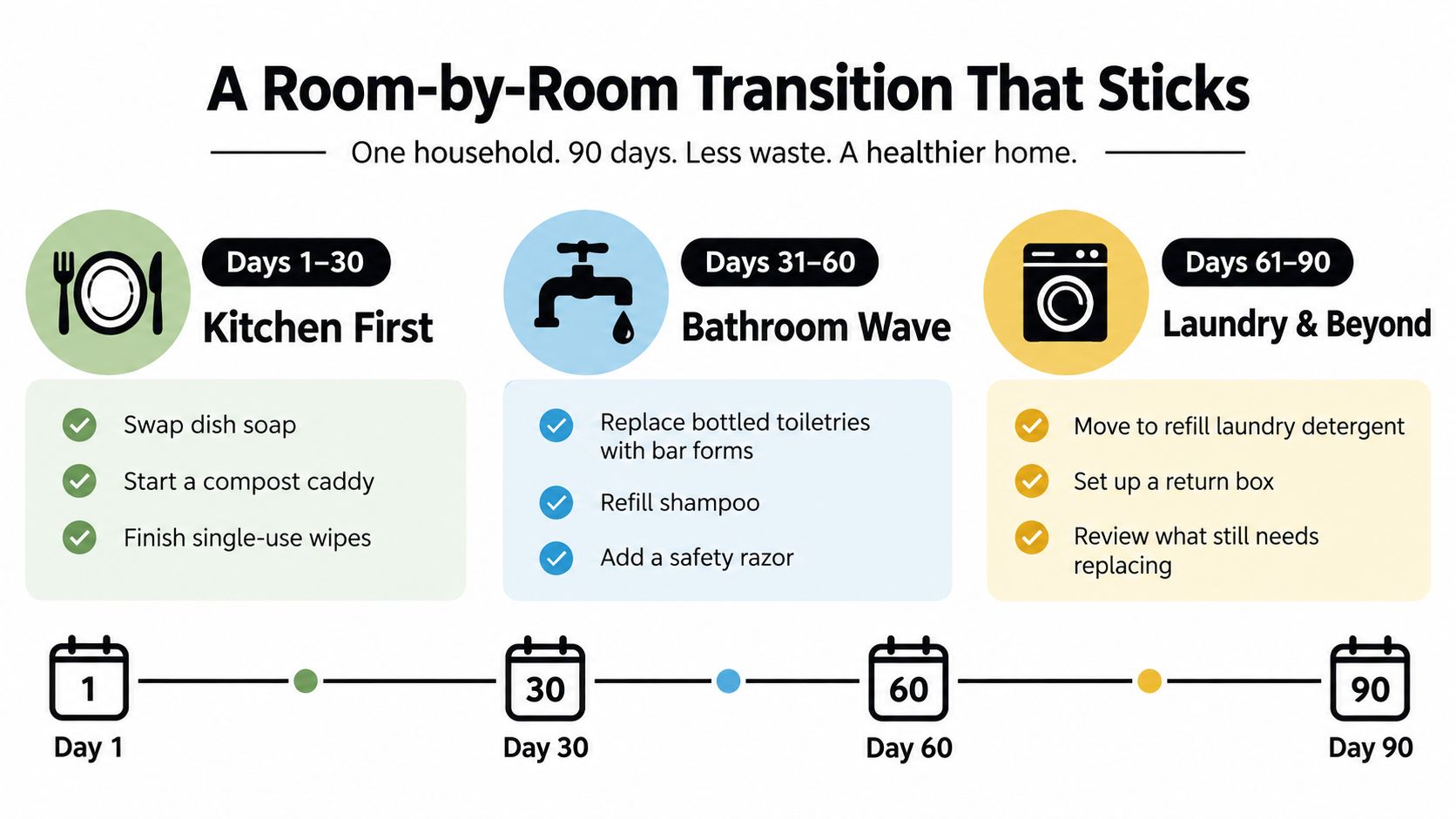
Households usually succeed when they change the room, not the entire shopping list. A room has a visible purpose, a storage area, and a small group of products that can be managed together. Replacing every item at once creates duplicate stock and makes it difficult to tell which swap helped.
Start with the rooms that work hardest
During the first stage, focus on the kitchen and bathroom. Finish the single-use wipes you already own, then replace dish soap and hand soap with formats that fit your normal shopping route. A refill bottle beside the sink is more useful than a beautiful container stored in a cupboard. Give each room a short setup session, including a place for the refill, a way to label it, and a plan for washing the empty container.
The next stage can move into laundry and floor care. Concentrated detergent, powder refills, and reusable cleaning cloths reduce packaging while also freeing storage space. Don't buy a large supply until you know the formula suits your machine, floor finish, water, and household preferences.
Leave the slow decisions until later
Body care, paper goods, and occasional-use items can wait. A shampoo bar may be a sensible choice, but it needs a dry storage solution and may not suit hard water. A safety razor can reduce disposable components, but only if the user is comfortable with the technique. The household should replace items as they finish rather than creating a second wave of unused products.
The first purchase often costs more than the conventional alternative because it may include a durable dispenser or container. The meaningful comparison comes after repeated use. Track the price of the product, the number of uses, the refill charge, delivery, and any travel required. If the refill cost doesn't fall below your normal benchmark after several cycles, the product may still reduce packaging, but it isn't an affordability win.
Keep the failed swaps visible
A failed experiment is useful when it stays specific. “The bar soap didn't work” is vague. “It stayed wet on a flat dish and became difficult to use” points to a draining holder or another format. “The refill station was too far away” suggests delivery, a local retailer, or a different brand.
Write the replacement date on the container and keep a small note of what gets reused, recycled, returned, or discarded. That record turns enthusiasm into evidence. It also prevents the common mistake of buying a new sustainable product before the old one has been used.
When Low Waste Is Worth It and When It Is Not
A refill isn't automatically cheaper, easier, or lower impact. The right comparison is cost per use plus packaging behavior plus effort. A premium refill that requires special shipping, a dedicated dispenser, and frequent cleaning may be a poor household fit even if the package looks impressive.
The reverse is also true. A modest product can work well when it uses a durable container, offers concentrated contents, and fits an existing shopping routine. The systematic review of reusable packaging finds that reusable plastic containers can become more climate-friendly than single-use plastic after roughly five uses, while steel may require approximately 13 to 33 uses because its manufacture is more energy-intensive. The same review reports that steel may last around 100 to 200 uses, compared with about 50 uses for plastic in the analysis. These are not universal guarantees. The review of reuse systems and life-cycle performance shows why material, cleaning, transport, and durability must be evaluated together.
Use the same test for every product
| Product | Single-Use Cost per Use | Refill Cost per Use | Savings per Use |
|---|---|---|---|
| Dish soap | Calculate from bottle price and actual washes | Calculate from refill price and actual washes | Difference may be positive, neutral, or negative |
| Hand soap | Include the number of pumps per bottle | Include refill and dispenser costs | Compare after repeated refills |
| Surface cleaner | Include how many rooms one bottle covers | Include dilution ratio and concentrate price | Depends on formula strength and rework |
| Laundry detergent | Include the amount used per load | Include strips, powder, or concentrate dosage | Check cleaning performance before claiming savings |
A product can fail in several quiet ways. A compostable package may require commercial processing that isn't available locally. A refill shipped inside an unaccepted plastic mailer may shift waste instead of avoiding it. A niche product used only occasionally may take a long time to justify its dedicated container. A “natural” or “non-toxic” claim also says little about packaging circulation unless the company supplies specific information.
McKinsey's consumer research identifies price, quality, and convenience as important purchasing factors, with more than 70% of consumers rating price and quality as important across categories. Its 2025 survey also reports that higher cost and limited availability were leading barriers to sustainable packaging, cited by 39% and 36% of U.S. respondents respectively. The 2025 U.S. sustainable packaging research supports a practical conclusion: sustainable products have to compete on performance and access, not just values.
Use four checks before switching: rotation count, cost per use, return policy, and independently supported data. When a brand answers all four clearly, the swap has a chance of becoming a habit. When it answers only with imagery and adjectives, keep looking.
Keeping the System Running and Common Questions
Low-waste homes need maintenance just like any other household system. Put a short checklist inside the cabinet where refills are stored.
- Inspect monthly: Check bottles, pumps, lids, and soap buildup. Wash and dry containers according to the product instructions.
- Review supplies seasonally: Look at bulk products before ordering more. Adjust for holidays, travel, guests, and changes in cleaning routines.
- Track access: Note refill station schedules, delivery dates, and return deadlines where they apply.
- Record outcomes: Mark which products were refilled, returned, recycled, or discarded. Replace systems that repeatedly fail.
Common questions
How do I find a refill station nearby? Search local zero-waste shops, independent grocers, municipal bulk-buy programs, and community drop-in refillers. Ask whether the station accepts your container and whether the product is dispensed from a maintained system.
Are dishwasher and laundry tablets worth it? They can be useful when they clean effectively, store well, and arrive in packaging your local system can handle. Test a small amount first, especially if your water is hard or your machine has specific requirements.
What should I do with accumulated plastic? Separate containers by material, check local acceptance, and contact the producer about take-back options. Don't keep unusable packaging indefinitely in the hope that a future program will accept it.
How can I involve a roommate or partner? Make the system visible. Label the refill container, keep the next refill in the same cabinet, and choose a product that doesn't require one person to perform every extra step. Convenience earns participation faster than reminders.
For a practical example of keeping a foaming dispenser in circulation, follow this guide to refilling a foam soap dispenser. A low-waste household is a maintained system, not a one-time purchase. The households that succeed treat refills like grocery lists, visible, automatic, and adjusted as the seasons change.
Fillaree offers refillable soaps, shampoos, conditioners, dish soap, and all-purpose cleaners through partner refill stations, home refills, and a take-back system for reusable refill bags. Visit Fillaree to choose a refill format that fits your home, check available options, and support a women-owned company building practical low-waste routines.