
Natural Antibacterial Dish Soap: A Practical Guide
You've just finished dinner, and the cutting board that held raw chicken is still beside the sink. You reach for the bottle of natural antibacterial dish soap, scrub until the grease disappears, rinse, and wonder whether the product killed bacteria or carried it away with the food residue.
That question matters because cleaning, antibacterial action, and disinfecting aren't interchangeable promises. A good dish soap must remove oil and residue first. An antibacterial formula may add a permitted active ingredient intended to reduce remaining bacteria. A disinfectant makes a stronger, regulated kill claim for specific organisms on inanimate surfaces. The label can make those categories look similar, even when the standards behind them are very different.
The practical answer isn't to treat every bottle as suspicious. It's to understand what does the work, identify when antibacterial action has a useful role, and choose ingredients, certifications, packaging, and companies that match your household values.
Table of Contents
- Why Your Dish Soap Deserves a Second Look
- What Natural Antibacterial Dish Soap Actually Means
- How Antibacterial Dish Soap Works at the Sink
- The Ingredients That Do the Heavy Lifting
- When Antibacterial Action Actually Matters
- Reading the Label, Certifications, and Real Claims
- Choosing a Dish Soap That Matches Your Values
- Practical Tips, Refill Habits, and Common Questions
Why Your Dish Soap Deserves a Second Look
The cutting board is a useful example because it combines several cleaning challenges at once. Raw poultry can leave behind proteins, fats, moisture, and microbes. A quick splash of water won't move that film, and a large amount of soap won't help much if the sponge never creates enough friction to loosen it.
The bottle beside your sink may say natural, plant-based, antibacterial, or biodegradable. Those words can point toward better choices, but they don't answer every important question. What surfactants are inside? Is the antibacterial claim supported by testing? Does the product rinse cleanly? Can you refill the container instead of replacing it?
A useful pause: Ask what the soap is designed to do, then ask whether the label supports that promise.
Regulation adds another reason to read carefully. In 2016, the U.S. Food and Drug Administration finalized a rule removing 19 active ingredients, including triclosan and triclocarban, from nonprescription consumer antiseptic wash products because manufacturers hadn't shown that those ingredients were safe for long-term daily use and more effective than plain soap and water at preventing illness. The FDA rule covered consumer antibacterial soaps and body washes used with water, while benzalkonium chloride, benzethonium chloride, and chloroxylenol remained eligible for currently marketed nonprescription consumer antiseptic wash products. The broader regulatory background is summarized in this overview of antibacterial soap regulation.
That history doesn't mean every natural dish soap is automatically safer or every antibacterial formula is unnecessary. It means the word antibacterial deserves context. This guide focuses on the chemistry at the sink, the ingredients worth recognizing, the situations where extra antibacterial action can matter, and the packaging choices that support companies working toward lower-waste kitchens.
What Natural Antibacterial Dish Soap Actually Means
The phrase becomes easier to understand when you separate it into three layers.
First layer, dish soap
Dish soap is a detergent built around surfactants. These molecules have one part attracted to water and another attracted to oils. When you scrub a greasy plate, surfactants lower water's surface tension, surround oily residue, and help suspend that residue in rinse water.
That same movement helps detach microbes clinging to food particles, grease, and films on the dish. In other words, ordinary washing is not passive rinsing. It combines chemistry with friction, water flow, and time.
Second layer, antibacterial
Antibacterial adds an intended biological action. The formula contains an active ingredient designed to kill or inhibit bacteria beyond the removal achieved through mechanical washing. That active may affect bacterial membranes, alter the surrounding environment, or interfere with cell processes.
The label should make the active identifiable. If a product uses antibacterial language but doesn't disclose what provides that action or offer meaningful testing information, treat the claim cautiously. A pleasant botanical scent isn't proof of antibacterial performance, and “kills germs” is broader than “helps wash away bacteria.”
Third layer, natural
Natural isn't a regulated term with one universal definition, so companies can use it differently. A natural antibacterial dish soap may rely on plant- or mineral-derived surfactants and actives while minimizing synthetic ingredients. Some formulas still use synthetic preservatives or processing aids because preventing microbial growth in a water-based product is a safety requirement, not a cosmetic detail.
A reasonable definition is therefore practical rather than absolute:
A natural antibacterial dish soap should combine effective surfactant cleaning with a disclosed antibacterial active and evidence that supports the specific claim.
Look for the full ingredient list, not just botanical images on the front label. Plant-derived ingredients can be useful, but sourcing, concentration, stability, skin tolerance, and testing determine whether they work well in a real kitchen.
How Antibacterial Dish Soap Works at the Sink
At the sink, a greasy plate goes through two overlapping processes. Surfactants do most of the cleaning, while an antibacterial active may reduce some of the bacteria left after washing.
Stage one, loosen and remove
Surfactants lower water's surface tension and surround grease, much like small helpers carrying oil away from the dish. Water can spread across the surface, scrubbing breaks the greasy film apart, and rinsing moves the loosened residue into the drain.
That physical action also removes bacteria attached to food or grease. A controlled hand-hygiene study reported a 2.34 log10 bacterial reduction for plain soap, compared with 2.15 log10 for antibacterial soap. The result shows how much decontamination can come from washing and rinsing alone (study details).
Stage two, reduce what remains
An antibacterial active can add a second mechanism. Depending on the ingredient, it may disrupt bacterial membranes, create conditions that slow activity, or interfere with cellular processes. Its effect depends on concentration, stability in the formula, contact time, and what happens during rinsing.
The comparison below reflects the tested hand-hygiene results, not a universal result for every dish soap.
| Wash Type | Log Reduction | Percent Reduction | Best For |
|---|---|---|---|
| Plain soap | 2.34 log10 | Not stated in the source | Routine mechanical washing |
| Antibacterial soap in the comparison | 2.15 log10 | Not stated in the source | A tested wash containing an antibacterial claim |
A separate 2024 challenge study found that antibacterial soaps containing chloroxylenol, benzalkonium chloride, or chlorhexidine achieved about 4.19 to 4.35 log10 E. coli reduction after 30 seconds, compared with 3.63 to 3.65 log10 for non-antibacterial soap. It also reported lower bacterial counts in rinse water, suggesting less transfer to sinks and nearby surfaces under those test conditions (2024 antibacterial soap challenge study).
The practical distinction is clear in this explanation of what makes soap antibacterial: surfactants remove grease and microbes, while an effective active can add targeted microbial reduction. Refill systems support the broader sustainability picture by reducing the need for a new container each time, though packaging choices do not replace good washing technique or evidence for an antibacterial claim.
The Ingredients That Do the Heavy Lifting
A dish soap label makes more sense when you sort ingredients by job rather than by whether their names sound familiar.
Surfactants lift grease
Plant-based formulas may use decyl glucoside or coco glucoside, commonly derived from sugar and fatty-alcohol sources. Sodium lauryl sulfate, often made from coconut or palm-derived feedstocks, is also a surfactant, although “plant-derived” doesn't automatically tell you how mild the finished formula will feel.
These ingredients reduce surface tension, surround oil, and help move residue into rinse water. On a label, they'll usually appear among the primary cleansing ingredients because they make up the functional washing base.
Antibacterial ingredients add a separate function
Essential oils such as tea tree, thyme, and lemon eucalyptus may contribute antimicrobial activity through their naturally occurring compounds. Plant acids, including citric acid and lactic acid, can lower pH and help with mineral deposits or odor conditions. Mineral-based additives such as zinc ricinoleate may support odor control, but that role isn't identical to a validated bacterial-kill claim.
A plant ingredient can show inhibition in a laboratory assay without delivering the same result in a diluted, rinsed kitchen product. Concentration, contact time, formulation stability, and the target organism all matter. The evidence gap around botanical actives is discussed in this review of natural antibacterial agents, while research on plant-based formulas remains heavily weighted toward small laboratory tests rather than household performance.
Preservatives protect the bottle
Water-based soap needs protection against microbial growth inside the container. Ingredients such as phenoxyethanol and sodium benzoate may serve as synthetic or nature-identical preservatives, depending on the formulation and regulatory classification. Their presence doesn't automatically make a product unsafe, and their absence doesn't automatically make it better.
A useful botanical example is yucca, whose naturally occurring saponins can produce cleansing foam. If you're exploring the plant itself rather than assuming every yucca-containing product has the same performance, this resource on Soap Tree Yucca for sale offers relevant background.
| Ingredient Category | Function | Common Label Names |
|---|---|---|
| Primary surfactants | Lift oil and suspend residue | Decyl glucoside, coco glucoside, sodium lauryl sulfate |
| Botanical actives | May inhibit or reduce bacteria under tested conditions | Tea tree oil, thyme oil, lemon eucalyptus |
| Acids | Adjust pH and help dissolve mineral buildup | Citric acid, lactic acid |
| Odor-control additives | Bind or manage odor compounds | Zinc ricinoleate |
| Preservatives | Protect the product from microbial growth | Phenoxyethanol, sodium benzoate |
When Antibacterial Action Actually Matters
At a normal sink, a plate carries food residue, not a special need for antibacterial chemistry. Surfactants, scrubbing, and thorough rinsing loosen grease, lift particles, and carry attached microbes away. The ingredient label may attract attention, but the washing process does most of the cleaning work.
Antibacterial action becomes more relevant when an item stays damp, receives heavier contamination, or could transfer microbes to food or a vulnerable person. Examples include a cutting board used for raw meat or poultry, a sponge that remains wet between washes, baby bottles and feeding items, and kitchens used by someone who is immunocompromised.
The added action still has limits. A wet sponge can remain contaminated if soap does not reach its interior. A cutting board needs scrubbing through grooves and along edges. Baby-feeding items require careful washing and rinsing, followed by any sanitizing step recommended by the manufacturer or health guidance.
As noted earlier, the controlled hand-hygiene comparison found that mechanical washing alone achieved the higher log reduction under that study's conditions. That result supports a targeted choice, not a universal promise that every antibacterial dish soap removes nearly all microbes. Separate challenge testing also showed that some antibacterial formulations can perform strongly in specified laboratory conditions, but those results do not automatically apply to an untested dish soap.
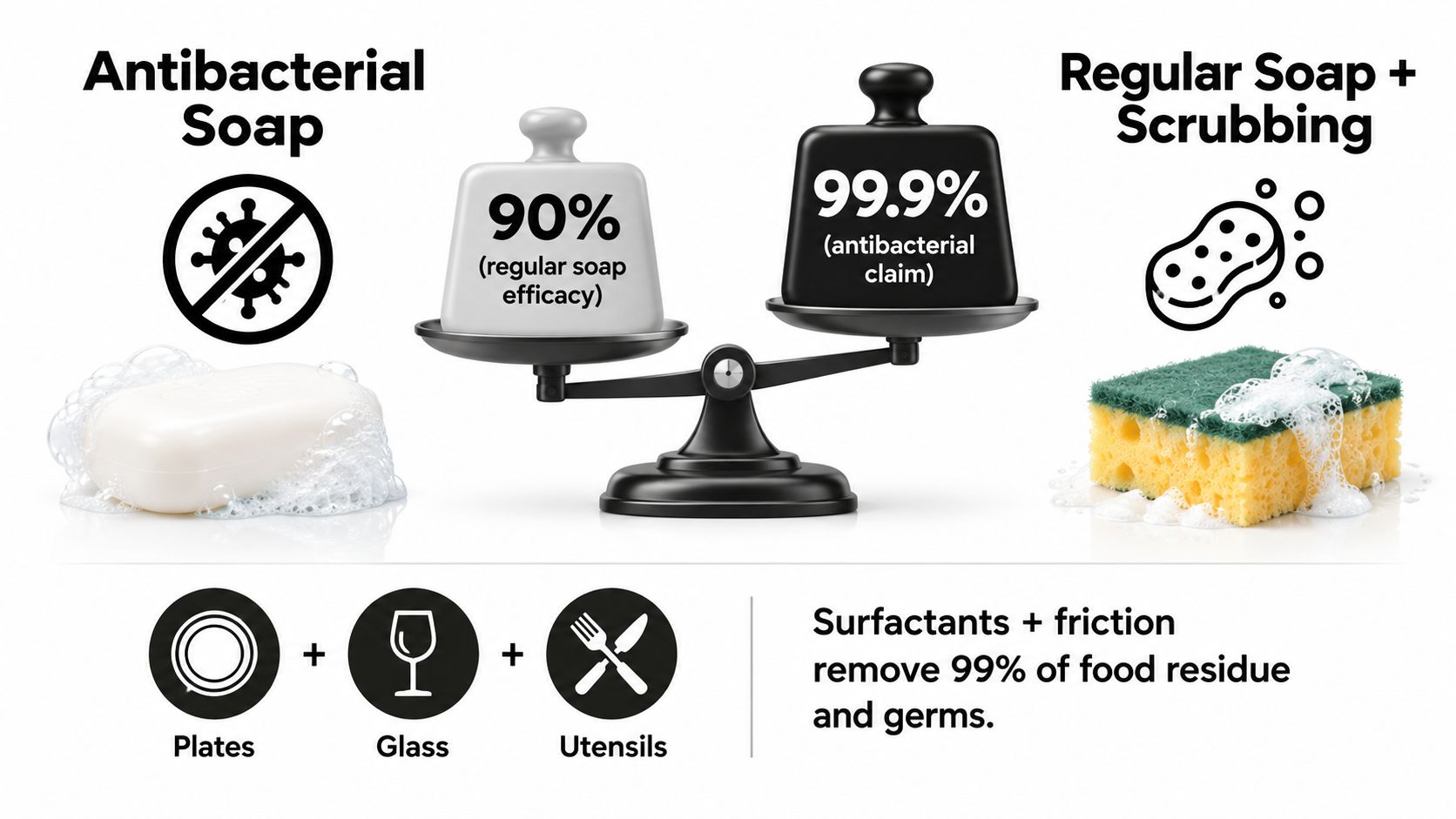
Use this decision rule:
- Routine loads: Choose a plain natural dish soap for ordinary food residue.
- Higher-concern items: Consider a product with a documented antibacterial claim for raw-meat boards, damp sponges, or situations where reducing transfer matters.
- Sensitive households: Give priority to mildness, rinsability, and clear instructions. More active ingredients are not automatically better for skin or waterways.
Refill systems fit this decision too. A concentrated formula or refill can reduce packaging without making antibacterial action necessary for every load. The broader sustainability benefit comes from matching the product and amount to the task.
Use antibacterial action as a targeted tool, not as a replacement for friction, contact, rinsing, and good sponge care.
Here's a visual demonstration related to the difference between cleaning action and antibacterial claims:
Reading the Label, Certifications, and Real Claims
A certification badge answers one question, not every question. EPA Safer Choice, for example, evaluates every ingredient against human-health and environmental safety criteria, and the EPA independently reviews products carrying the label (EPA Safer Choice explanation). That can help you assess ingredient safety, but it doesn't by itself prove antibacterial efficacy.
Other badges work differently. USDA BioPreferred focuses on biobased content. EWG Verified addresses ingredient hazard transparency within its own framework. Leaping Bunny concerns animal testing, and B Corp evaluates broader company practices. Those values may matter greatly, but none should be read as proof that a dish soap kills bacteria.
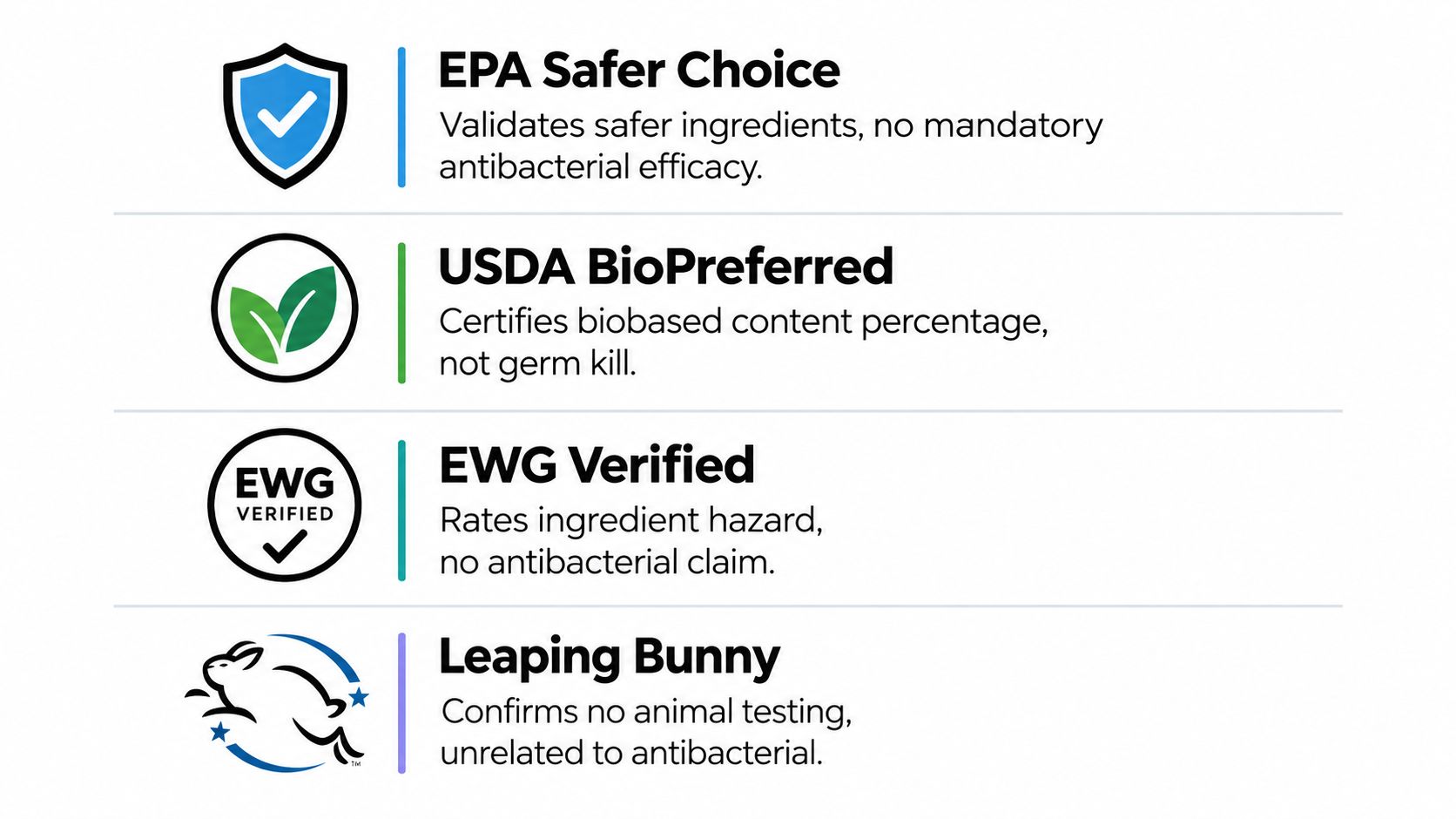
Separate badges from efficacy evidence
A genuine antibacterial claim should identify the active ingredient and explain the test basis. Look for third-party testing, the organism tested, the contact time, and a reported log reduction. A protocol such as ASTM E2871 may be relevant to antimicrobial testing, but the presence of a method name alone isn't enough. The result must apply to the actual product and use conditions.
The regulatory bar for a disinfectant is different again. EPA guidance defines a disinfectant as a substance or mixture that destroys or irreversibly inactivates bacteria, fungi, and viruses on inanimate surfaces, and disinfectants are regulated as pesticides. That category requires specific safety and labeling standards, as explained in the EPA registered disinfectant guidance.
Ask three questions before trusting the front label:
- Is the antibacterial claim third-party tested? Look for the active, organism, contact time, and result.
- Which certification addresses environmental or ingredient safety? Safer Choice can be relevant to those questions, but it isn't an antibacterial guarantee.
- Which badge addresses animal welfare? Leaping Bunny speaks to animal testing, not microbial reduction.
For a practical way to examine environmental language and avoid attractive but unsupported claims, use this guide to avoid greenwashing.
Choosing a Dish Soap That Matches Your Values
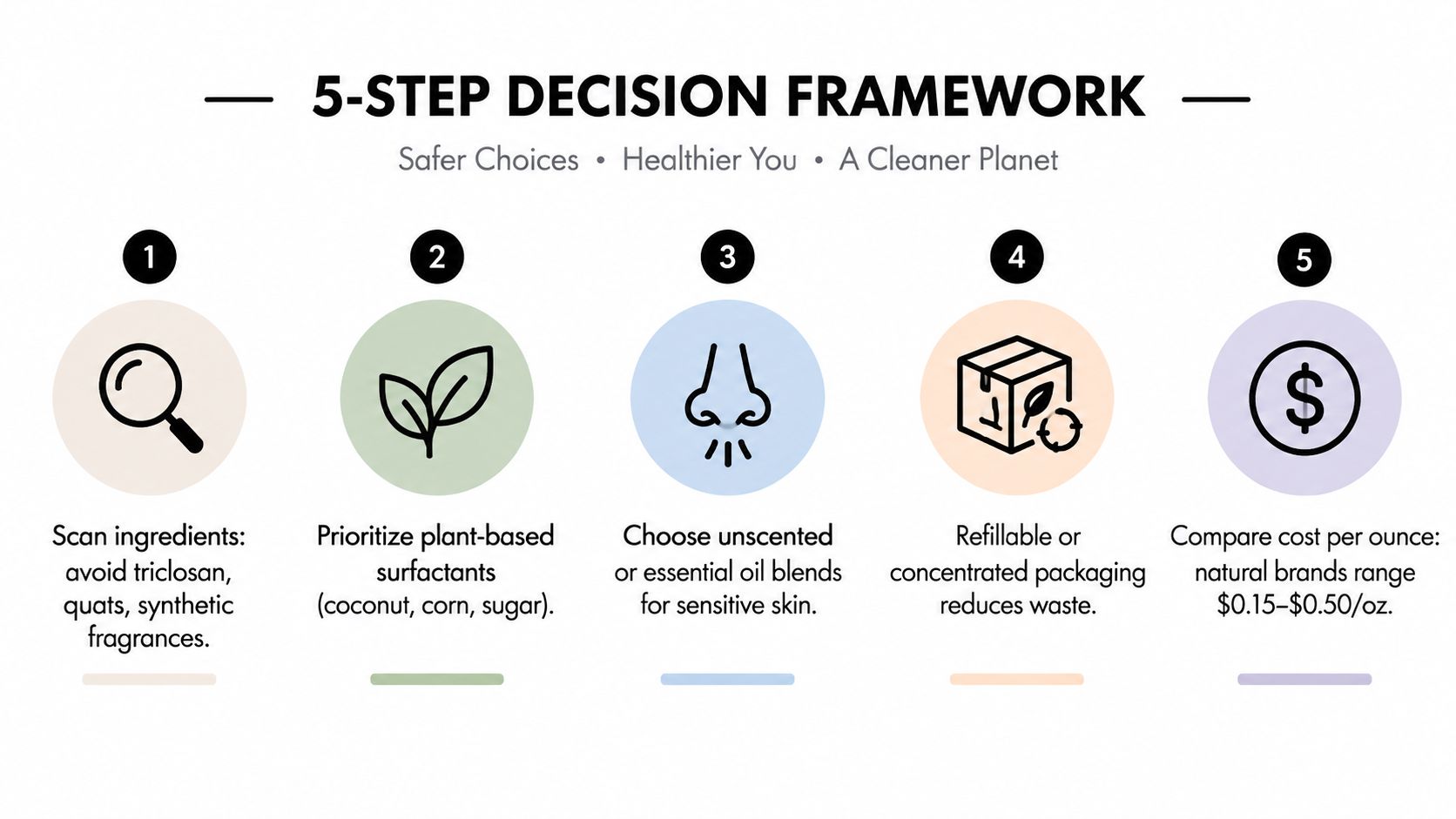
Start with the household problem, not the trend. If you wash ordinary plates and want a lower-impact routine, effective surfactants, easy rinsing, mildness, and refillable packaging may matter more than an antibacterial label. If raw-meat cleanup or damp sponges concern you, add documented antibacterial testing to the list.
A practical buying sequence
- Scan the ingredient list. Look for recognizable surfactants and disclosed actives. Don't assume a leaf on the label proves a plant-based formula.
- Check certifications. EPA Safer Choice can help with ingredient safety and environmental criteria. USDA BioPreferred can help you evaluate biobased content. Neither replaces antibacterial testing.
- Inspect the package. Refillable aluminum, glass, or post-consumer recycled plastic can support a different waste pattern than repeatedly buying single-use bottles.
- Investigate the company. Published sourcing policies, supply-chain information, refill instructions, and clear testing documentation show more than vague claims about being green.
- Compare the use experience. A soap that cuts grease, rinses without a film, and works with your water is more likely to become a lasting habit.
A family with young children might choose an unscented or lightly scented formula with a short ingredient list and clear rinse instructions. A zero-waste household may prioritize concentrates, bulk refills, or a dispensing station. Someone seeking genuine antibacterial action should look for a named active and a product-specific log-reduction claim rather than relying on botanical imagery.
Outdoor washing presents a different challenge because water access and waste handling change. For practical ideas about carrying and using dish-care supplies away from home, explore HYDAWAY outdoor dish care.
Refill systems connect these priorities. A concentrate or bulk format can reduce the need for new containers, while a well-tested formula can preserve cleaning performance. Refill stations also let customers bring their own containers and purchase multiple products from a shared dispensing point. The Plastic Pollution Coalition highlighted this model as one that could save millions of plastic containers from landfill (refill station packaging example).
Practical Tips, Refill Habits, and Common Questions
Use enough soap to wet the surface and create useful lubrication, but don't pour a large stream into the sink by default. Concentrates should follow the maker's dilution instructions rather than an improvised ratio. Warm water helps loosen many greasy residues, while scrubbing remains essential for stuck-on food and textured cutting boards.
A low-waste routine can start with one bottle. Finish the product, clean and dry the container, then refill it with a compatible concentrate or refill pouch. Store unopened refills sealed, dry, and away from heat, and don't top up a partly used bottle without cleaning it first.
Does natural antibacterial dish soap kill germs? Some tested formulas can reduce bacteria through an active ingredient, while ordinary soap mainly removes microbes through surfactants, friction, and rinsing. The label and test evidence determine which promise applies.
Is it safe for septic systems? Check the product instructions and your septic professional's advice. “Natural” alone doesn't establish compatibility.
Will it work in hard water? It can, but mineral deposits may affect rinsing and leave film. Citric acid may help with limescale, depending on the formulation.
Do baby bottles need antibacterial soap? Careful washing is central. Follow the bottle maker's cleaning and sanitizing guidance, especially when a child has specific health needs.
The lowest-impact choice is often the bottle already on your counter, cleaned and refilled instead of replaced.
Fillaree offers refillable home and body essentials, including its Clean Plate Club dish soap and a home refill system designed for repeated use. If you want to connect effective dishwashing with a lower-waste routine, visit Fillaree to explore its dish soap and refill options.