
Non Toxic Body Wash: A Practical Guide to Safer Choices
A “non toxic” body wash isn't automatically a gentle body wash. The popular advice to avoid sulfates and parabens can help you narrow the shelf, but it doesn't tell you whether a cleanser will respect your skin barrier, rinse cleanly, stay microbiologically safe, or create unnecessary packaging waste.
A better approach looks at the whole formula. Surfactant type, pH, preservative system, fragrance disclosure, and refill design tell you much more than a front-label claim. Use those details to choose a product that suits your skin and your values, rather than chasing a perfect-sounding ingredient list.
Table of Contents
- What "Non Toxic" Really Means on a Body Wash Label
- The Building Blocks of a Gentle Body Wash Formula
- Ingredients Worth Scrutinizing on the Label
- How Real Formulas Compare on Safety and Performance
- Matching a Body Wash to Your Skin and Your Life
- Reading Certifications Without Getting Greenwashed
- Refillable and Low-Waste Body Wash Options
- Bringing It All Together for a Smarter Choice
What "Non Toxic" Really Means on a Body Wash Label
“Non toxic” sounds precise, but it isn't a universal safety grade for personal care. Brands can use terms such as clean, natural, low tox, and non toxic in different ways, so the phrase alone doesn't tell you how the product was tested or whether it suits daily use.
The useful question isn't, “Is this ingredient toxic?” Toxicity depends on factors such as concentration, route of exposure, frequency, and whether the product is rinsed away. A body wash touches the skin briefly, but daily exposure can still matter for someone with eczema, a damaged barrier, or a known allergy.
A practical rule: Treat “non toxic” as a starting point for investigation, not as proof that a formula is gentle.
The European Union gives shoppers a more structured regulatory context. Cosmetics there follow Regulation (EC) No. 1223/2009, including a positive list of permitted preservatives in Annex V and usage conditions for certain ingredients. A 2014 amendment, for example, limited triclosan to 0.2% in mouthwashes and 0.3% in special cosmetic products, including hand soaps, body soaps, and face powders. The regulatory overview also explains why preservation remains necessary, even in products made with natural ingredients.
In the United States, the label still matters. The FDA requires retail cosmetics to carry an ingredient declaration under the Fair Packaging and Labeling Act, giving shoppers a way to identify ingredients they know they react to. That doesn't turn “non toxic” into a regulated guarantee.
Use three anchors instead: What cleans the skin? What pH does the formula support? How does it prevent contamination? Then add fragrance transparency and packaging. This framework also helps you recognize greenwashing, a topic covered in this guide to avoiding greenwashing.
The Building Blocks of a Gentle Body Wash Formula
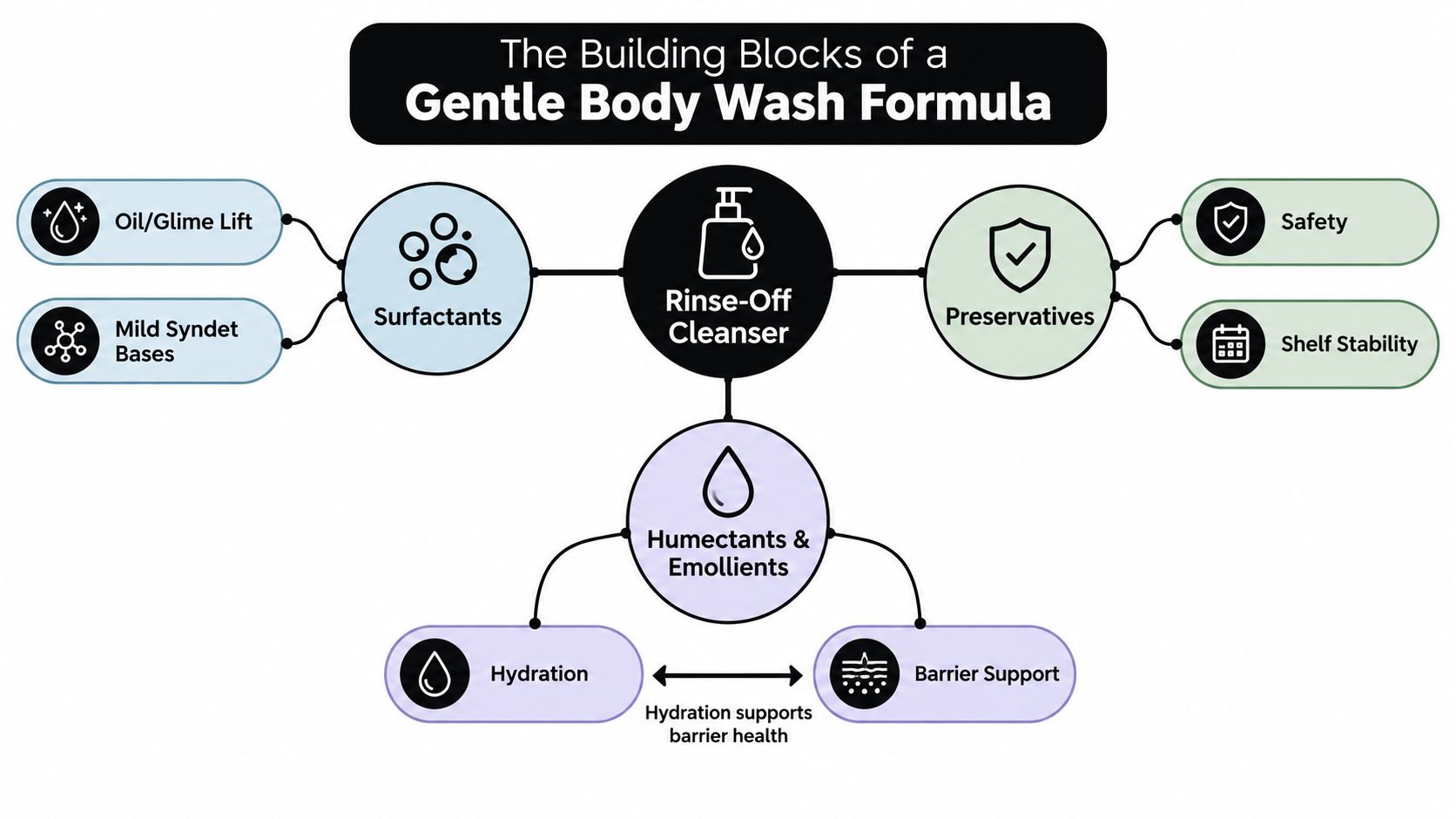
Every rinse-off cleanser has a job beyond making foam. It must lift sweat, oils, sunscreen, and dirt, then rinse away without leaving the skin tight or disrupting the product with microbes.
Start with the cleansing base
Surfactants have one part that interacts with water and another that interacts with oils. They gather grime so water can carry it down the drain. Mild surfactants, including plant-derived decyl glucoside and coco-glucoside, are often chosen for lower-irritation formulas, although no surfactant is automatically suitable for every person.
A syndet, short for synthetic detergent cleanser, is built from surfactants rather than traditional alkali soap. Syndets can be formulated close to the skin's naturally acidic range, around pH 4.5 to 5.5, which supports the acid mantle and may reduce the drying effect associated with high-pH cleansers. Traditional soap behaves differently because its chemistry is alkaline.
That distinction explains why a product can create abundant lather yet leave skin uncomfortable. Foam is a sensory feature, not a reliable measure of cleansing quality or gentleness.
Look beyond the bubbles
Humectants attract water, while emollients and refatting agents help the skin feel less stripped after washing. A body wash might also contain pH adjusters to bring the finished formula into a skin-compatible range.
Ingredient order gives you a rough sense of concentration. Ingredients near the beginning usually make up more of the formula than those near the end, though the label doesn't tell you the exact amount of every ingredient. For a more detailed look at surfactants, fragrance, and label order, use this resource on how to read shower gel labels.
Preservation is part of safety
Water-based cleansers need protection against contamination from air, water, hands, and skin. Preservatives commonly make up less than 1% of a product's content, yet they play an important role in shelf stability and microbial safety, as explained by this preservation science overview.
A short ingredient list isn't automatically safer if it leaves out the system that keeps a water-based product stable. The better question is whether the formula uses a disclosed preservative system that works for the product and your skin.
Ingredients Worth Scrutinizing on the Label
Read the ingredient list by function rather than scanning for a single villain. A cleanser's performance comes from the interaction between its surfactants, pH, fragrance, conditioning ingredients, and preservation system.
Scan the cleansing agents first
Some shoppers choose to avoid sodium lauryl sulfate, sodium laureth sulfate, and cocamide MEA because these ingredients can feel too cleansing or irritating for their skin. That doesn't mean every person will react to every product containing them, especially in a rinse-off formula. It means they deserve attention if your skin becomes tight, itchy, or flaky after washing.
Also look beyond the phrase “sulfate-free.” Sodium C14-16 olefin sulfonate can appear in products marketed that way, and a product can still be too aggressive for sensitive skin. Cocamidopropyl betaine is widely used in gentle-looking formulas, but some people find it irritating or react to impurities associated with its manufacture. Ingredient-level reading is more useful than a front-label promise.
Examine preservation and scent
Formaldehyde-releasing preservatives, including DMDM hydantoin and quaternium-15, and isothiazolinones such as methylchloroisothiazolinone and methylisothiazolinone deserve extra scrutiny if you have a history of contact dermatitis. Parabens are widely used because they help control fungal, bacterial, and yeast growth, but they remain among the most scrutinized preservative groups.
Fragrance can represent a mixture of substances that aren't individually listed. Essential oils are still fragrant materials, so “plant-based” doesn't mean non-sensitizing. If you react easily, fragrance-free is often a clearer choice than a botanical scent blend.
| Ingredient Category | Examples to Watch | Why It's Flagged | Common Safer Alternative |
|---|---|---|---|
| Stronger surfactants | Sodium lauryl sulfate, sodium laureth sulfate | May feel drying or irritating for some skin types | Mild syndet surfactants, including decyl glucoside or coco-glucoside |
| Sulfate-free alternatives | Sodium C14-16 olefin sulfonate | “Sulfate-free” doesn't guarantee low irritation | A cleanser built around milder surfactants |
| Preservatives of concern | DMDM hydantoin, quaternium-15, MCI, MI | Greater concern for people prone to preservative allergy | A disclosed preservation system selected for the formula |
| Fragrance materials | Parfum, fragrance, essential-oil blends | Can obscure individual sensitizers | Fragrance-free formula |
| Frequently debated additives | Parabens, petrolatum, some PEGs | Often avoided by shoppers because of scrutiny or preference | Choose according to your sensitivities and values, not a blanket slogan |
A label can contain unfamiliar emulsifiers or solubilizers without making the product unsafe. If you want to understand one commonly questioned ingredient, this explanation of polysorbate offers useful context. Focus first on the ingredients highest on the list, known personal triggers, and the product's overall design.
How Real Formulas Compare on Safety and Performance
A label becomes easier to interpret when you compare formulas by what they do. The table below describes common formulation patterns, not a universal ranking. Actual performance depends on the finished product, use frequency, water hardness, and the user's skin.
| Formula Type | Primary Surfactant | Approx. pH | Preservative System | Fragrance | Best For |
|---|---|---|---|---|---|
| Traditional high-foam cleanser | Stronger anionic surfactants | Often higher than the skin's natural range | Required for the water-based formula | Often scented | People who prioritize abundant lather and don't experience dryness |
| Mid-range syndet bar | Mild syndet surfactants | Can be formulated near skin-compatible pH | Varies by bar and water content | Fragranced or fragrance-free | People who want a solid cleanser with a less alkaline profile |
| Fragrance-free sensitive-skin wash | Mild surfactants | Usually selected near skin-compatible pH | Disclosed low-irritation system | None | Eczema-prone or reactive skin, subject to individual tolerance |
| Plant-based liquid wash | Plant-derived or blended surfactants | Depends on the finished formula | Still necessary in a water-based product | Essential oils, fragrance, or none | Shoppers seeking plant-derived ingredients while accepting a synthetic surfactant system |
A traditional high-foam cleanser may feel satisfying because it removes oil quickly. That same quality can leave dry or compromised skin feeling tight after repeated use. A syndet bar may produce less foam but provide a better match for someone who wants a solid format without the higher pH associated with traditional soap.
Plant-derived doesn't mean irritation-proof. Decyl glucoside and coco-glucoside are often well tolerated and biodegradable, but individual reactions still matter. Conversely, a formula containing a familiar preservative isn't automatically unsuitable just because the ingredient has a long chemical name.
Compare the finished formula, not one ingredient in isolation. A fragrance-free wash with mild surfactants may be a better choice for one person, while another may prefer a lightly scented syndet that leaves no tight after-feel.
Test a new body wash on a small area first if your skin reacts easily. Stop using it if you develop persistent burning, swelling, or a rash, and seek medical advice for symptoms that don't settle.
Matching a Body Wash to Your Skin and Your Life
A household bathroom often contains several different skin needs. One person may have oily, acne-prone shoulders, while another develops eczema patches. A third shaves frequently and gets razor bumps, and a fourth is caring for a new tattoo that needs a simple, non-scrubbing routine.
The oily-skin user may prefer a light syndet that rinses cleanly without aggressive scrubbing. For a teenager with keratosis pilaris, a mild acidic cleanser with a gentle exfoliating acid may be useful, but irritation can worsen if cleansing and exfoliation become too intense. The product should serve the skin, not create a stronger sensation for its own sake.
Let the routine determine the formula
Someone with eczema generally benefits from a fragrance-free, short ingredient list and a mild surfactant system. A person who shaves regularly may want a cleanser that rinses without residue and doesn't contain a heavy fragrance near freshly shaved skin. A new tattoo calls for following the artist's aftercare directions and avoiding unnecessary fragrance, friction, or exfoliating ingredients while the skin heals.
Perimenopausal dryness can change a routine that previously worked well. A richer-feeling wash with humectants and lipid-supporting ingredients may be more comfortable than a cleanser chosen for strong foam. People bathing infants should keep the formula especially simple and avoid assuming that “natural” essential oils are automatically appropriate.
Skin type also changes with season, medication, climate, and bathing habits. A non toxic body wash is therefore a starting point, not a permanent identity for a product or a person. Choose the mildest formula that cleans adequately, then watch how your skin feels later that day and the next morning.
Reading Certifications Without Getting Greenwashed
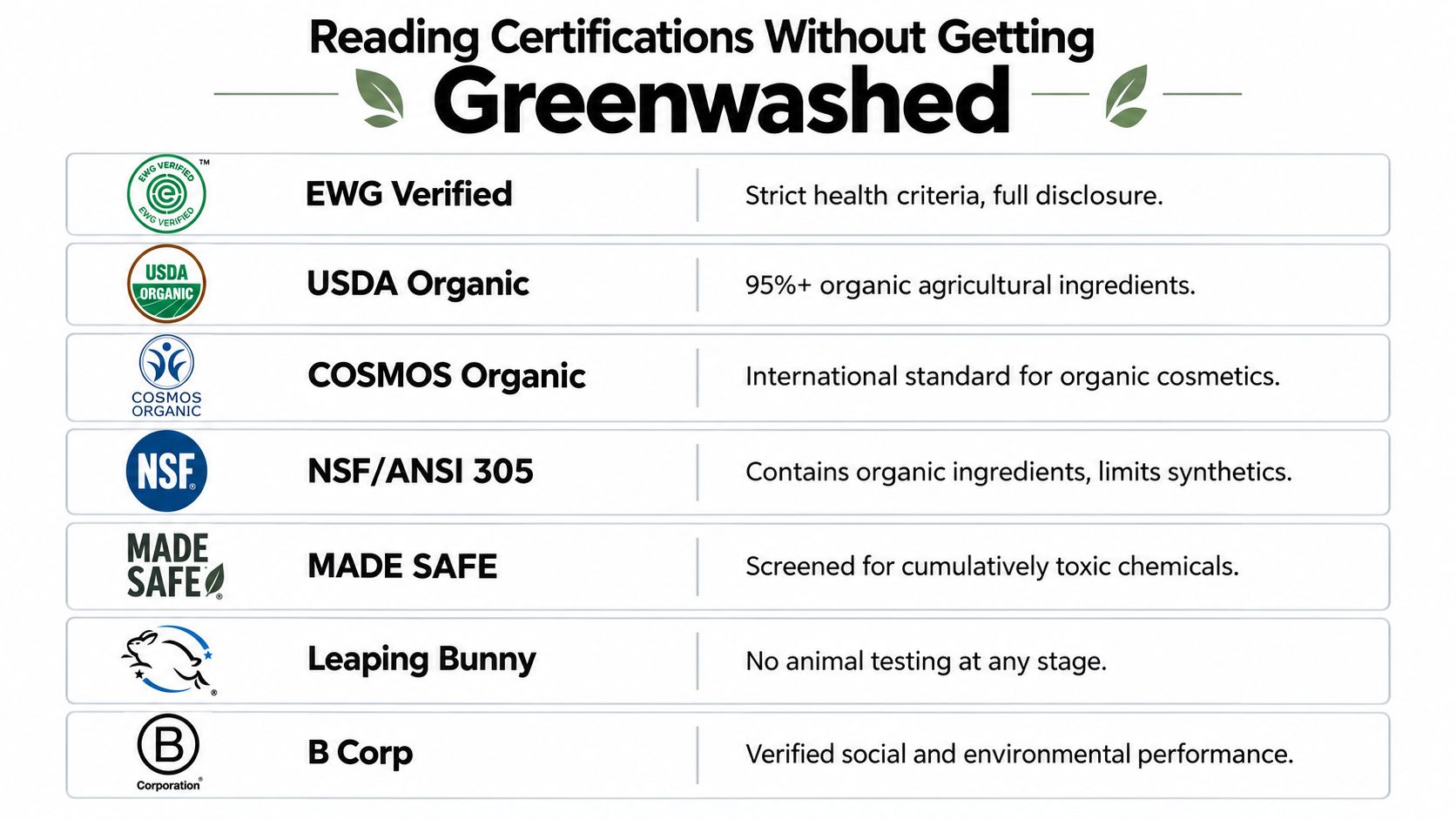
A certification only helps when you know what it verifies. EWG Verified is associated with strict ingredient criteria and disclosure, while USDA Organic addresses organic agricultural content. USDA Organic requires at least 95% organic ingredients, according to this certification overview.
Other seals address different priorities. COSMOS Organic relates to an international organic cosmetics standard, NSF/ANSI 305 concerns products containing organic ingredients within a defined standard, and MADE SAFE screens products for chemicals of concern. Leaping Bunny focuses on animal-testing policies. B Corp looks beyond one bottle and evaluates verified social and environmental performance, accountability, and transparency.
Match the seal to your priority
If ingredient restrictions matter most, start with a seal that evaluates ingredients and requires disclosure. If organic agriculture is your priority, look for the relevant organic standard. If cruelty-free purchasing matters, animal-testing certification carries more weight than a “natural” badge.
Terms such as natural, clean, conscious, and non toxic may describe a brand's position, but they don't independently prove what the product contains or how the company operates. A certification logo should be traceable to a standard, certifying organization, or public product listing.
For claims about plant-based intimate care, it can also help to read a focused discussion such as Momotaro Apotheca's plant-based vulvovaginal care guide. The broader lesson applies to body wash too: ask what “clean” means, who checked it, and whether the claim covers ingredients, manufacturing, testing, or company conduct.
Decision rule: Give shelf space to seals that match your priority and explain their scope. Ignore badges that offer no standard, verifier, or accessible criteria.
Refillable and Low-Waste Body Wash Options
A gentle formula can still arrive in a bottle designed for one short life. That makes packaging part of the same purchasing question, not a separate sustainability bonus. If you care about exposure, waterways, and waste, assess what's inside the cleanser and how the container is replaced.
Compare the refill formats
In-store bulk dispensers let customers reuse a permanent bottle, but the system depends on local access, sanitation practices, and accurate product identification.
Pouches or bags can reduce the amount of rigid packaging needed for each refill. They still require a plan for collection or disposal, so look for brands that explain whether used packaging is returned, recycled, or discarded.
Concentrated tablets and powders reduce the need to ship water and may use a shorter ingredient list. They can also require a separate mixing step, and a water-based finished product still needs appropriate preservation.
Bottle-return programs are the clearest circular model when a company takes containers back, cleans them, and puts them into service again. Ask whether the return process is specific and verifiable, rather than treating a recyclable bottle as equivalent to a reusable one.
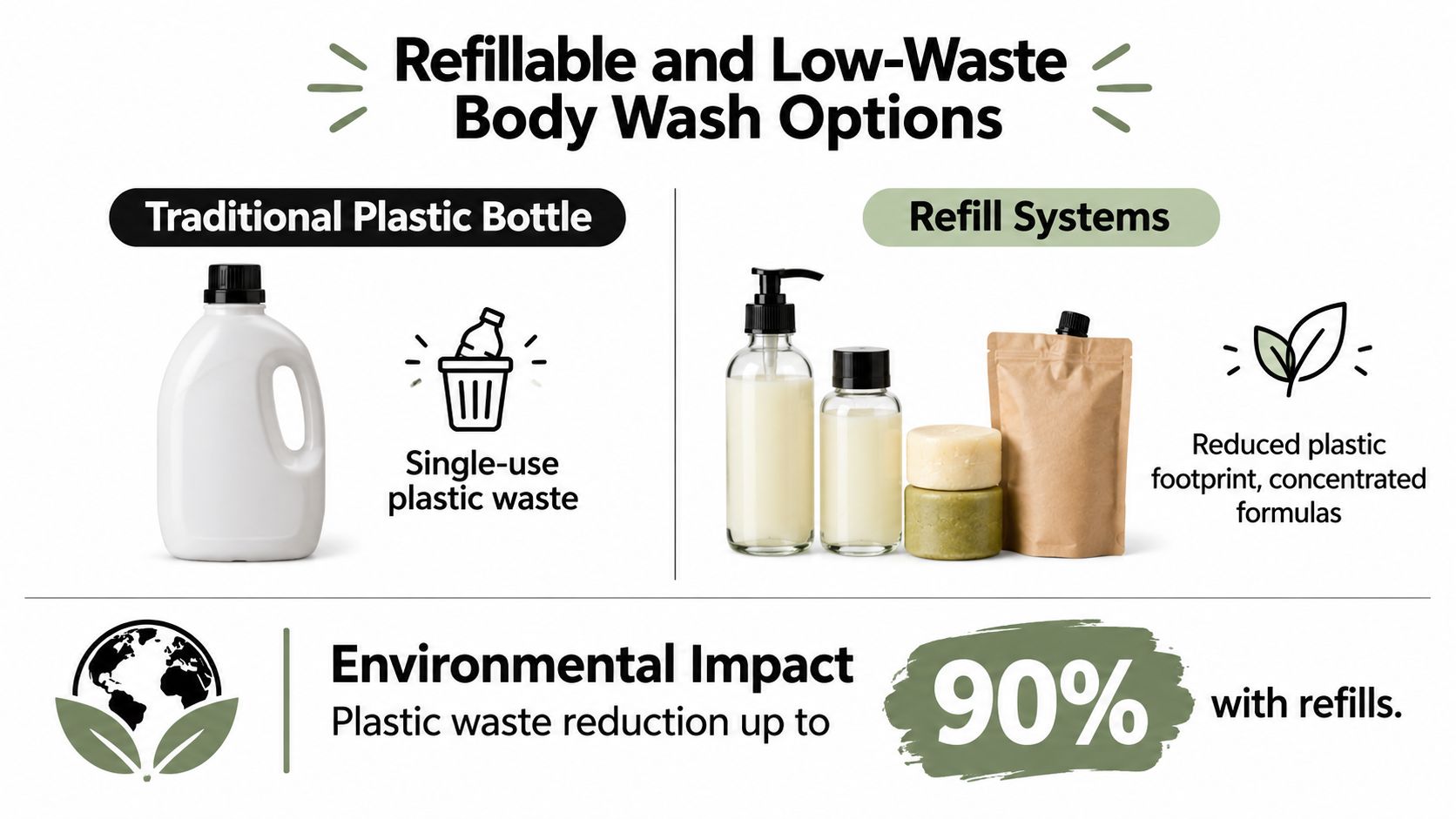
Some refill models pair well with liquid syndets, while solid formats may avoid a water-based formula altogether. Neither format wins automatically. A shopper should compare the surfactants, preservation, scent, dispenser hygiene, and replacement process together.
Refill stations can also become part of a household routine rather than a one-off purchase. A practical starting point is this refill station guide, which helps frame refill shopping as a system involving the container, the location, and the product being dispensed.
Bringing It All Together for a Smarter Choice
Use a short aisle-side check instead of trying to memorize every controversial ingredient.
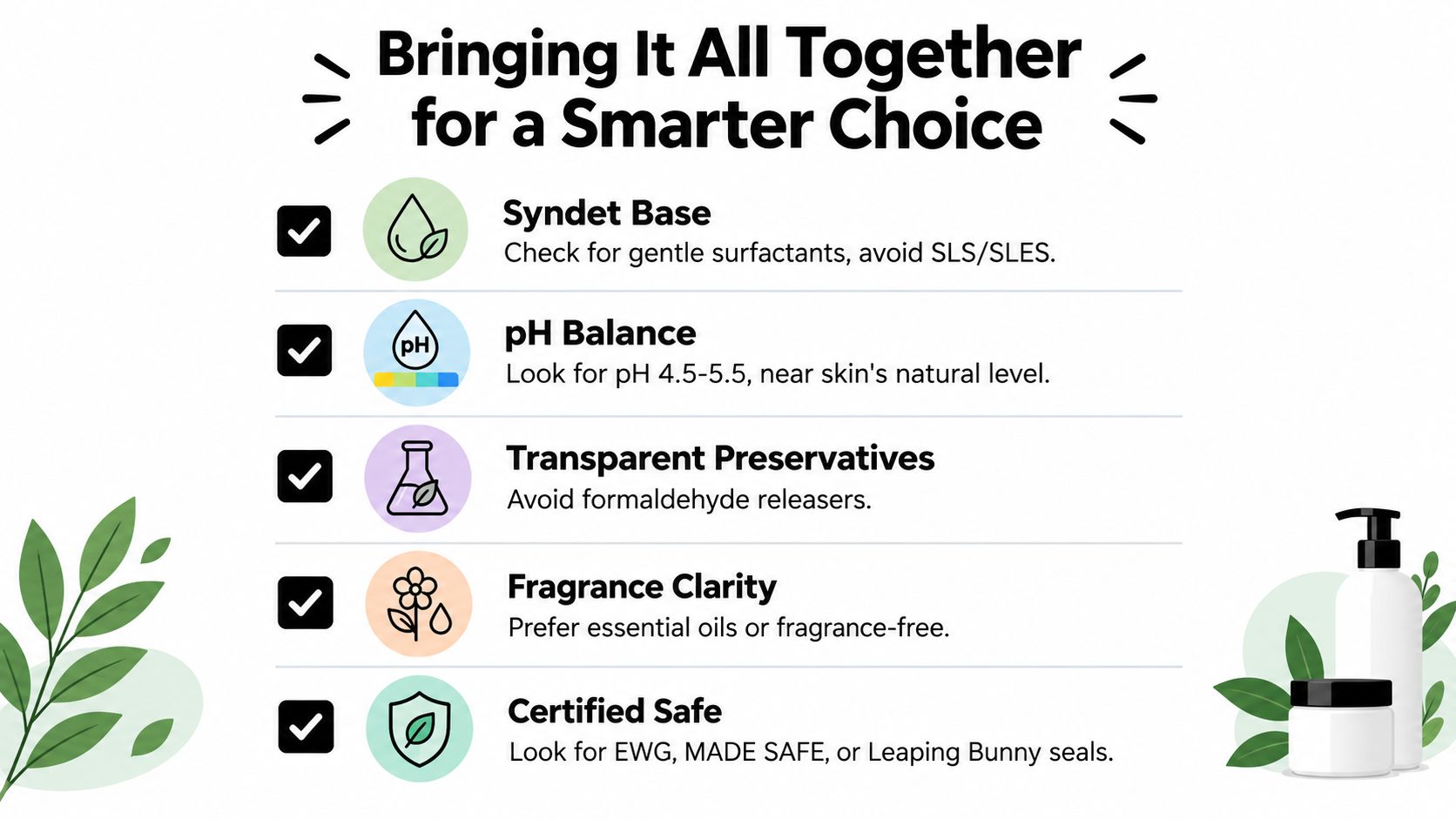
- Start with the base. Prefer a syndet-style cleanser when your skin dislikes traditional alkaline soap. Look for mild surfactants and don't assume a rich lather means better cleaning.
- Check the pH. A formula near the skin's natural acidic range, around 4.5 to 5.5, may be more compatible with a disrupted barrier than a high-pH cleanser. If the brand doesn't disclose pH, use the formula type and your skin's response as additional clues.
- Read preservation clearly. Water-based products need protection from microbial contamination. Look for a disclosed system and consider your own history with formaldehyde releasers, isothiazolinones, or other preservatives.
- Question fragrance language. “Botanical,” “natural scent,” and “essential oil” don't mean fragrance-free. Choose a fragrance-free product if scent consistently triggers itching, redness, or discomfort.
- Check the verification. A certification should identify what it evaluates, whether that's ingredient criteria, organic content, animal testing, or company performance. A front-label claim without a standard deserves less weight.
- Inspect the container. Recyclable, refillable, returnable, and reusable are different models. Choose the one your household can realistically maintain, because a system only reduces waste when people use it consistently.
A good product balances skin compatibility, effective cleansing, preservation, transparent labeling, and a credible packaging system. For broader household decisions, practical sustainable cleaning guides can help you apply the same thinking beyond the shower.
Fillaree offers refillable soaps and body-care essentials, including a liquid Soap & Suds body wash available in a reusable bottle and home refill format. Visit Fillaree to explore refill stations, home refills, and a lower-waste way to support your daily cleansing routine.