
Parabens Free Soap: A Practical Guide to Safer Cleaning
You're standing in the body-care aisle, turning a soap bottle around to read the ingredient list. One label says paraben-free, another promises “natural” ingredients, and a third uses the word “soap” even though it looks more like a liquid cosmetic cleanser. You want a product that cleans well, feels gentle, supports responsible companies, and doesn't hide important details behind reassuring marketing.
That's why parabens free soap deserves a more practical conversation. Avoiding parabens can reflect personal preferences and values, but it doesn't answer every safety question. The formula, preservation system, label accuracy, packaging, and company practices all matter.
Table of Contents
- Why I Chose Parabens Free Soap
- Understanding Parabens and Health Risks
- How to Read Soap Ingredient Labels
- Alternatives and Preservation Strategies
- The Hidden Ingredients Problem
- Refillable Systems and Sustainable Choice
Why I Chose Parabens Free Soap
I remember how easy it was to make a shopping decision based on one word. I'd see “paraben” on a label, decide I didn't want it, and move on. That instinct is understandable, especially when a daily-use product stays in contact with our skin, our sinks, and the wider environment.
Over time, I learned that the better question isn't, "Is this ingredient present?" It's, "Does this company explain the full formula, preserve it responsibly, package it thoughtfully, and make a product people can use every day?" A paraben-free claim can be a useful starting point, but it shouldn't end the investigation.
That principle shaped how I think about Fillaree. Building a refillable body-care company over the last decade has made “voting with your dollar” feel less like a slogan and more like a daily practice. Each purchase supports a formulation choice, a packaging decision, a manufacturing process, and the people responsible for all three.
Values show up in ordinary purchases
A good product should work first. A hand soap needs to remove dirt without leaving hands uncomfortable. A body wash needs a pleasant texture and dependable performance. A refill system needs to be convenient enough that people will keep using it.
Those standards also apply beyond soap. If you're simplifying your whole routine, a thoughtful guide to oral care without chemicals can help you ask the same questions about toothpaste, fragrance, abrasives, and labeling.
For practical examples, compare a basic product page with a company's broader information about natural hand soaps. Look for ingredient clarity, intended use, packaging instructions, and a realistic explanation of what the product does and doesn't promise.
Practical rule: Choose a product because the whole system makes sense, not because one front-label phrase sounds comforting.
Supporting good companies means rewarding that kind of clarity. It means looking for effective products from businesses that care about safety, workers, customers, and waste, while staying honest about trade-offs. That approach doesn't require fear of every synthetic ingredient. It requires attention.
Understanding Parabens and Health Risks
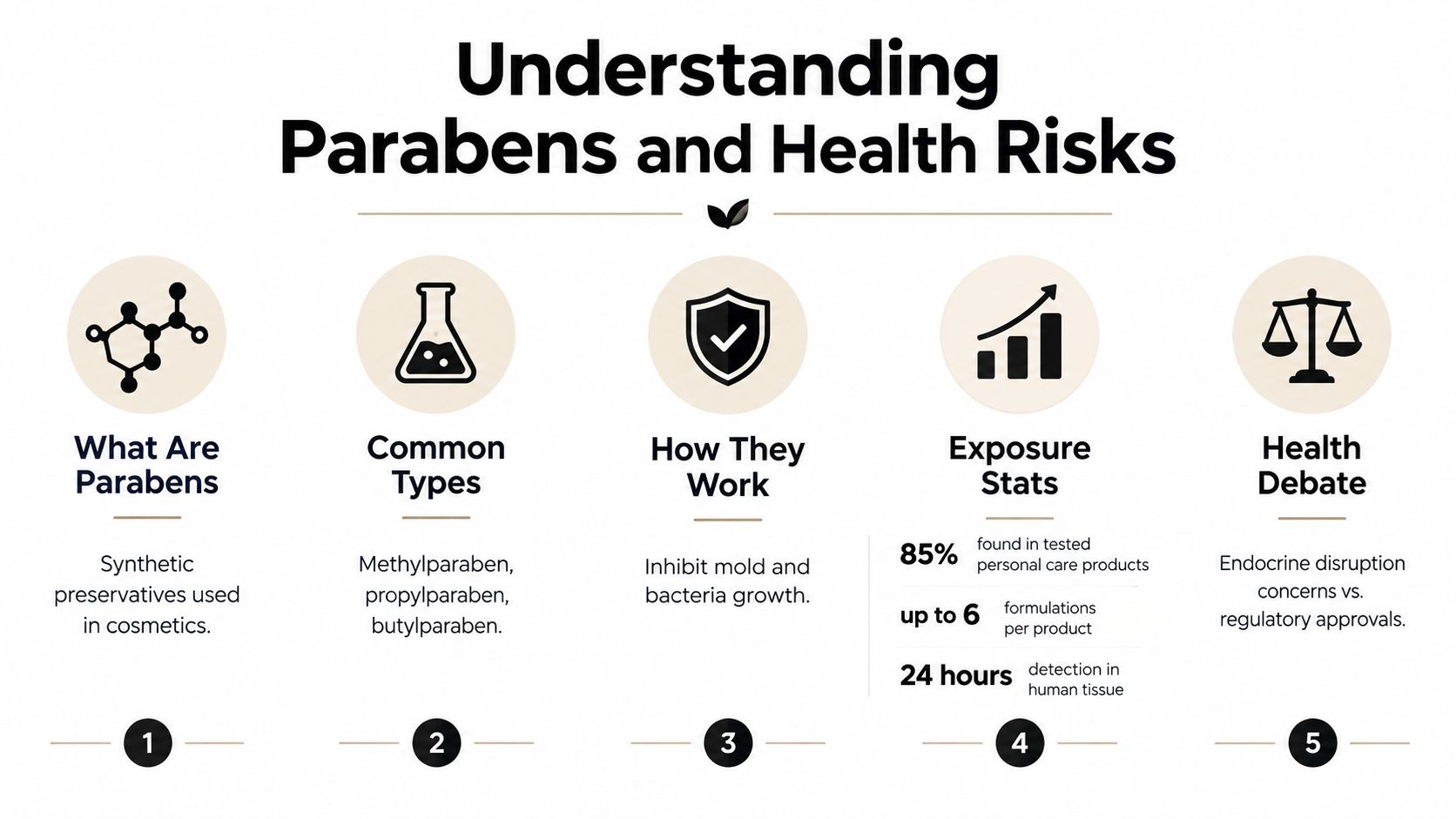
Parabens are preservatives, not cleansing agents. Manufacturers use them to help control mold and bacterial growth, particularly in personal-care products that contain water. Common examples include methylparaben, propylparaben, and butylparaben.
The safety picture is more conditional than many labels suggest. An EU scientific opinion on parabens states that one ester could be used at up to 0.4%, while mixtures could reach 0.8% under the earlier framework. Later EU action lowered propylparaben and butylparaben to 0.14% individually or together, with products placed on shelves after 16 April 2015 required to meet the newer rule.
The EU also banned five other parabens because reassessment data were insufficient, requiring products placed on the market after 30 October 2014 to be free from those substances. These decisions show restriction and category-specific caution, not a universal ban on every paraben in every product.
What the evidence says
The U.S. position differs. The FDA says it has no special preservative rules for cosmetics and has not found evidence that parabens, as used in cosmetics, harm human health. Health Canada describes parabens as legacy preservatives generally used at 0.5% or less, while noting that current evidence doesn't show clear human harm at typical use levels. Its regulatory summary describes an EU cap of 8 g/kg for total parabens and 4 g/kg for any single paraben, alongside a lower SCCS recommendation of 1.9 g/kg for combined propylparaben and butylparaben because of stronger hormonal activity signals. See Health Canada's cosmetic ingredient safety information.
Documented allergy is also uncommon. A systematic review and meta-analysis reported allergic contact dermatitis incidence of 0.9%, with a 95% confidence interval of 0.4% to 2.0%, classifying the reaction as rare. The Cosmetic Ingredient Review's assessment concluded that parabens have a low order of toxicity and are rarely irritating or sensitizing at cosmetic-use concentrations. Its 2020 assessment considered 20 of 21 parabens safe under present practices when total parabens stayed within 0.8%, while propylparaben and butylparaben were considered safe when their combined individual concentrations stayed within 0.19%. These findings are summarized in a systematic review of paraben safety.
The practical distinction matters. A Norwegian public-health review of parabens notes that butylparaben was considered safe in rinse-off products such as soap and shampoo, while concerns have focused more strongly on certain leave-on uses for very young children. Choosing paraben-free soap can still be reasonable, but the label reflects preference, regional rules, and formulation philosophy more than a universally proven safety crisis.
How to Read Soap Ingredient Labels
Start with the product category, not the marketing headline. In the United States, the FDA distinguishes a narrow legal category called soap from cosmetics. A product qualifies as soap when it's composed mainly of alkali salts of fatty acids and is labeled only for cleansing, as explained in this overview of FDA soap and cosmetic regulation.
That means a bar or bottle marketed as “soap” may legally be a cosmetic cleanser if it contains synthetic detergents, moisturizers, fragrance claims, or other cosmetic positioning. The distinction doesn't automatically tell you which product is better. It tells you why reading the full ingredient list matters.
A useful label-reading sequence
- Find the complete ingredient list. Don't rely only on “clean,” “natural,” or “free-from” claims. Look for a list that identifies the materials used in the product.
- Check the cleansing base. True soap commonly lists fats or oils transformed into alkali salts of fatty acids. A cosmetic cleanser may list surfactants instead. Neither category is automatically gentle or harsh, so consider the full formula and your skin's response.
- Scan for preservatives. If a liquid product contains water, ask how the manufacturer controls microbial growth. A paraben-free product still needs a preservation strategy, unless its format and manufacturing process make that unnecessary.
- Separate fragrance from function. Fragrance can affect comfort and tolerance even when parabens aren't present. Fragrance-free and essential-oil-scented are different claims, and neither tells you whether the overall formula suits sensitive skin.
- Look for use instructions. A rinse-off bar, hand soap, body wash, and leave-on lotion face different formulation demands. Directions can reveal whether the product is intended to remain on the skin.
- Investigate the company. Good manufacturers explain why they chose particular ingredients, how they test stability, and what happens to packaging after use. A clear answer is more useful than a long list of vague promises.
Label-reading principle: “Paraben-free” tells you what the formula leaves out. It doesn't tell you what replaces it.
Alternatives and Preservation Strategies
Removing parabens doesn't remove the need for product protection. Preservatives help prevent mold and bacterial growth, especially in water-based formulas. A responsible paraben-free formula therefore replaces the preservative system with something selected for the product's pH, water activity, packaging, intended use, and expected storage conditions.
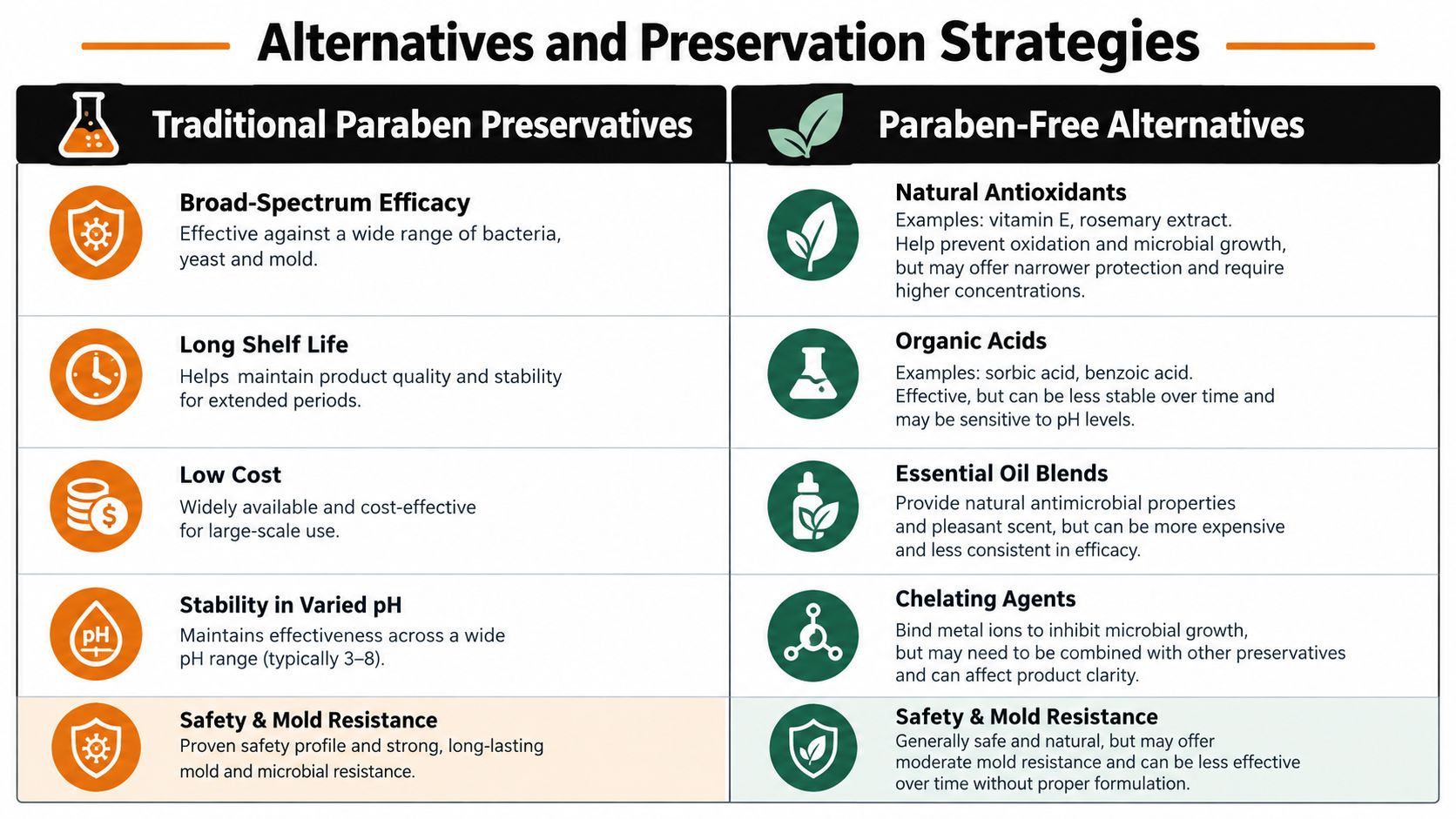
Traditional parabens have practical strengths. They offer broad-spectrum activity, tend to remain stable across varied conditions, and have a long history of formulation use. Their low cost and predictable performance explain why manufacturers adopted them widely.
Paraben-free systems can work well, but they aren't automatically simpler or safer. Organic acids such as sorbic and benzoic acid are pH-sensitive. Natural antioxidants such as vitamin E and rosemary extract can support formula stability, but they aren't interchangeable with a complete antimicrobial preservative system. Essential oils may contribute antimicrobial activity and fragrance, yet they can also create skin-tolerance concerns and shouldn't be treated as a universal substitute.
Compare the formulation, not the label
| Formulation approach | What it can do | Trade-off to ask about |
|---|---|---|
| Parabens | Provide broad-spectrum preservation and stability | Some shoppers prefer to avoid the ingredient class |
| Organic acids | Offer preservation in suitable pH conditions | Performance depends strongly on pH |
| Essential-oil blends | Add scent and may contribute antimicrobial activity | Fragrance and skin tolerance require careful evaluation |
| Chelating agents | Support preservation by binding certain metals | They're part of a system, not a complete preservative alone |
| High-pH soap | Creates an environment less favorable to some microbes | The finished product still needs appropriate manufacturing and storage controls |
For liquid products, ask whether the company conducts microbial testing and stability checks. For bars, ask how the soap is made, cured, packaged, and stored. A product can be free from parabens and still be poorly preserved, contaminated during production, or uncomfortable on the skin.
Ingredient names can also confuse shoppers. A resource explaining what polysorbate does in personal-care formulas is useful because unfamiliar ingredients aren't automatically harmful, and familiar-sounding “natural” ingredients aren't automatically risk-free.
The most dependable approach combines a suitable preservation system, controlled manufacturing, clean packaging, and clear instructions. “Natural” is not a performance test. A good formula must remain safe and usable through its intended life.
The Hidden Ingredients Problem
A paraben-free claim can create a false sense of completion. You may avoid one preservative class while overlooking fragrance disclosure, substitute preservatives, dyes, surfactants, packaging contact, or chemicals introduced during manufacturing.
Recent independent coverage describes a study of 113 personal-care and cleaning products in which 98% contained at least one chemical not listed on the label, and 85% contained at least one unlabeled chemical with known or suspected health hazards. The findings are discussed in coverage of hidden chemicals in consumer products. The implication is practical, not sensational: a front-label exclusion doesn't describe the entire formula.
Ask better questions
Look for companies that publish complete ingredient lists and explain fragrance choices. Ask whether “paraben-free” also means the brand discloses its substitute preservative system. If a company won't answer basic formulation questions, a reassuring badge on the front of the package shouldn't carry much weight.
Packaging deserves the same scrutiny. A formula that arrives in a disposable bottle may meet one ingredient preference while creating a recurring waste problem. Conversely, a refill pouch or reusable container needs sanitation instructions and a reliable return or reuse process.
The strongest choice joins ingredient transparency, product performance, and responsible packaging. A soap doesn't become safe because it uses a fashionable label, and it doesn't become sustainable because its package is beige. Judge the complete system.
Refillable Systems and Sustainable Choice
Refilling can turn a single purchase into a lasting household habit, but the system has to be designed for real life. Consumers need clear instructions, clean containers, dependable product quality, and an easy way to return or reuse packaging.
A Dutch online experiment with 250 consumers found that refillable and returnable packaging were both evaluated positively. Participants associated reusable packaging with environmental benefits, anticipated conscience, and enjoyment, while also identifying contamination, complexity, and performance as risks, according to research on reusable packaging perceptions.
That contamination concern deserves attention. The same research found that refillable packaging had a significantly higher perceived contamination risk than returnable packaging, with mean scores of 2.50 versus 1.80 and p < 0.01, as reported in the study's published chapter. Brands can address that risk through washable containers, controlled filling procedures, sealed components, useful storage guidance, and transparent sanitation practices.
What a workable refill system includes
A practical system should make the responsible choice easy:
- Accessible refills: Customers need nearby refill points or a home-delivery option that fits their routine.
- Clear container care: Instructions should explain how to empty, wash, dry, and reuse bottles.
- Formula consistency: The soap should clean effectively after each refill, not only when the package is new.
- Return pathways: Used refill packaging should have a defined next step instead of going straight to the bin.
- Community participation: Partner stations, local shops, and neighborhood events can make reuse feel normal rather than inconvenient.
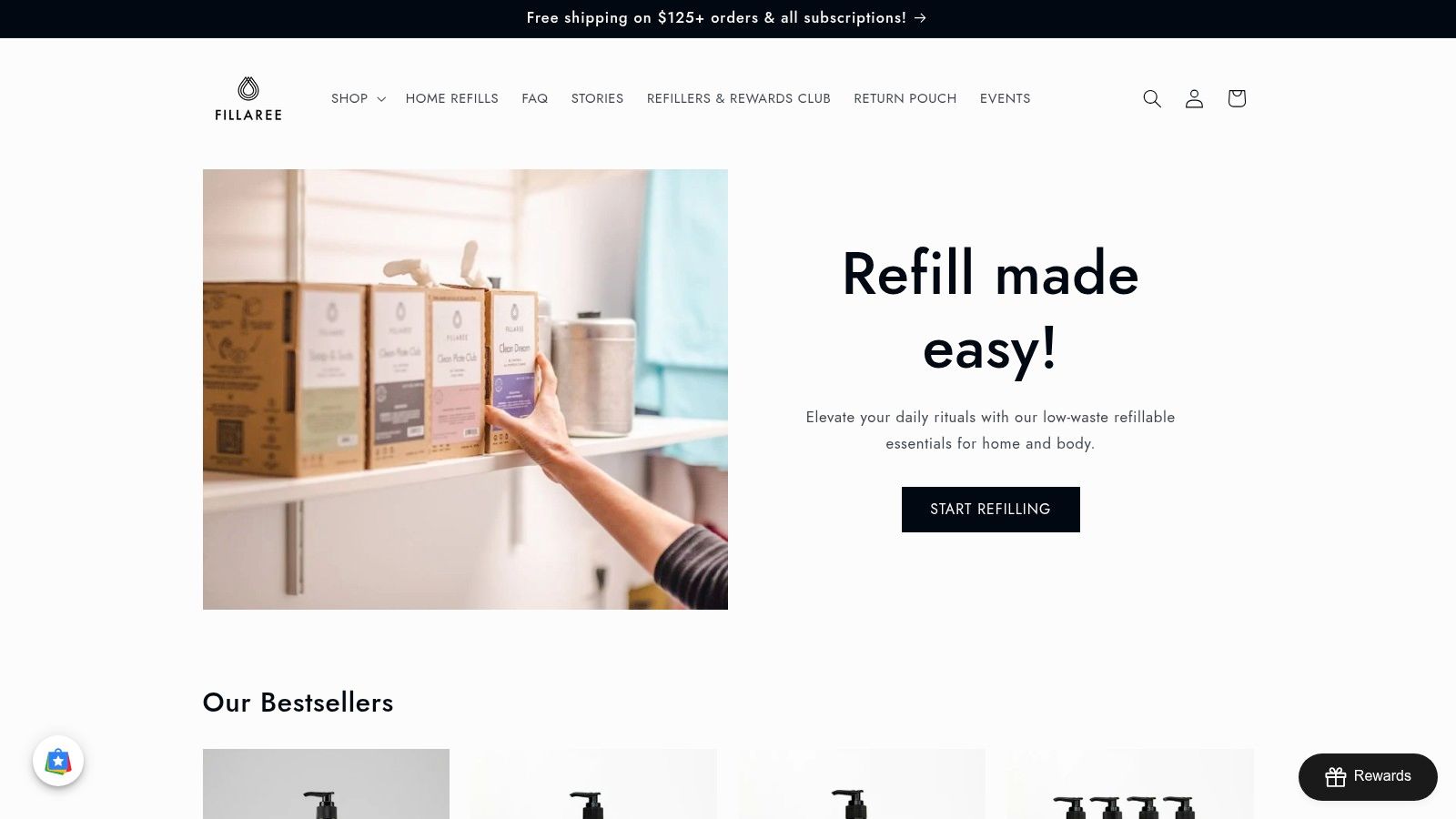
Fillaree offers refillable soaps and other household essentials through partner stations, home refills, and a take-back process for used refill bags. Its Charcoal Hand & Body Soap is described as paraben-free and phthalate-free, while its Soap & Suds product uses organic vegetable oils and essential oils. Those are specific product and system choices, not proof that every paraben-free product has the same formulation or environmental profile.
Here's what the system looks like in practice:
You can also see how a refill station supports zero-waste routines. The meaningful choice isn't “parabens or sustainability.” You can evaluate both. Choose a soap with a transparent formula, a preservation approach suited to its format, packaging that fits your habits, and a company willing to explain its decisions.
Fillaree offers refillable hand and body soaps designed for low-waste routines, with options for partner-station refills and home replenishment. Visit Fillaree to explore the products, refill options, and practical ways to make paraben-free cleaning part of a more transparent circular system.