
Septic Safe Dish Soap What It Means and How to Choose
You're standing at the kitchen sink after dinner, watching a cloud of suds circle the drain. If your home has a septic system, it's natural to wonder whether that cheerful foam is upsetting the tank underground. The good news is that ordinary liquid dish soap is generally fine in normal household quantities. The more useful question is what the soap contains, how much you use, and whether your septic system is already healthy.
I've spent years helping Durham households reduce waste without turning everyday chores into chemistry homework. The practical approach is simple: choose a gentle, phosphate-free and biodegradable formula, skip antibacterial claims, use only what you need, and keep the wider system maintained. Resources such as see from Total Plumbing can also help when a plumbing symptom points beyond product choice.
This guide explains how septic systems process wastewater, why the phrase septic safe dish soap can be misleading, which ingredients deserve caution, and how refill habits can support both septic care and low-waste living. By the end, you'll have a calm, practical way to choose good products, use them sensibly, and support good companies that care about waterways, packaging, and the communities they serve.
Table of Contents
- How Your Septic System Actually Works
- What Septic Safe Really Means and What It Does Not
- Ingredients and Formulations to Avoid and Why They Harm Septic Systems
- How Much Matters More Than the Label and How to Use Dish Soap Safely
- Septic Maintenance Habits and Low Waste Refill Options That Align
- Choosing Your Next Septic Safe Dish Soap With Confidence
How Your Septic System Actually Works
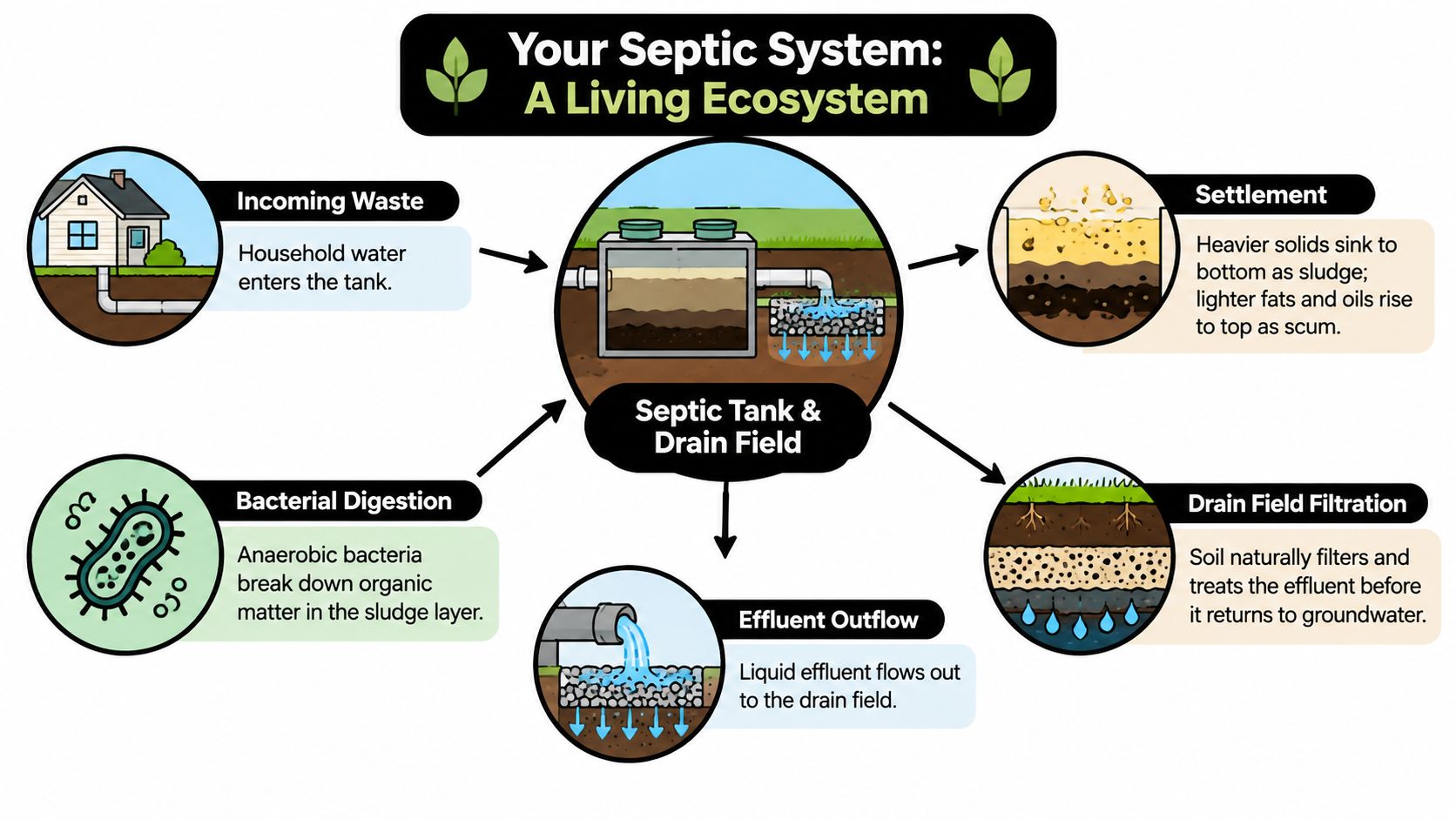
A septic system works less like a trash can and more like a small living treatment plant. Wastewater from sinks, showers, toilets, and washing machines enters the tank, where heavier solids settle at the bottom as sludge and lighter fats and oils rise as scum. The liquid layer between them, called effluent, moves onward toward the drain field.
The tank relies on living biology
Anaerobic bacteria work in the oxygen-poor tank environment to break down organic material. These microbes don't make waste disappear, but they reduce and transform it so the system can handle the liquid portion more effectively. A harsh or concentrated chemical load can interfere with that biological activity, just as an overly strong cleaning solution can damage helpful organisms in a garden compost pile.
Dish soap is part of the household wastewater stream. A small amount used for washing a sink of plates is very different from pouring a large quantity of concentrated cleaner into the drain. The tank can receive everyday wastewater, but it isn't designed to neutralize every chemical product used in a home.
The drain field finishes the treatment
After effluent leaves the tank, it spreads through pipes in the drain field and filters through layers of soil. Soil helps treat the wastewater before it returns to groundwater. A properly functioning drain field is therefore part of the treatment system, not merely a place where the tank empties.
That distinction matters when you assess cleaners. A product may break down in the tank yet still add unwanted nutrients or persistent residues to the wider wastewater pathway. Conversely, a mild formula used in small amounts may pose little concern in a correctly sited and maintained system.
A useful mental model: your tank is a living digestion chamber, and your drain field is the soil-based finishing filter. Protect both, not just the pipe under the sink.
This model applies beyond dish soap. If a product claims to be gentle, ask whether it is likely to biodegrade, whether it contains antibacterial ingredients, and whether you're sending a little through with normal washing or a concentrated load all at once.
What Septic Safe Really Means and What It Does Not
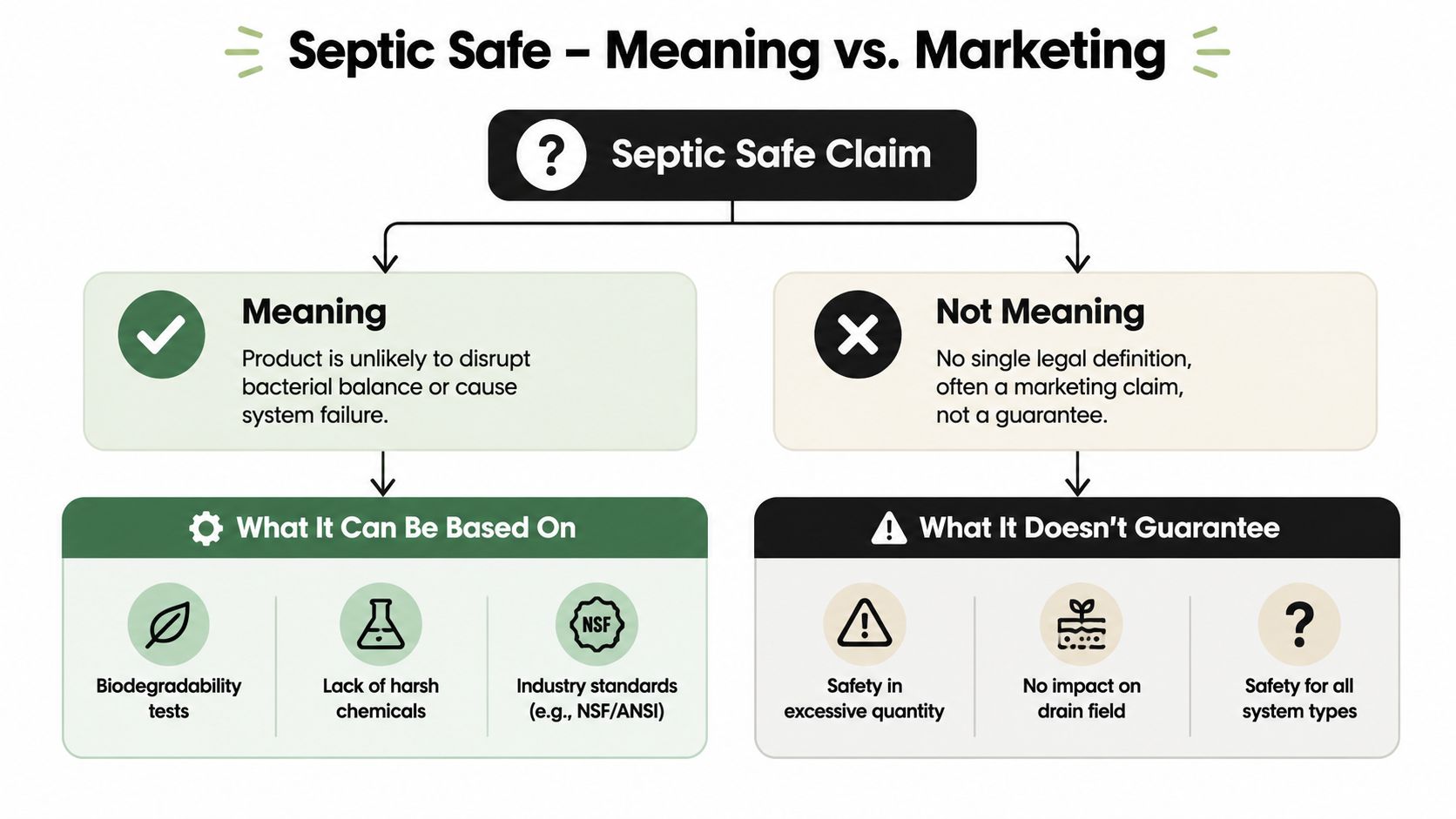
The words septic safe sound precise, but they often aren't. Product labels may use the phrase to signal that ordinary use is unlikely to cause trouble, yet the claim alone doesn't tell you how the formula was evaluated, how much product the claim assumes, or whether the product suits every septic system.
A stronger approach is to look past the front label. The U.S. EPA says there is no scientific evidence that biological or chemical septic additives help septic tanks, and some additives can harm the system or contaminate groundwater. The EPA also explicitly warns homeowners not to use septic system additives, so prevention through sensible household products is more dependable than buying something intended to repair the biology afterward. This guidance is discussed in EPA-related septic product guidance.
Read the claim as a starting point
A product that is suitable for septic households should be unlikely to disrupt bacterial treatment when used as directed. That doesn't mean it is harmless in excessive quantities, safe for every system condition, or incapable of affecting the drain field. A weak tank, overloaded system, or poorly maintained drain field can respond badly to habits that a healthy system would tolerate.
Look for evidence that gives the label meaning:
- Ingredient transparency: You should be able to identify the surfactants, preservatives, fragrances, and active cleaning agents.
- Biodegradability information: This indicates that ingredients are designed to break down, although tests can depend on the formula and testing conditions.
- Third-party verification: The EPA's Safer Choice framework evaluates products against human health and environmental criteria, including septic-system compatibility. That gives shoppers a more structured benchmark than an unsupported “septic safe” statement.
- Use directions: A product's suitability depends partly on the amount used. Directions that encourage a small, controlled dose are more useful than vague promises.
The broader shift is away from informal “safe enough” marketing and toward verification that considers downstream environmental impact and wastewater compatibility. You don't need a chemistry degree, but you do need to treat the label as one piece of evidence rather than a guarantee.
Ingredients and Formulations to Avoid and Why They Harm Septic Systems
The formula matters because a septic tank depends on microbial activity. Some ingredients can suppress that biology, add nutrient load, or remain troublesome as wastewater travels toward the drain field. The goal isn't to fear every synthetic ingredient. It's to avoid formulations that create unnecessary stress when gentler options can clean just as well.
Antibacterial agents deserve special caution
Antibacterial dish soaps are a poor fit for a system that relies on beneficial bacteria. An antibacterial ingredient is designed to inhibit or kill microbes, and that action doesn't stop at the kitchen sponge. Regular use can send those agents into the tank, where they may interfere with the organisms responsible for breaking down organic matter.
Phosphates are another reason to read the label. A large-scale detergent study summarized by the U.S. cleaning industry found that detergent-derived phosphorus accounts for 5.2% of average annual phosphorus inputs to septic systems. The concern is downstream water quality, since phosphorus can contribute to nutrient problems when wastewater isn't fully treated. For a household, choosing phosphate-free dish soap is a modest but sensible way to reduce that load. Further context appears in septic detergent guidance on phosphate-free formulas.
Compare the formulation, not just the fragrance
Readily biodegradable surfactants, including linear alkylbenzene sulfonate, or LAS, and plant-derived surfactants are commonly preferred in septic-adjacent products because they break down more readily than older branched-chain surfactants. The National Septic Authority discusses septic-compatible product formulation and the role of biodegradable surfactants in reducing persistence.
| Ingredient or feature | Septic impact | Better alternative |
|---|---|---|
| Antibacterial agents | May suppress beneficial bacteria in the tank | A non-antibacterial formula |
| Added phosphates | Adds phosphorus to the wastewater stream and can increase downstream nutrient concerns | Phosphate-free dish soap |
| Persistent surfactants | May remain longer as wastewater moves through the system | Readily biodegradable surfactants such as LAS or plant-derived options |
| Excessive fragrance or opaque ingredient lists | Makes it harder to judge the formula and may add unnecessary ingredients | Transparent ingredient information and a mild formula |
| Polysorbates and similar supporting ingredients | Need context because performance depends on the whole formulation | Review the manufacturer's ingredient information, such as this explanation of polysorbate in cleaning products |
“Plant-based” is helpful information, but it isn't a complete safety test. Biodegradability testing can be context-specific, and surfactants vary widely. A review of nonionic surfactants found more than 97% parent-compound loss with metabolite formation in raw domestic wastewater after 96 to 100 hours in the cited PubMed review. That supports broad breakdown under the tested conditions, not automatic compatibility for every product.
How Much Matters More Than the Label and How to Use Dish Soap Safely
A bottle can carry a reassuring label and still cause trouble if you use far more product than necessary. Ordinary liquid dish soap is generally acceptable in normal household quantities, while the larger concerns are overuse, antibacterial formulas, and using dish soap as a whole-house cleaner. Dose, formulation, and system condition work together.
Use a small, diluted amount
For handwashing, add soap to a basin or sink of water instead of coating every plate directly. This spreads the product through the water and reduces highly concentrated patches entering the drain. A small squirt is usually enough for routine dishes, especially when you scrape food residue first.
Avoid treating dish soap as a substitute for drain cleaner. If a drain is slow, use a plunger, a drain snake, or get plumbing help rather than sending a large chemical or soap load into the septic tank. For a specific household plumbing approach, this toilet unclogging dish soap method is better considered a targeted plumbing technique, not permission to pour soap down drains routinely.
Watch the pattern of wastewater
One full sink of soapy water is different from repeated buckets of concentrated cleaner. If you're washing a large stack of dishes, work in manageable batches and avoid releasing a sudden, unusually heavy flow. Scrape plates into the trash or compost where appropriate, keep grease out of the sink, and don't use dish soap to clean floors, walls, or the whole house unless the product directions specifically support that use.
The same dose awareness applies to other household chores. Avoid pouring leftover cleaning solution into the drain because the container is nearly empty. Follow the product's disposal directions, and ask a septic professional about unusual spills or a suspected system problem.
Practical rule: use enough soap to lift food and grease, not enough to create a mountain of foam. Suds are a cleaning signal, not a measurement of effectiveness.
For everyday use, these habits are more valuable than chasing a magic additive or changing every product at once:
- Scrape before washing: Less food and grease reaches the tank.
- Dilute during washing: Add soap to water rather than applying a heavy stream directly to dishes.
- Skip antibacterial formulas: Protect the microbial process instead of trying to sterilize the tank.
- Avoid concentrated dumping: Never empty a bucket of strong soapy solution into the drain in one go.
- Keep cleaners in their proper role: Dish soap belongs at the sink, not in drains, toilets, or as an all-purpose septic treatment.
- Respond to warning signs: Slow drains, odors, or wet areas near the drain field call for professional assessment.
Septic Maintenance Habits and Low Waste Refill Options That Align
Dish soap is one small input in a larger septic system. A gentle formula cannot make up for neglected maintenance, excess water, grease entering the plumbing, wipes flushed down toilets, or vehicles and heavy structures over the drain field. The tank, pipes, and soil each have a role, so household care needs to cover all three.
Pair product care with system care
Have the tank serviced on the schedule recommended for your property and local conditions. Conserve water where practical so the drain field does not receive unnecessary surges, and repair leaking fixtures promptly. Keep cooking grease, solvents, paint products, pesticides, and wipes out of household drains.
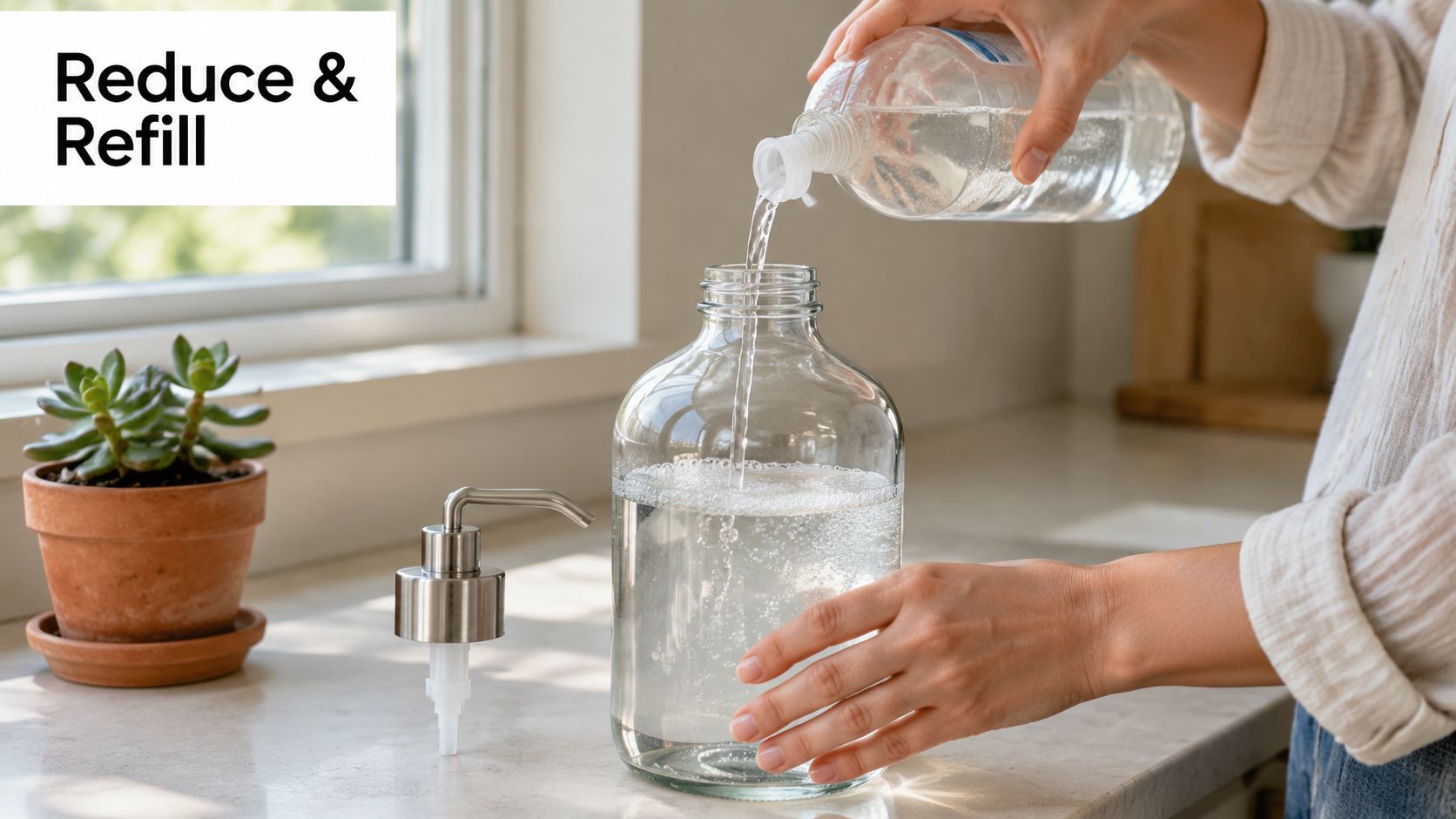
Low-waste choices can support that routine. Buying a gentler formula in a refillable container reduces packaging without encouraging careless dosing. A refill station or larger home refill lets you keep a familiar dispenser and replace only the product. Clear instructions make it easier to use a consistent amount each time.
Reuse works when people return and refill
Returnable packaging depends on dependable participation. A major reuse report notes that returnable systems can still face environmental-performance challenges when return rates are low, even at around 60% according to the Ellen MacArthur Foundation's reuse report. A refill routine therefore needs to fit ordinary shopping habits, rather than rely on occasional good intentions.
The same report describes an EU scenario in which reaching a 50% reusable-packaging target by 2030 across three sectors could cut 3.7 million tonnes of CO2, 10 billion cubic metres of water, and nearly 28 million tonnes of material. Independent reuse research also reports 72% energy savings and 75% water savings for reuse compared with single-use packaging in its European reuse barometer summary.
Those figures describe packaging systems, not septic performance. The practical connection is still clear: choose a biodegradable, septic-compatible soap, measure it sensibly, and support businesses that maintain refill infrastructure and responsible material recovery. Durham households can explore local places to buy and refill, keeping the low-waste habit close to home.
Choosing Your Next Septic Safe Dish Soap With Confidence
Choosing a septic safe dish soap doesn't require perfect ingredients or a cupboard full of specialty products. Start with three filters: formulation, dose, and system condition. The formula should be phosphate-free, biodegradable, and non-antibacterial, with transparent ingredient information and, where available, meaningful third-party verification such as EPA Safer Choice.
Then look at how you'll use it. A mild liquid soap used in a small amount for ordinary handwashing is a different situation from concentrated product poured into a drain, used as a whole-house cleaner, or released in repeated heavy loads. Scrape plates, dilute soap in the sink, keep grease and harsh chemicals out of the plumbing, and treat slow drains or odors as maintenance concerns rather than invitations to add more cleaner.
Finally, consider the company behind the bottle. Good products matter, but so do good systems. Refill options can help reduce single-use packaging when customers return containers or refill consistently, and supporting responsible businesses keeps low-waste infrastructure available in the community.
For a product-focused starting point, review Fillaree's dish soap guidance for septic systems. Compare the ingredients, choose a dispenser that makes measured use easy, and make one practical change this week rather than waiting for a perfect household reset.
Fillaree offers refillable dish soap and home refill options designed for households that want effective cleaning with less single-use packaging. Visit Fillaree to explore septic-friendly products, refill options, and local ways to build a simpler low-waste routine.