
What Does Purple Shampoo Do to Blonde Hair
You leave the salon with that clean, expensive-looking blonde. A week or two later, the mirror tells a different story. The bright tone has softened into something warmer, yellower, and a little less polished than you wanted.
That's usually the moment people ask what does purple shampoo do to blonde hair, and whether it's worth adding another bottle to the shower. It can be worth it, but only if you use it for the right reason, at the right frequency, and with a formula that doesn't fight your hair or your values.
Table of Contents
- Why Your Blonde Hair Turns Brassy
- The Color Wheel Secret How Purple Shampoo Works
- Creating Your Perfect Purple Shampoo Routine
- Common Purple Shampoo Mistakes and How to Fix Them
- How to Choose a Sustainable and Gentle Purple Shampoo
- Your Top Purple Shampoo Questions Answered
Why Your Blonde Hair Turns Brassy
You can wash, style, and protect your blonde carefully and still watch it drift warmer over time. What changes first is usually the tone, not the overall color. Hair starts to reflect more yellow, gold, or even a slight orange cast, especially through the mids and ends.
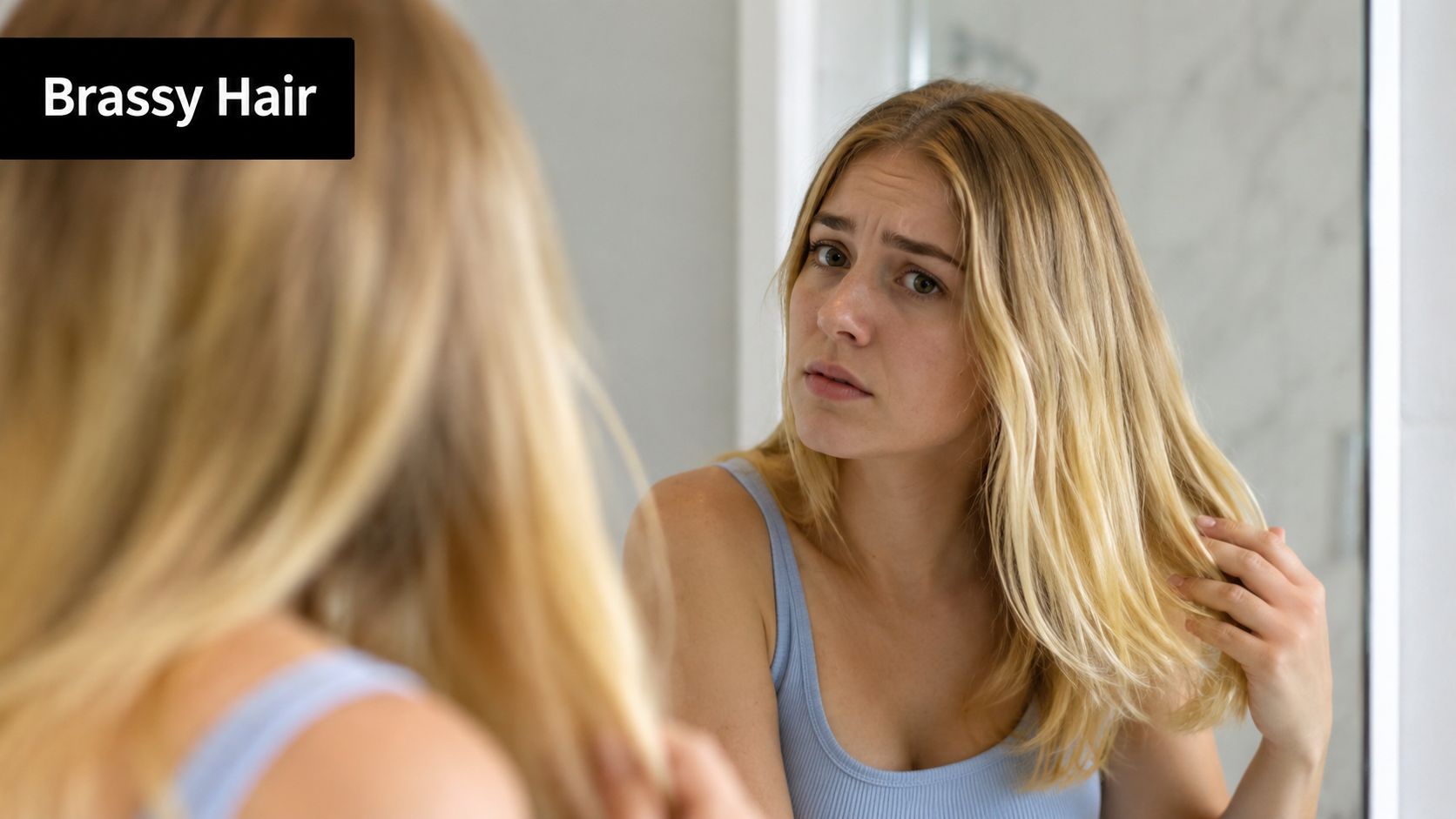
The reason is simple. Blonde hair, especially hair that has been lightened, is more porous and more exposed. Sun, hot tools, hard water, chlorine, and repeated washing all wear on the cuticle, so warm underlying tones show up faster. That is normal for highlighted, bleached, gray-blended, and naturally blonde hair.
The everyday reasons brassiness shows up
A few habits and environmental factors tend to push blonde off-tone:
- Sun and heat exposure: UV rays and high styling temperatures dry out the outer layer of hair and make warm tones more visible.
- Bleached or highlighted lengths: Lightened hair has a more fragile cuticle, so it grabs discoloration and loses a fresh toner finish sooner.
- Mineral and product buildup: Hard water, styling products, dry shampoo, and chlorine can leave blonde looking dull, flat, or slightly yellow.
- Daily wear: Friction from brushing, tight styles, and even pillowcases slowly roughs up the hair surface.
I see one misconception all the time. Brassiness does not always mean your colorist missed the mark, and it does not automatically mean you need another lightening service. In many cases, your blonde is reacting to normal life and to the condition of the hair fiber itself.
This is also where conscious hair care matters. If your routine relies on frequent heat styling, over-washing, or replacing toning products every few weeks because they are harsh or overpackaged, the cost adds up for your hair and for the planet. A gentler routine, less heat, refillable or low-waste products, and support for ethical brands can help keep blonde clearer for longer with less waste overall.
If you wear extensions, shade matching matters too. Understanding undertones is part of mastering hair extension shades, especially if your natural hair and added hair start warming up at different rates.
Brassiness usually creeps in gradually. Many people only notice it once bathroom lighting, daylight, or a photo makes the yellow cast obvious.
The Color Wheel Secret How Purple Shampoo Works
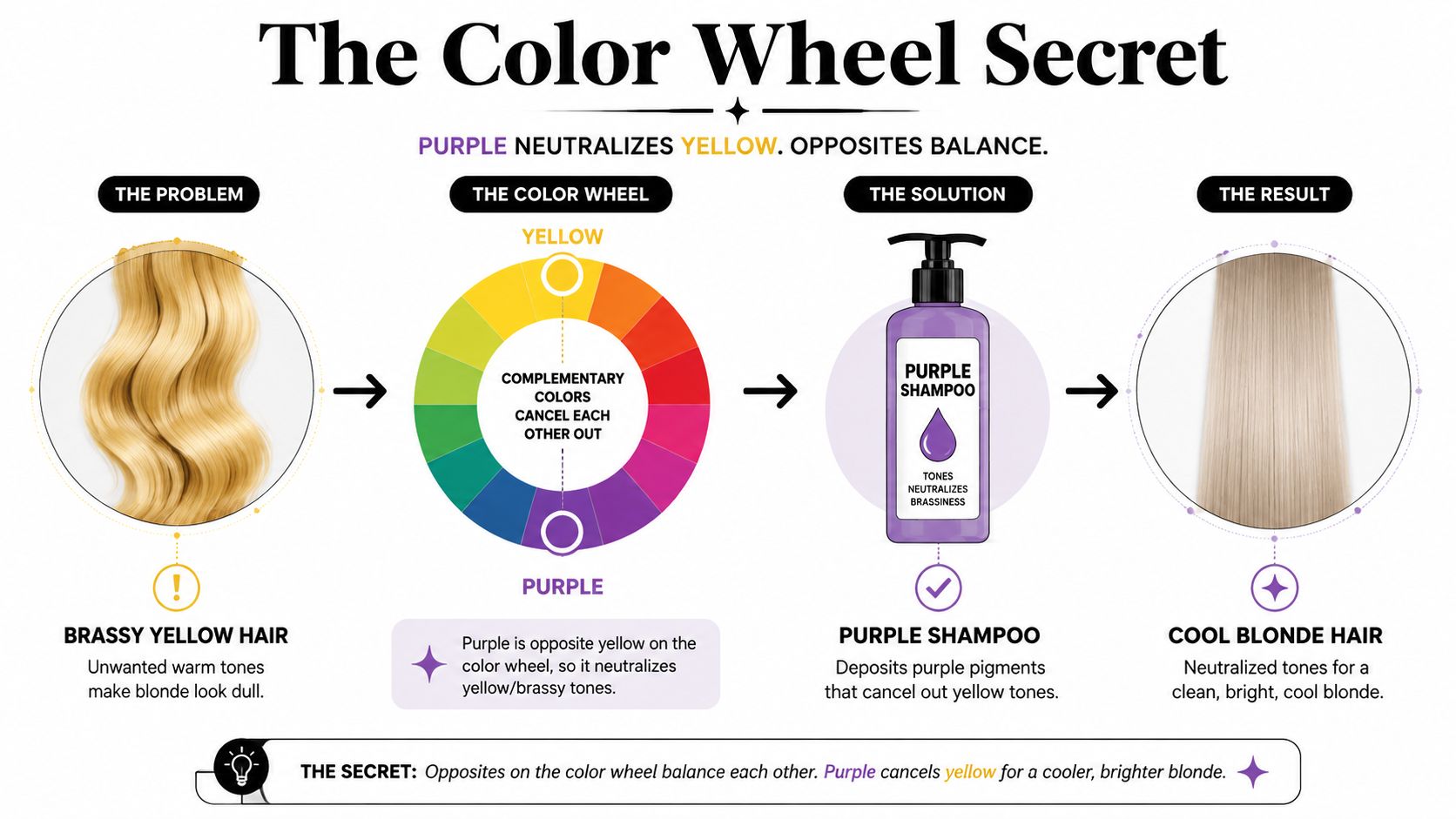
Purple shampoo works because violet and yellow sit opposite each other on the color wheel. According to Lux Life's explanation of the science behind purple shampoo, violet pigments are approximately 400–420 nm, while yellow tones are approximately 570–590 nm. When those violet pigments sit on the outer layer of blonde hair, they help cancel the yellow cast that makes hair look brassy.
What it does and what it doesn't
This is the part many people get wrong. Purple shampoo does not lighten hair. It doesn't raise your natural level, and it doesn't turn dark hair blonde. What it does is deposit a temporary wash of violet pigment on the hair's outer cuticle so blonde looks cooler, cleaner, and brighter.
That's why the effect can feel dramatic even though the product isn't changing your actual lightness. You're not getting a lighter blonde. You're seeing less yellow.
Practical rule: Use purple shampoo as a toner, not as a substitute for lightening services.
Madison Reed also frames it this way in its discussion of why to use purple shampoo. The product brightens the appearance of blonde by neutralizing yellow undertones, rather than making the hair blonder in a chemical sense. Their guidance also notes that cooler blondes often need enough contact time for the pigment to work, typically 2 to 3 minutes, and up to 10 minutes for intense results, depending on the formula and the level of warmth in the hair.
Why shade matching still matters
Purple shampoo helps most with yellow brassiness. If your hair reads more golden, buttery, or pale yellow, it's usually a good fit. If the unwanted warmth is deeper or more orange, shampoo alone may not fully correct it.
This is also why visual tone matching matters so much in extensions and color blending. If you're comparing your blonde to added pieces or trying to figure out whether your warmth is soft gold or full brass, a guide to mastering hair extension shades can help you train your eye before you choose a toning routine.
A good result depends on matching the product to the problem. Purple shampoo isn't magic. It's targeted color correction.
Creating Your Perfect Purple Shampoo Routine
You wash your hair, leave the purple shampoo on a little longer because the blonde looked warm in the bathroom mirror, and end up with hair that feels drier than it did before. That usually means the routine needs adjustment, not more product.
A good purple shampoo routine is specific to your hair. Porosity matters. So does how pale your blonde is, how often you wash, and whether your hair already runs dry, fine, or fragile. The best routine is also a restrained one. Using only what your hair needs keeps tone cleaner, prevents the cycle of over-toning and correcting, and helps you buy less over time.
Who should use it more carefully
Highly lightened, porous, and very pale blonde hair grabs pigment fast. Fine hair often shows that effect even sooner because buildup and dryness are easier to notice. Natural blonde hair can also feel rough if toning products are used too often, especially with stronger formulas.
Start conservatively. If your hair is platinum, bleached, highlighted, or very porous, begin with a short contact time and watch how the mid-lengths and ends respond first. If your hair is natural blonde or low-porosity, keep the routine lighter and less frequent. You can always add another toning wash next week. It is harder to quickly reverse a flat, over-muted blonde without using more products.
If your hair is fine, soft, or already prone to dryness, the follow-up matters as much as the shampoo. Pair toning with a lightweight moisturizing product, and if your strands lose volume easily, choosing the best conditioner for fine hair can keep your blonde bright without leaving it limp.
A simple routine that works
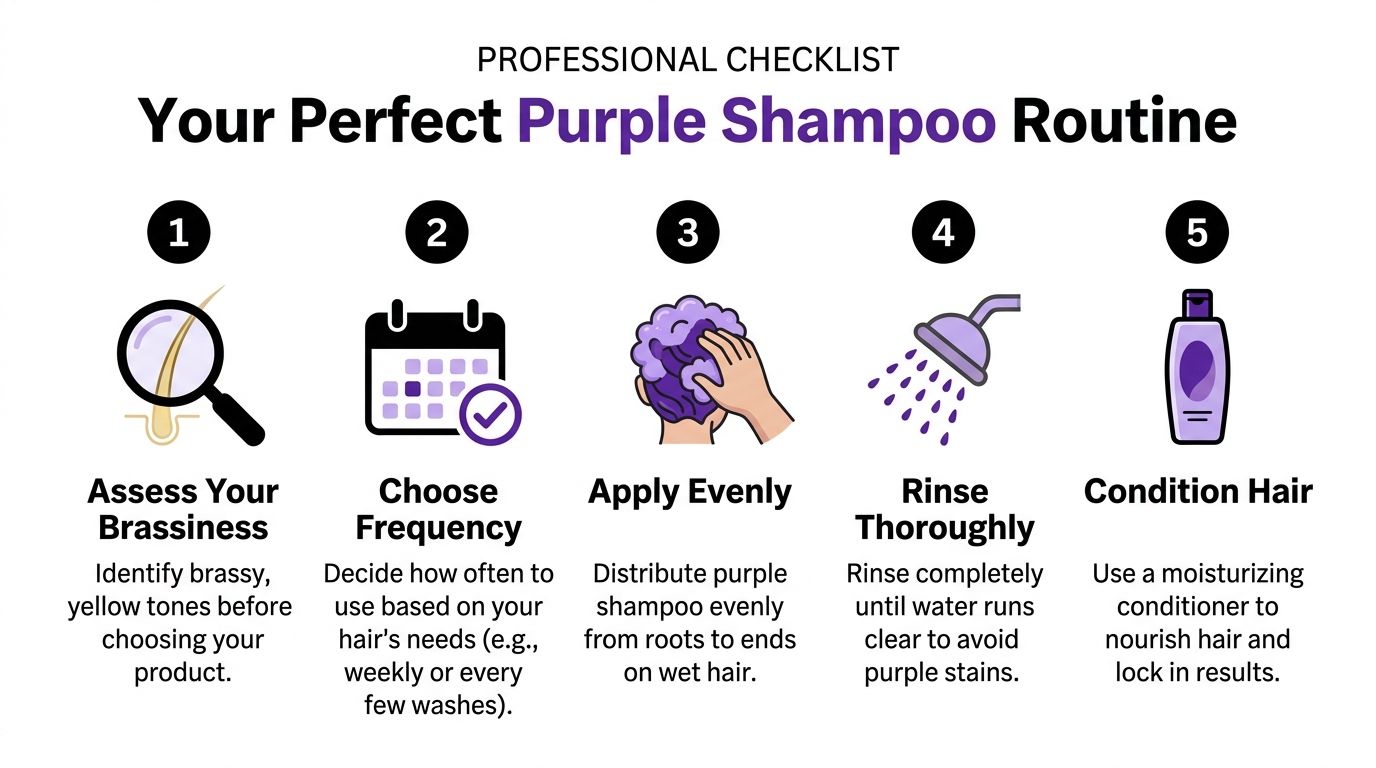
For many blondes, one purple shampoo wash per week is a smart starting point. If you wash two or three times weekly, make just one of those washes your toning wash and keep the others focused on cleansing and moisture.
Use this framework:
- Check the tone before you wash. Slight yellowing needs less product and less time than obvious brassiness.
- Apply where warmth shows up most. That is often through the mid-lengths and ends, not every inch from root to tip.
- Keep the first few uses short. One to three minutes is usually enough to test how your hair takes pigment.
- Rinse very thoroughly. Left-behind residue can make pale sections look dull.
- Condition every time. Purple shampoo adjusts tone. It does not reliably replace moisture.
This walkthrough is helpful if you want to see the process in motion:
Formula strength matters too. Some purple shampoos are soft enough for more frequent use. Others are highly pigmented and work better as an occasional reset. I always suggest patch-testing your routine on your least visible section first, especially if your ends are porous or your blonde is very light.
A sustainable routine is usually a simpler one. Use purple shampoo only when your tone needs correction. Alternate with a gentle regular shampoo. Choose a conditioner or mask that comes in low-waste packaging if you can, and support brands that are transparent about ingredients, refills, and manufacturing standards. Better hair care is not just about cooler color. It is about building a routine that respects your hair, your budget, and the amount of product you bring into your home.
If your blonde starts looking flat instead of bright, reduce the frequency or shorten the contact time. Small adjustments usually work better than adding more pigment.
Common Purple Shampoo Mistakes and How to Fix Them
You wash, rinse, and catch your hair in the mirror under bathroom light. Instead of bright blonde, the ends look flat, a little gray, or oddly thirsty. In practice, that usually points to a routine issue, not a ruined color.
The pattern is simple. Purple shampoo gets overused, left on too long, or applied without enough attention to porosity, especially on pale or processed sections. The good news is that the fix is usually small too. Use less product, space out toning washes, and bring moisture back in before buying another corrective product. That approach is better for your hair and creates less waste.
The two issues I see most often
The first is a faint purple, silver, or muddy cast. The second is dryness that gets blamed on blonde hair in general, when the actual problem is a toning routine that keeps taking without giving moisture back.
If your hair picks up too much violet pigment, the color sits on the surface and usually fades out with a few regular washes. A clarifying shampoo can speed that up if you need a quicker reset.
| The Problem | The Cause | The Solution |
|---|---|---|
| Hair looks slightly purple or gray | Too much pigment, too much time, or too many toning washes close together | Pause purple shampoo for a few washes and use a clarifying shampoo if the cast is hanging on |
| Blonde looks dull instead of bright | The color has been over-corrected, so the blonde loses that clean reflective look | Go back to a gentle regular shampoo and conditioner until the blonde looks clear again |
| Hair feels rough or dry | Toning corrected the shade but did not replace moisture | Follow with a rich conditioner or mask and reduce how often you tone |
| Tone looks patchy | Product was not distributed evenly, or some areas were more porous | Apply more selectively next time, focusing on the brassy sections instead of coating every strand |
| Curls or waves feel extra thirsty | Pigmented cleansers can leave textured hair less soft when moisture is already low | Build your wash day around hydration, and if your hair needs more slip, this guide to the best conditioner for curly hair can help |
A bad purple shampoo result is usually reversible.
I tell clients to treat correction the same way I treat sustainable beauty in general. Start with the smallest fix that solves the problem. Shorter contact time, fewer toning washes, a better conditioner, and more precise application usually do more than adding another bottle to the shower. Conscious hair care is not about owning every product for every scenario. It is about choosing what your hair needs and supporting routines that waste less.
How to Choose a Sustainable and Gentle Purple Shampoo
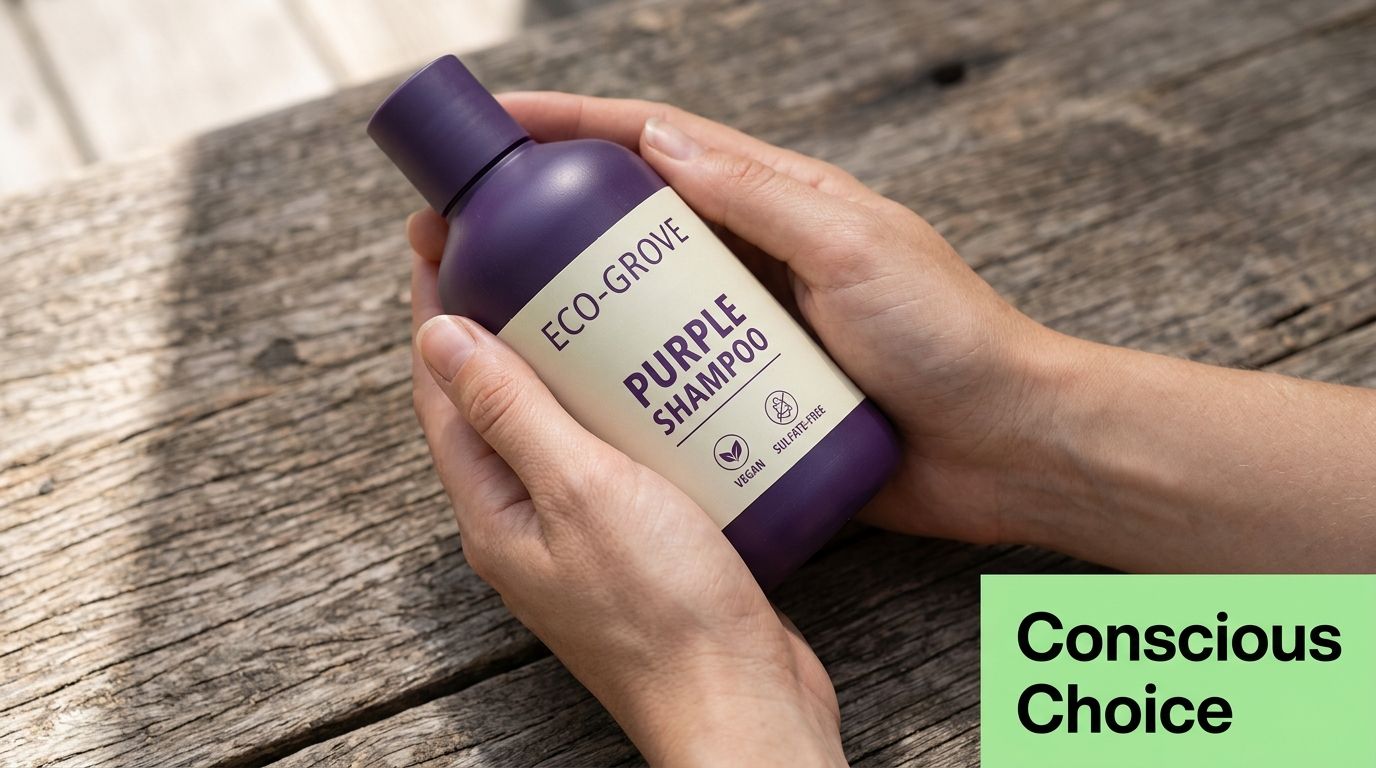
Performance matters, but so does the kind of company you support every time you restock your shower. A purple shampoo can tone beautifully and still come in waste-heavy packaging or rely on marketing that says more than the formula delivers.
What to look for on the bottle
A good starting filter is gentleness. Purple shampoo already has a job to do, which is toning. If the base formula also leaves your hair stripped, you'll end up needing more products to undo that dryness.
Look for:
- A mild cleansing base: If your blonde already feels fragile, avoid formulas that leave the lengths squeaky.
- Clear usage guidance: Good brands tell you how often to use the product and what signs mean you should scale back.
- Packaging with a lower waste footprint: Refillable options, recycled materials, and concentrated formats all make a difference.
- Company values you can stand behind: Women-owned businesses, brands with transparent ingredient choices, and companies investing in circular systems deserve attention.
Good products and good companies
There are plenty of good products in the market, but the strongest buying habit is learning how to spot a good company. I'd rather see someone buy a decent purple shampoo from a business that cares about ingredient transparency, packaging reduction, and long-term accountability than chase a flashy bottle that creates more waste and more clutter.
If low-waste hair care matters to you, it's worth exploring alternatives to standard single-use packaging, including shampoo bar soap options and refill systems where available. Those choices won't make your blonde cooler on their own, but they do align your routine with the same care you're putting into the health of your hair.
Supporting good companies who care isn't separate from beauty. It's part of it.
The practical sweet spot is a product that tones effectively, asks for moderation instead of overuse, and comes from a brand making a real effort to reduce harm. That's the kind of routine that tends to last.
Your Top Purple Shampoo Questions Answered
Can you use purple shampoo on brown hair with highlights?
Yes, if the highlighted pieces are turning yellow. Purple shampoo targets the lighter sections that show brassiness most clearly. It won't make the brown base lighter.
What's the difference between purple and blue shampoo?
Purple shampoo is usually the better match for yellow brassiness in blonde hair. Blue shampoos are typically chosen when warmth reads deeper and more orange. Pick the product based on the tone you're trying to cancel, not the label trend.
Will purple shampoo stain your hands or shower?
It can. Sally Beauty advises that users must wear gloves during application because heavily pigmented blue and purple formulas can stain skin and light-colored surfaces, as noted in its guidance on maintaining blonde hair with blue and purple shampoo.
How long should you leave it on?
That depends on your hair and the formula. Some blondes only need a quick pass, while cooler or more porous blondes may need a longer contact time. Start shorter than you think, then adjust.
What does purple shampoo do to blonde hair, in one sentence?
It temporarily neutralizes yellow brassiness so blonde hair looks cooler, brighter, and fresher between salon visits.
If you want your hair routine to reflect your values as much as your style, take a look at Fillaree. Their women-owned company builds refillable, low-waste essentials for home and body, making it easier to care for yourself while creating less single-use plastic waste.