
Bottles of Shampoo: Materials, Sizes and Refill Choices
15.6 billion units of shampoo packaging were sold worldwide in 2013, up 4% that year, according to Euromonitor figures reported by Cosmetics Business. That total includes more than bottles, but it changes how an ordinary shower shelf looks: the container isn't a minor detail when manufacturers sell packaging at that scale.
Buying better bottles of shampoo starts with a less glamorous question than color, fragrance, or label design: what happens when this one is empty? A bottle you can comfortably refill is usually a more useful starting point than a disposable package with an impressive recycling symbol.
Table of Contents
- Why the Shampoo Bottle Matters More Than You Think
- Bottle Types, Materials and Recyclability
- Bottle Sizes and How Many Refills Each Holds
- How Bottle Material Changes Environmental Impact
- Refill Systems and Take-Back Routes
- How to Choose Refill-Friendly Shampoo Bottles
- Pick Your Next Bottle and Start Refilling
Why the Shampoo Bottle Matters More Than You Think
Say your household finishes a bottle, buys another, and repeats the routine without thinking about the container. Each replacement requires someone to manufacture a rigid package, transport it, fit it with a closure, and eventually collect or dispose of it.
A shampoo bottle is like a disposable coffee cup for the bathroom. It's convenient once, but repeatedly replacing the whole container turns a small object into an ongoing material commitment. Unlike the shampoo, the bottle doesn't have to disappear with every wash.
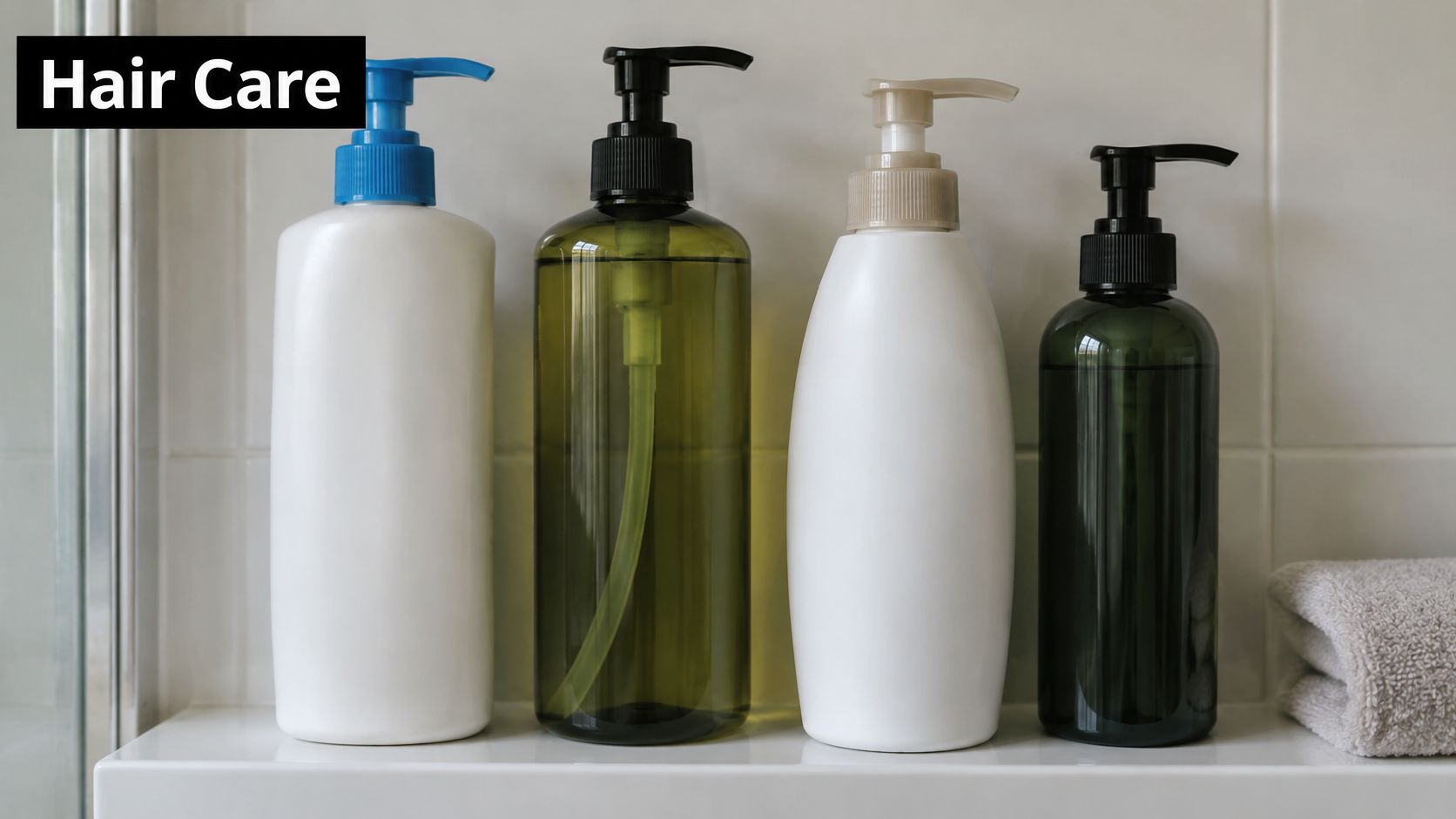
The familiar shower lineup makes that distinction easy to miss.
Start with the container's next job
Packaging choices reflect practical needs. A flexible sachet can make a purchase affordable; a sturdy bottle can handle family use; a small reusable container can fit a gym bag. No single format solves every problem.
The useful questions are more specific:
- Material: What are the bottle, label, and closure made from?
- Size: Will you finish the contents and keep using the container?
- Recovery: Can your local system accept the complete package or its separated components?
- Refill fit: Can you buy more shampoo without buying another rigid bottle?
The best bottle is the one you refill rather than replace, provided it remains clean, functional, and suitable for the formula. Material choice still matters, but it belongs inside that longer service life, not ahead of it.
Bottle Types, Materials and Recyclability
Shampoo bottle formats compared by use and recovery
| Format | Typical use | Recycling evidence | Refill fit |
|---|---|---|---|
| HDPE bottle | Larger sizes above 250 ml and value formats | 29.3% of natural HDPE bottles recycled in the US in 2018; about 58–63% assessed recyclability in Germany, Austria, and Switzerland | Sturdy base for repeated use when the closure remains serviceable |
| PET bottle | Clear, premium-looking bottles | 29.1% of PET bottles and jars recycled in the US in 2018; assessed recyclability of 7.75% in Germany and 12.53% in Austria and Switzerland | Reusable when designed for it; labels and pumps need scrutiny |
| Glass bottle | Heavier premium bottles | Confirm acceptance with the local glass-container collection program | Reusable in principle, but heavy and breakable in a shower |
| Flexible sachet or pouch | Affordable single-use products, including formats used in India and Indonesia | Don't assume acceptance in household recycling; seek an explicit collection or return route | Low-material refill delivery; not normally the durable dispensing bottle |
The US figures in this comparison come from the EPA's 2018 containers and packaging estimates, which also put recycling across all plastic containers and packaging at 13.6%. These are collection-and-recycling outcomes, not a guarantee that any particular shampoo package will be recycled.
The European figures describe something different: assessed recyclability, not observed recycling rates. A comparative assessment of 60 shampoo packages found average recyclability of 36.04%, ranging from 0% to 99.43%, with the material-specific results shown above.
The label can change the outcome
HDPE, or high-density polyethylene, is often opaque and sturdy. PET, or polyethylene terephthalate, commonly provides the clear bottle used to show off a formula. Neither abbreviation tells you everything about the finished package.
A PET body wrapped in an incompatible polypropylene label can enter the wrong sorting stream. A pump may combine different plastics with a metal spring. Even a bottle made from an accepted resin can become difficult to recover when the rest of the package interferes.
Glass avoids that particular resin combination, but introduces other trade-offs. It weighs more, requires care around wet hands and hard tile, and isn't automatically the better choice just because it feels substantial.
Flexible packaging uses little material for its carrying capacity, but low material use isn't the same as easy recycling. A pouch with no workable return or collection route remains a disposal problem, even when it helps avoid a heavier bottle.
The bathroom-bin checklist
Before putting an empty package in recycling, work through the actual components:
- Identify the body. Is it HDPE, PET, glass, or a flexible laminate?
- Inspect the label. Does it detach, and does your collection program require removal?
- Check the closure. Should the pump come off, and should the cap stay on?
- Verify local acceptance. Look up the format, not just the resin symbol.
Practical rule: A simple, compatible package often beats a complicated one with a prominent recycling logo.
Choose for the system you can use. A removable closure, compatible label, and durable body are more useful than a theoretical promise of circularity.
Bottle Sizes and How Many Refills Each Holds
Shampoo container sizes and bottles filled
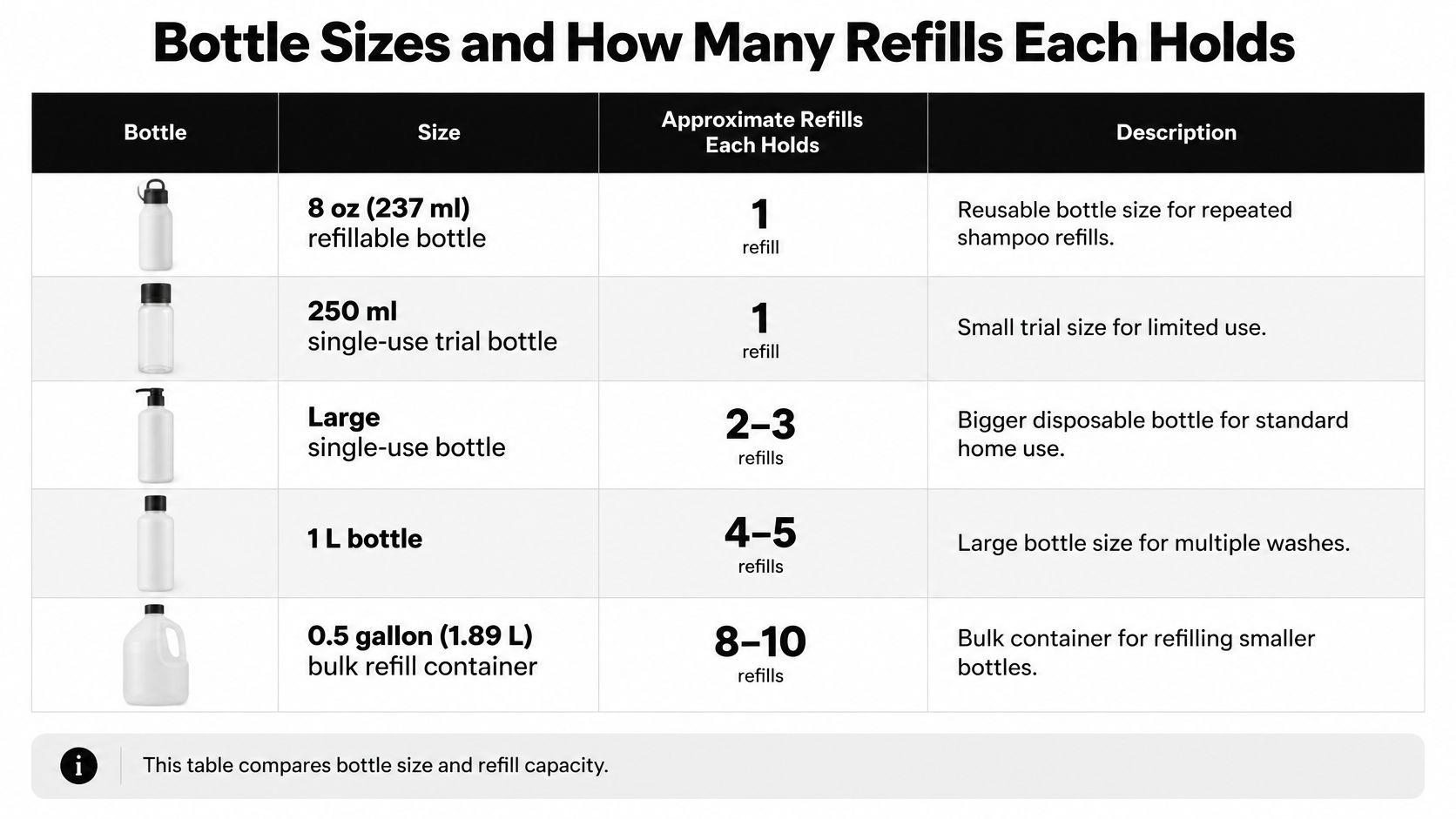
The following is a worked capacity comparison, using a nominal 8 US fluid ounce bottle rounded to 237 ml. The large disposable bottle is an illustrative size, not a universal packaging standard.
| Container | Volume | 8 oz bottles it can fill | Best for |
|---|---|---|---|
| 8 oz refillable bottle | About 237 ml | 1 | Daily carry and gym bags |
| Single-use trial bottle | 250 ml | 1 full bottle, with a little left | Light use and testing a formula |
| Large single-use bottle | About 474 ml in this example | 2 | Family routines and long hair |
| Liter bottle | 1 L | About 4 | Dispensing at home |
| Bulk refill container | 0.5 US gallon, about 1.89 L | About 8 | Repeatedly filling smaller bottles |
Capacity isn't the same as packaging efficiency
In this example, dividing 1.89 L by 237 ml gives roughly eight bottlefuls. A bulk container can therefore supply the contents of about eight small bottles, but the packaging benefit still rests on what you keep and what you discard.
A larger container means fewer packages for the same volume of shampoo. It doesn't automatically mean less packaging material overall: a thick, elaborate bulk container may use more material than you'd expect. Look at the complete system, including the refill bag, box, spout, and dispensing bottle.
This size guide makes the capacity differences easier to compare.
Match the size to the routine
A small refillable bottle is convenient for a gym locker or overnight bag. For flights, check the applicable liquid-container rules rather than assuming your everyday carry bottle qualifies; Grainmark Leather's guide to packing toiletries for business trips offers a useful packing companion.
At home, choose a dispenser you can hold securely with wet hands. Keep the bulk supply somewhere dry and accessible enough that refilling doesn't become an abandoned chore.
For price comparisons, calculate shelf price ÷ volume in ml × 100 to get cost per 100 ml. Compare the same formula where possible, and include delivery charges or a required dispensing accessory before deciding a refill is cheaper.
Buy the capacity you'll use, not the largest container you can store.
Before buying, answer one practical question: how many refills will this container get before it's retired?
How Bottle Material Changes Environmental Impact
Environmental impact of shampoo packaging models
| Packaging model | Impact change vs bottle-only baseline | Main driver |
|---|---|---|
| Bottle-only model with conventional pump bottle | Baseline, 0% change | Repeated production of primary packaging |
| Refill system | 20% lower weighted environmental impact | Lower consumption of oil-derived plastic |
| Replaceable-container system | 25% lower weighted environmental impact | Reuse of durable components |
A life-cycle assessment indexed by FAO AGRIS found the 20% refill and 25% replaceable-container reductions in total weighted environmental impact shown above. Those figures compare packaging systems, not individual resin grades. The advantage comes from using less oil-derived plastic and keeping durable components in service longer.
Recycled resin can lower impact in general terms, but treat recycled content as a secondary lever. A bottle's recyclability depends on its material and label combination, not on the recycling symbol alone. The label adhesive, full-body sleeve, pump, and cap can decide whether the bottle gets accepted or rejected at the sorting line. If the package is built to be refilled, those components stay out of the waste stream longer.
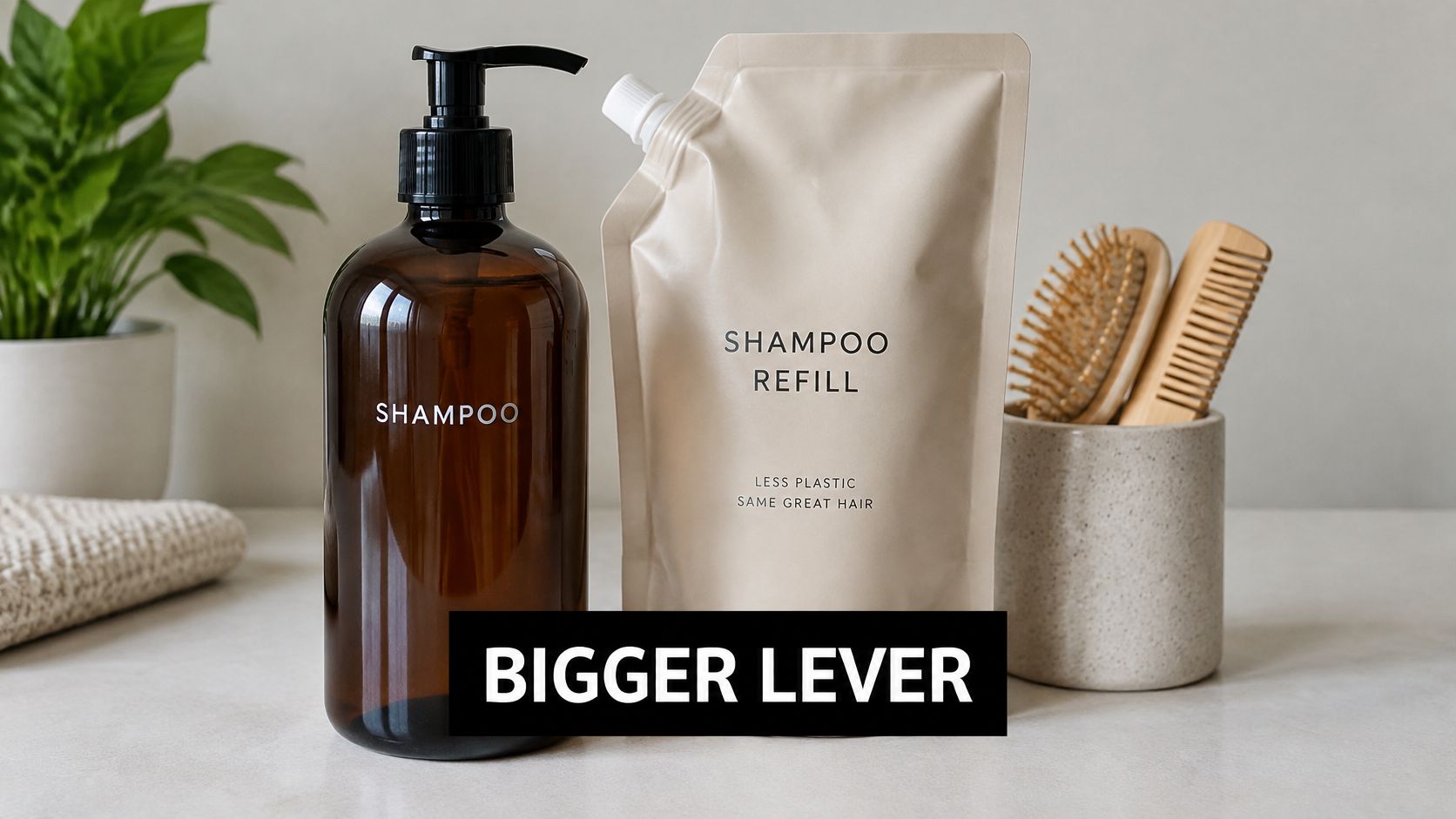
The physical arrangement matters as much as the bottle's appearance.
Keep the expensive components working
The refill assessment tied the gains to lower use of oil-derived plastic. That is a design lesson, not a promise that every refill product delivers the same result.
A refill system works best when the pump, cap, bottle, and identification label survive repeated use. Replacing a failed pump every time you refill undermines the purpose of keeping the bottle. A decorative dispenser that cracks or becomes impossible to clean is not durable in any useful sense.
Recycled content remains worthwhile, but it answers a different question: what material makes the next package? Reuse asks whether you need that next package at all.
Prevent waste before sorting it
According to UNEP's waste-pollution overview, packaging accounts for 36% of all plastic produced, and 85% of single-use plastic bottles, containers, and packaging end up in landfills or are mismanaged. That second figure covers a broad packaging category, so it is not a shampoo-specific disposal rate.
Recycling still requires collection, sorting, and reprocessing. Preventing another rigid bottle removes the need for those steps for that avoided bottle, although refill delivery, washing, and transportation still have impacts.
For a broader packaging checklist, consider what makes packaging eco-friendly. Apply the same practical thinking beyond the shower: Eco Clean Solutions can help you find practical eco-friendly cleaning tips for household routines.
This video offers another way to consider the refill approach.
For households, a simple refill tally is useful. For businesses, track bottles avoided per customer, refill cycles per bottle, and package mass per use rather than relying on an attractive material name.
Refill Systems and Take-Back Routes
A refill loop needs more than a bottle and good intentions. It needs an easy transfer method, sensible cleaning, and a destination for the emptied refill packaging.
Make the transfer straightforward
- Keep a suitable dispenser. Start with a sound bottle that opens fully, doesn't leak, and is compatible with the shampoo. There's no need to replace a functional container just to achieve a matching bathroom set.
- Choose a workable refill format. Check that the spout fits the bottle opening or use a clean funnel reserved for toiletries. A container that's awkward to lift or pour will make the routine harder.
- Empty, clean, and dry before refilling. Remove the pump, clean the bottle and closure according to the supplier's directions, rinse thoroughly, and let them dry completely. Don't dilute shampoo or repeatedly top up old product with fresh product.
- Finish the loop. Close the emptied refill package and follow its return instructions. If no return route exists, separate components only as directed by the local collection program.
Consider a household that keeps a large dispenser in the shower and a smaller bottle in a gym bag. Both can draw from the same bulk supply without requiring a new retail bottle whenever either runs empty.
Ask what happens after return
A take-back label doesn't tell you whether packaging is reused, recycled, or discarded. Ask the brand to distinguish those outcomes and explain what condition returned containers must be in.
We wash, sanitize, and refill returned bottles, then send them back into use. That's a specific process, not just a promise to accept packaging.
For an in-person route, use our guide to finding local refill options, then confirm the location's current products and container requirements before making a trip.
Before you commit: Make sure returning the empty packaging is as realistic for your household as ordering the full one.
A strong refill routine fits ordinary life. The useful durability question isn't whether a bottle looks permanent, but how many refills it will receive before retirement.
How to Choose Refill-Friendly Shampoo Bottles
Good products need to work on your hair and fit the way you shop, store, and refill. A package can look environmentally considerate yet become frustrating if its pump sticks, its opening is too narrow, or the formula doesn't suit you.
Use this visual checklist for the physical bottle, then consider the formula and company behind it.
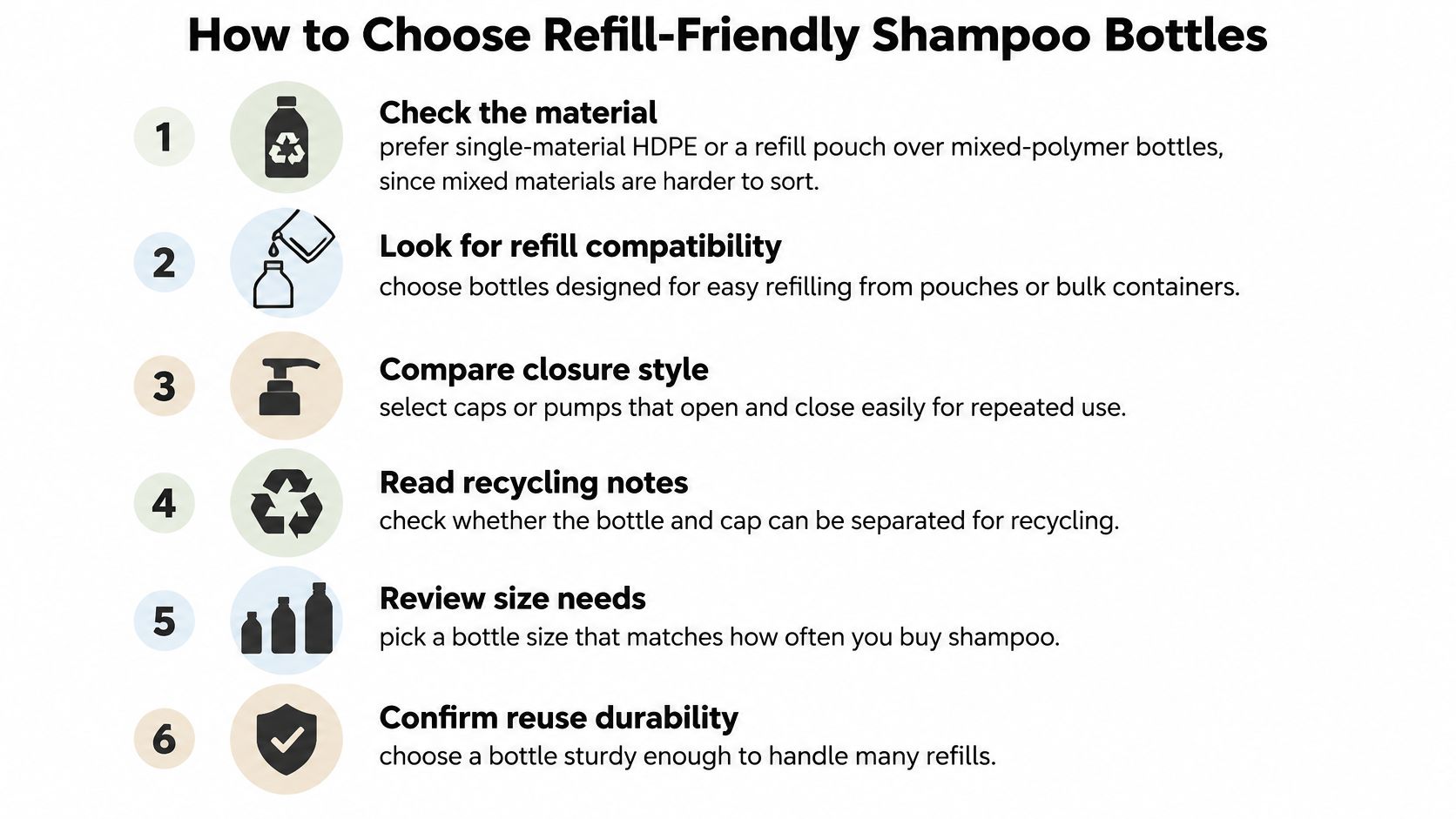
Six checks before buying
- Check the material. Prefer a durable, simple construction over a mixed-material package assembled mainly for appearance; HDPE can be a practical choice, while a pouch can supply the refill. The reason is waste prevention, not a blanket claim that one material always wins.
- Test the pump and cap. Confirm that the closure unscrews, reseals securely, and can be cleaned without damaging it. A replaceable closure can keep a sound bottle working instead of sending the whole assembly into disposal.
- Examine the label. Look for clear material information and a label designed to work with the bottle's recovery route, rather than assuming paper or a peelable sleeve is automatically compatible. This reduces the risk that an otherwise acceptable bottle becomes difficult to sort.
- Confirm refill compatibility. Check the bottle opening, refill spout, storage space, and return requirements before ordering. We ask customers to rinse refill bags within a few days of emptying them because soap residue left longer can harden and make the bags unusable, preventing their reuse.
- Read beyond natural claims. The EPA Safer Choice standard reviews every chemical ingredient regardless of its percentage; for products designed for direct release into waterways, it excludes ingredients with aquatic-toxicity values below 10 mg/L and generally avoids persistence exceeding a 60-day half-life alongside excessive bioaccumulation. Those direct-release criteria shouldn't be presented as a universal shampoo rule, but the ingredient-by-ingredient approach is a useful model for reducing chemical uncertainty.
- Check company accountability. Look for independently verified information about workers, suppliers, communities, and environmental practices, not just a claim printed on the package. Supporting good companies who care means checking how they operate as well as what they sell, reducing the risk of rewarding unsupported promises.
Read the claim literally
A useful environmental claim names the component and the action. Bottle accepted locally with pump removed is more actionable than an unexplained recyclable badge.
The FTC's Green Guides summary says recyclable claims may need qualification when appropriate facilities aren't available to at least 60% of consumers or communities where the item is sold. Marketers should also make clear whether a claim applies to the product, package, or a particular component.
For ingredient language, GLAZE - House of Wellness explains how to evaluate skincare ingredient claims. The same habit helps with shampoo: distinguish a disclosed ingredient list and a meaningful safety assessment from reassuring but undefined language.
If liquid shampoo isn't the right fit, compare shampoo bars and soap before choosing an alternative. A bar still needs to suit your hair and storage routine.
The packaging checks reduce avoidable waste; the formula and accountability checks reduce chemical and governance uncertainty. None replaces the basic requirement that you enjoy using the product enough to finish it.
Pick Your Next Bottle and Start Refilling
Choose your next bottle by refill fit first, usable size second, and company evidence third. Today, find the material code on your current bottle, look for a compatible refill, and clean the empty container for its intended reuse or recycling route.
A simple bottle with a workable refill route is a stronger choice than an elaborate disposable pump package. A manageable size beats a bulk purchase you won't finish. A company that publishes verifiable information deserves more confidence than one relying on green packaging language.
B Lab's assessment and governance standards describe an assessment spanning workers, communities, customers, suppliers, and the environment; the cited B Corp framework requires a verified minimum score of 80 and an eligibility review. That broader lens helps you match purchases to your values without treating low-waste packaging as proof of responsible business conduct.
Our Soap & Suds 8 oz refillable bottle costs $9.00 USD; it's a hand-and-body-wash option, not our shampoo. Our home refill boxes are designed for up to eight refills, while BABS hold over 2.5 gallons, enough for 40+ small-bottle refills, for eligible home and body essentials rather than shampoo.
We offer refillable shampoo and conditioner, home refill options, and a return-and-reuse process designed to keep containers working. Visit Fillaree to choose a hair-care refill that fits your routine, and start with one bottle you'll refill this week.