
Choosing the Right Cleaner for Toilet: A Practical Guide
You're standing in the cleaning aisle with one hand on a bottle promising shine, another promising disinfection, and a third promising a “natural” formula. At home, the toilet has a rust-colored ring, the bathroom door is closed because someone in the house has asthma, and the septic system has never received much thought.
Choosing a cleaner for toilet use is less about finding the most powerful label and more about matching chemistry to the stain, surface, household, wastewater system, and packaging. A good product removes the soil you face, limits unnecessary airborne exposure, and fits a routine you can repeat without creating avoidable waste.
Table of Contents
- Why Your Choice of Cleaner for Toilet Matters More Than the Bottle
- How the Main Types of Toilet Cleaner Actually Work
- Matching Cleaner to Surface, Septic, and Air You Breathe
- A Safer Routine for Households with Kids, Pets, or Asthma
- A Practical Stain Removal Routine That Actually Works
- Refill Systems and the Companies Worth Supporting
- Your Low-Waste Bathroom Plan and Quick Answers
Why Your Choice of Cleaner for Toilet Matters More Than the Bottle
A toilet cleaner works in a small room, but its effects don't stop at the bowl. The formula can affect indoor air while you apply it, the wastewater system after you flush, and the amount of packaging your household discards over time.
The wider sanitation picture makes the basic purpose clear. The United Nations sanitation factsheet reports that roughly 3.5 billion people lacked safely managed sanitation services in 2023, while unsafe water, sanitation, and hygiene conditions were associated with around 1,000 deaths of children under five every day. A household cleaner can't solve missing infrastructure, unsafe water, or inadequate waste treatment. It can, however, support cleaner facilities where toilets and plumbing already exist.
A bottle carries two decisions
The first decision is chemical. Do you need an acid to dissolve mineral scale, an oxidizer to change the color of organic stains, or a mild cleaner to remove ordinary soil from the exterior? The second is logistical. Will you pour and rinse a product, use a concentrated refill, or leave a tablet releasing active chemicals in the tank throughout the day?
Those choices have different consequences. A spray used across the whole bathroom may put more product into the air than a gel applied directly under the rim. A disposable bottle may be convenient but create more packaging than a durable bottle topped up from a bulk supply. A continuous-release tablet may reduce manual scrubbing while sending a steady chemical load into the bowl and wastewater.
Practical rule: Choose the least aggressive product that can handle the specific soil, then apply it precisely rather than broadly.
There isn't one universally best cleaner. A household with hard-water scale needs a different tool from a household dealing mainly with routine soil. A home with children, pets, asthma, porcelain fixtures, municipal sewer service, or a septic tank may reasonably make different choices.
The useful question isn't "Which bottle is strongest?" It's "What is this product designed to do, and what does my toilet need?"
How the Main Types of Toilet Cleaner Actually Work
Start with the stain, not the scent. Toilet cleaners usually rely on one or more of four mechanisms: dissolving, oxidizing, biologically breaking down soil, or lifting grime with surfactants.
Acidic cleaners dissolve mineral deposits
Hard-water rings are mostly a mineral problem. An acidic cleaner reacts with mineral deposits in much the same way lemon juice reacts with chalk. The acid helps dissolve scale so a brush can lift it from the porcelain.
Acidic products are useful for limescale, uric-scale buildup, and some rust-related deposits, but “acidic” doesn't mean harmless. A long dwell time, repeated use, or contact with incompatible surfaces can damage finishes and metal parts. Read the label, apply only to the bowl area intended by the manufacturer, and rinse thoroughly.
Bleach changes stains through oxidation
Bleach is an oxidizer. It changes the chemistry of colored organic material, which can make porcelain look whiter and can help with some disinfection tasks. Think of it as a chemical version of sunlight fading fabric, although the reaction is much more direct.
Bleach doesn't dissolve mineral scale well, so a white-looking bowl can still have a rough ring underneath. It also creates a serious mixing hazard, which makes careful separation from other products essential.
Enzymatic cleaners work gradually on organic matter
Enzymatic formulas use biological activity to break down certain organic residues. The compost-pile analogy is useful here. Microbes and enzymes don't attack every material equally, but they can help process the kinds of organic soil that leave odors or buildup.
These products may be gentler in routine use, but they aren't a substitute for an acid when the main problem is mineral scale. They also need label-directed contact time. Wiping them away immediately may remove the product before it has had a chance to work.
All-purpose cleaners lift ordinary soil
All-purpose cleaners usually depend on surfactants, which loosen the bond between grime and a surface so water can carry the soil away. Picture dish soap with additional cleaning agents and, in some formulas, fragrance or deodorizing ingredients.
They're often appropriate for the outside of a toilet, seat hinges, flush handle, and other nonporous fixtures. They may not be the right choice for a stubborn bowl ring, and an exterior spray shouldn't automatically be treated as a bowl disinfectant.
| Cleaner Type | How It Works | Best For |
|---|---|---|
| Acidic cleaner | Dissolves mineral deposits through an acidic reaction | Hard-water scale, mineral rings, some rust deposits |
| Bleach-based cleaner | Oxidizes colored organic material and can disinfect when labeled for that use | Whitening, targeted disinfection, some organic stains |
| Enzymatic cleaner | Uses biological action to break down certain organic residues | Odors, organic soil, gentler routine maintenance |
| All-purpose cleaner | Surfactants loosen and suspend everyday grime | Toilet exterior, fixtures, light surface soil |
A formulation is more than its headline ingredient. The EPA Safer Choice Standard evaluates every ingredient against toxicity and functional-class criteria, including surfactants, solvents, and chelating agents. That distinction matters because two products with similar marketing language can behave differently depending on the complete formula.
For a broader look at how disinfecting products differ by use and formulation, this disinfectant cleaning products guide can help clarify the difference between routine cleaning and targeted disinfection.
Matching Cleaner to Surface, Septic, and Air You Breathe
A cleaner can be excellent at stain removal and still be a poor match for your home. The practical test has four parts: stain power, surface safety, wastewater impact, and airborne exposure.
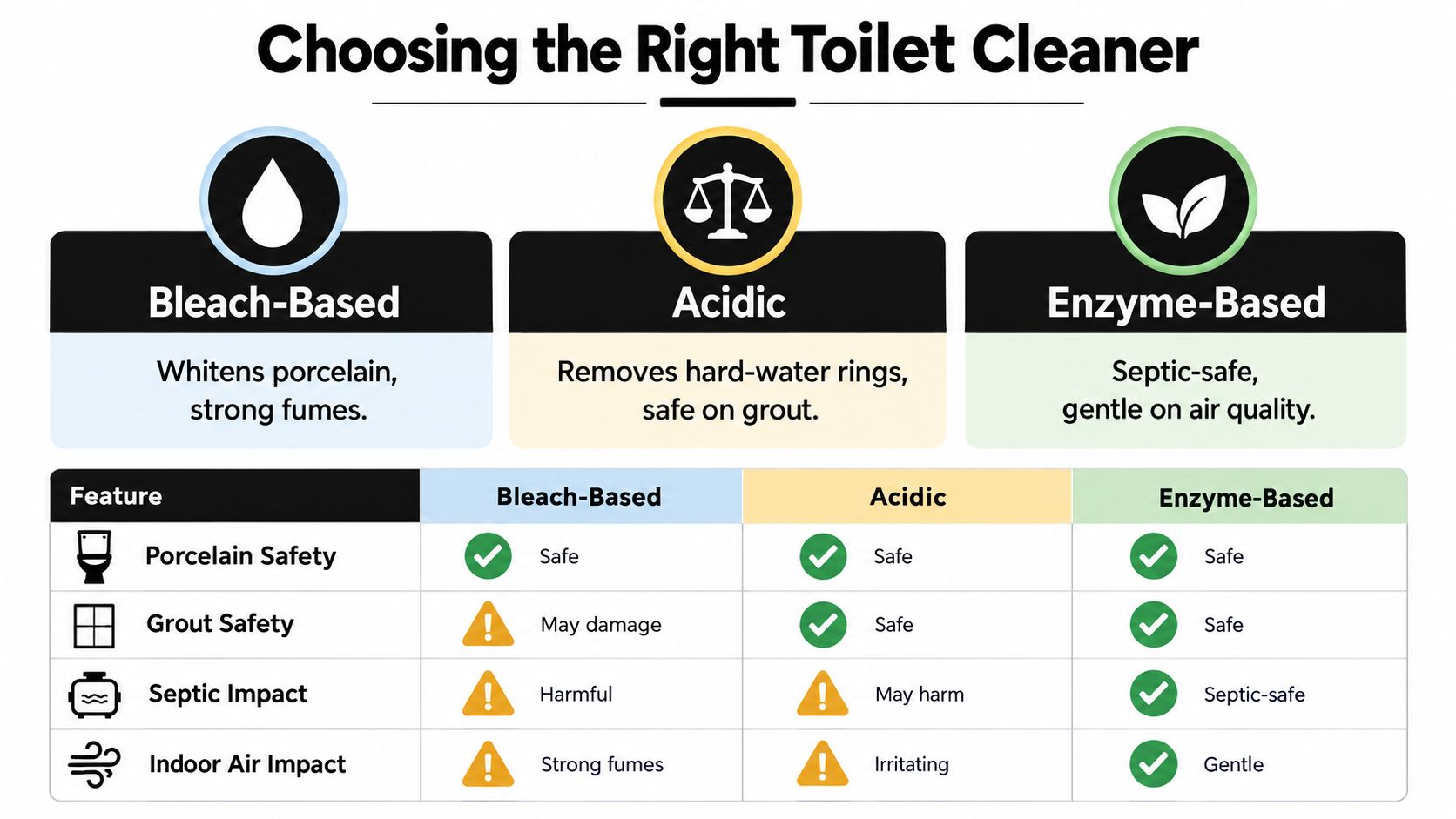
Acidic cleaners usually win against mineral scale because they dissolve the deposit rather than merely bleaching its color. They need restraint around delicate finishes, metal components, and any surface the label excludes. Bleach works quickly on discoloration and labeled disinfection tasks, but its fumes can make a small bathroom unpleasant, especially when ventilation is poor.
Enzymatic cleaners take a quieter approach. They can suit organic residues and odor management, particularly where a household wants to avoid aggressive fumes, but they won't magically dissolve a hard-water ring. All-purpose cleaners are practical for exterior surfaces and light soil, yet they shouldn't be expected to perform every job inside the bowl.
Septic systems change the calculation
A brief application followed by thorough rinsing is different from a product that releases active chemicals continuously. A 2025 peer-reviewed study measured active chlorine concentrations up to 189 mg/L and active bromine concentrations up to 164 mg/L in toilet tank water from continuous-release tablets. The active halogens persisted in bowl water for more than 24 hours, and the study raised questions about wastewater microbes, septic performance, and downstream water quality. See the peer-reviewed study of continuous-release toilet-cleaning tablets for the measured chemistry and its implications.
That doesn't mean every tablet will damage every system. It does mean “septic-safe” shouldn't be treated as a universal guarantee. Municipal sewer systems, household septic tanks, and systems with limited or untreated wastewater pathways don't handle inputs in exactly the same way.
For households evaluating cleaning products around septic systems, this resource on septic-safe dish soap offers a useful reminder: wastewater compatibility depends on the whole system, not just a friendly-sounding front label.
Air exposure deserves equal billing
The strongest smell is not proof of stronger hygiene. A heavily fragranced product may make a bathroom feel chemically “clean” while adding unnecessary airborne exposure. Direct application, ventilation, and a smaller amount of product often matter more than choosing the most intense scent.
A Safer Routine for Households with Kids, Pets, or Asthma
A safer routine begins by separating cleaning from disinfection. Routine cleaning removes soil. Disinfection is a targeted step for circumstances where reducing pathogens is specifically needed, such as an illness-related concern or a label-directed task.
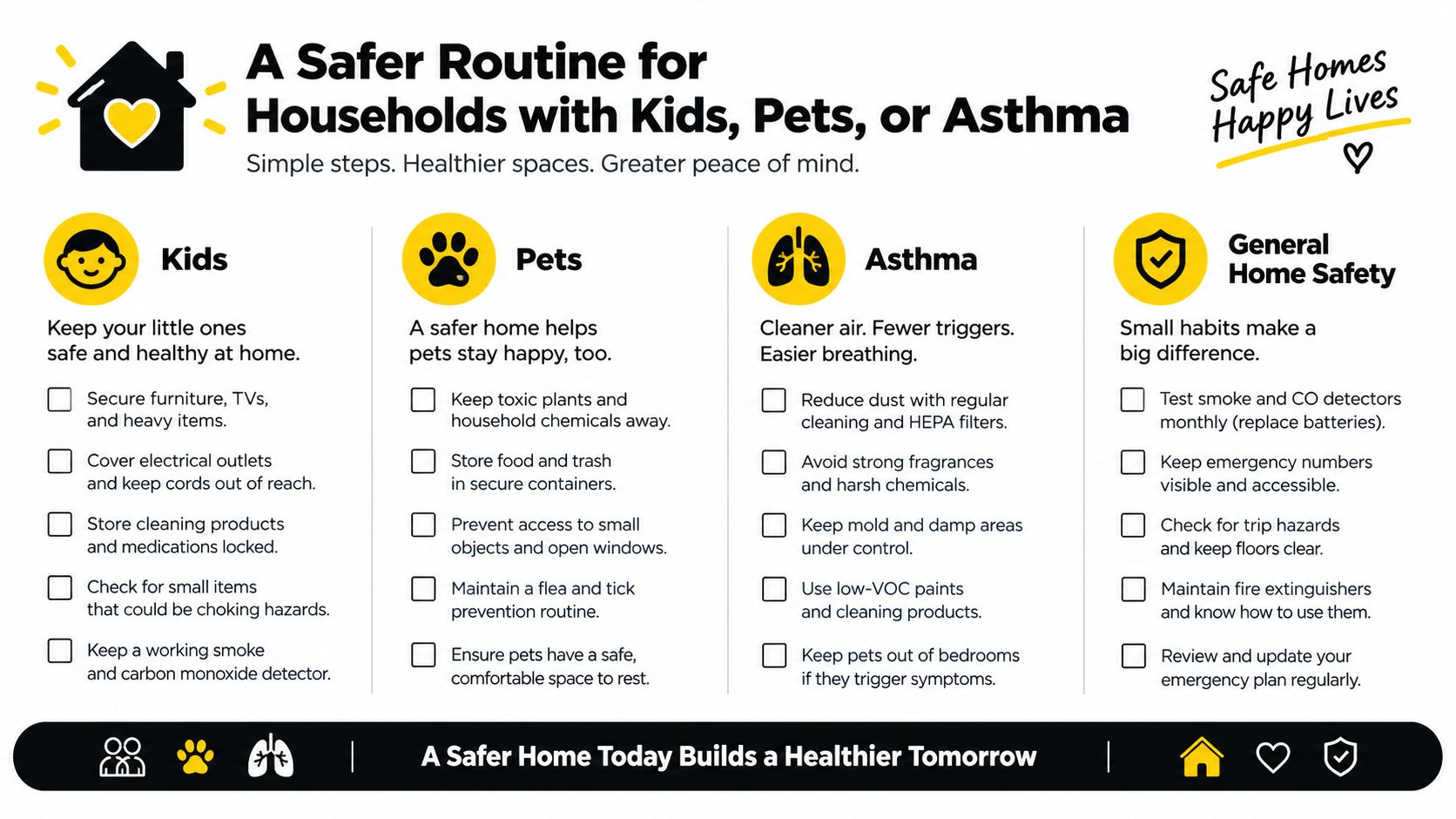
For ordinary household soil, choose the narrowest product that fits the job. Apply gel or liquid directly under the rim instead of spraying the bowl and surrounding air. Open ventilation before applying the product, keep children and pets away while it works, and wait until the surface has been rinsed before allowing them back into the area.
Use a simple decision tree
- If the bowl has ordinary soil: Use a suitable cleaner, brush the bowl, and rinse or flush according to the label.
- If the problem is scale: Choose an appropriate acidic descaler, respect the contact time, and keep it away from incompatible materials.
- If someone is ill or disinfection is specifically needed: Use a product labeled for that purpose and follow its dilution and contact-time instructions.
- If someone has asthma or respiratory sensitivity: Prefer low-spray, direct application, strong ventilation, and minimal fragrance.
- If children or pets share the home: Store products securely and keep them out of the room until treated surfaces are rinsed and dry.
The CDC guidance on cleaning and disinfecting with bleach states that household bleach must never be mixed with any other cleaner or disinfectant because the reaction can release vapors that are very dangerous to breathe. That includes bleach with acidic toilet-bowl cleaners, vinegar, or ammonia products.
If bleach is the appropriate labeled choice, use the product exactly as directed. The CDC identifies regular, unscented household bleach with 5% to 9% sodium hypochlorite as the common U.S. concentration range for disinfection, but local product labels and directions still control how it should be used.
For asthma-sensitive homes: Less airborne product is often a better improvement than a stronger-smelling formula.
A broader discussion of ventilation and household exposure can be found in this guide to Mesa indoor air quality. For families comparing lower-exposure household routines, this resource on kid-safe cleaning products provides another practical point of reference.
A Practical Stain Removal Routine That Actually Works
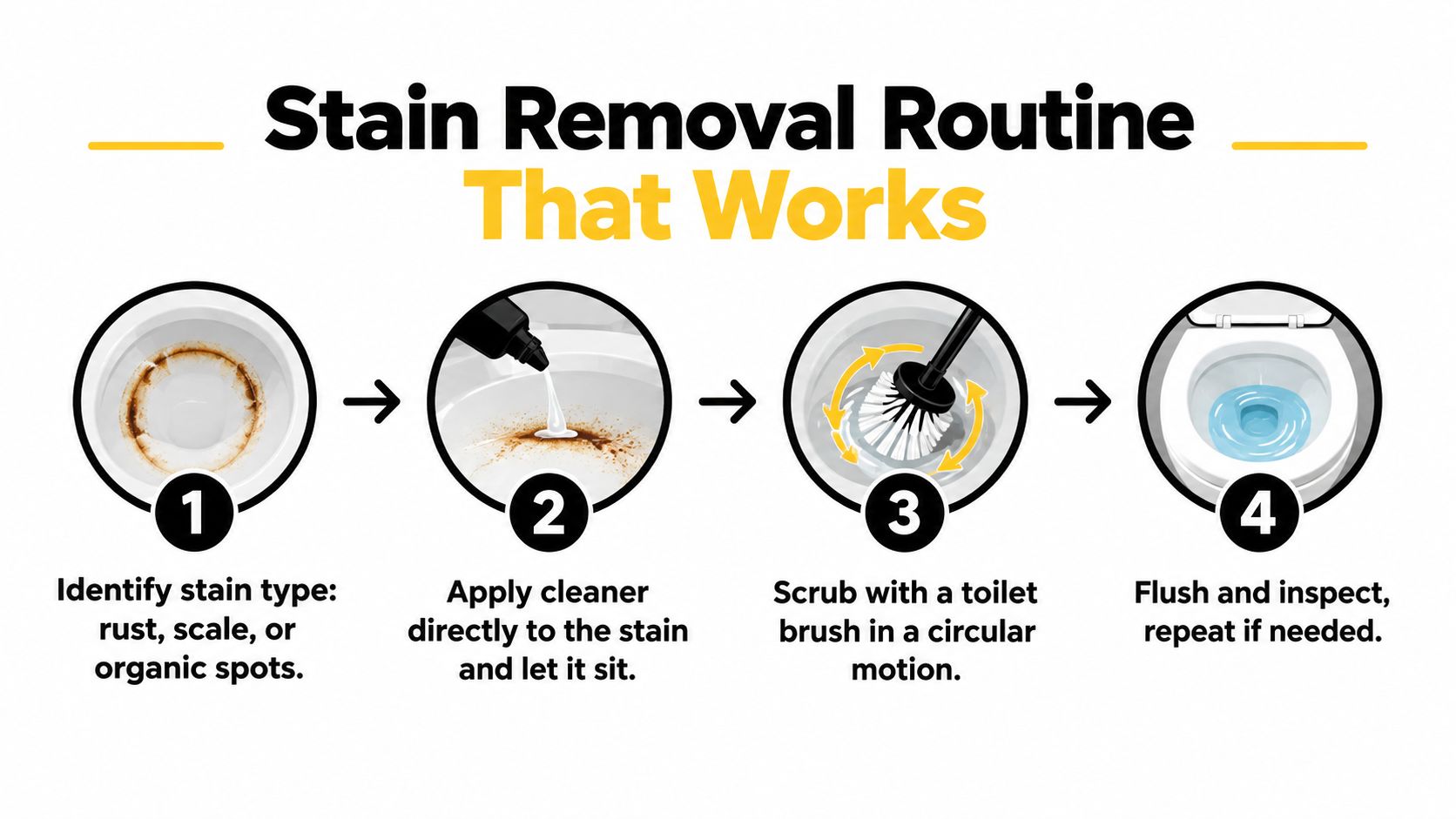
A toilet bowl tells you what kind of cleaner it needs. A reddish-orange ring suggests rust or mineral deposits. A chalky, rough band points toward hard-water scale. Dark organic spots under the rim need direct contact and mechanical brushing, while mildew around the base may require attention to the surrounding moisture and seal, not just another dose of bowl cleaner.
Match the tool to the deposit
Start by lowering the water level if the label and toilet design allow it, so the cleaner can contact the stain instead of immediately diluting. Apply the product directly under the rim and around the affected area. Let it sit for the label-directed contact time, then use a toilet brush in a circular motion, reaching beneath the rim and around the waterline.
A pumice stone can help with stubborn mineral deposits on suitable vitreous china, but use it carefully and keep both the stone and porcelain wet. Don't use abrasive tools on surfaces the manufacturer excludes. A microfiber cloth works well for the exterior, flush handle, seat hinges, and base when paired with a compatible all-purpose cleaner.
Build a repeatable rhythm
A quick routine prevents a deep deposit from becoming a restoration project. Brush the bowl regularly with the appropriate cleaner, wipe high-touch exterior areas with a low-spray product, and reserve stronger descaling work for visible mineral buildup rather than using an acid automatically every time.
A weekly deep clean can include the bowl, underside of the rim, seat hinges, flush handle, and floor around the base. Work with one product at a time. If you used an acidic cleaner, rinse thoroughly before any later use of a bleach product, and never combine cleaners in the bowl, brush, bucket, or cloth.
The 2024 review of 77 studies discussed by BBC Future linked regular use of cleaning sprays with increased asthma risk, asthma symptoms, and wheezing in children. That finding supports a simple habit change: apply cleaner to the cloth or surface where appropriate, rather than filling the room with mist.
Continuous-release tank tablets may seem convenient because they work between manual cleanings. But their persistent active halogens create a different wastewater and plumbing question from a product used briefly and rinsed away. For most households, a targeted manual routine offers more control over the amount, contact time, and destination of the cleaner.
Refill Systems and the Companies Worth Supporting
Once the formula fits the stain and the household, look at the container. A refill system uses a durable bottle that gets topped up from a bulk box, a refill station, or a larger concentrate. The aim is simple: stop replacing the whole bottle every time the contents run out.
That approach can reduce single-use packaging and make low-waste habits easier to maintain, but it still needs practical checks. The refill must suit the product, the bottle must be clearly labeled, and the household must store it safely. A refill model isn't automatically responsible if the formula is unsuitable for the surface, or if the shipping and packaging system creates other problems.
The commercial category is substantial. One industry analysis of the toilet-cleaning-products market estimated worldwide revenue at $6.38 billion in 2025 and projected natural and organic toilet cleaners to grow 8.9% annually, compared with a 4.6% forecast for conventional chemical formulations. That projection signals growing market attention to lower-impact formulations. It doesn't prove that any label is safe or effective without examining the ingredients and directions.
Look at the company as well as the product
Green packaging is easy to print. Evidence takes more work to find. Check whether the company explains its formulation, refill process, packaging choices, take-back practices, and manufacturing responsibilities. A durable bottle and refill station can support a lower-waste routine, but transparent instructions and credible ingredient information still matter.
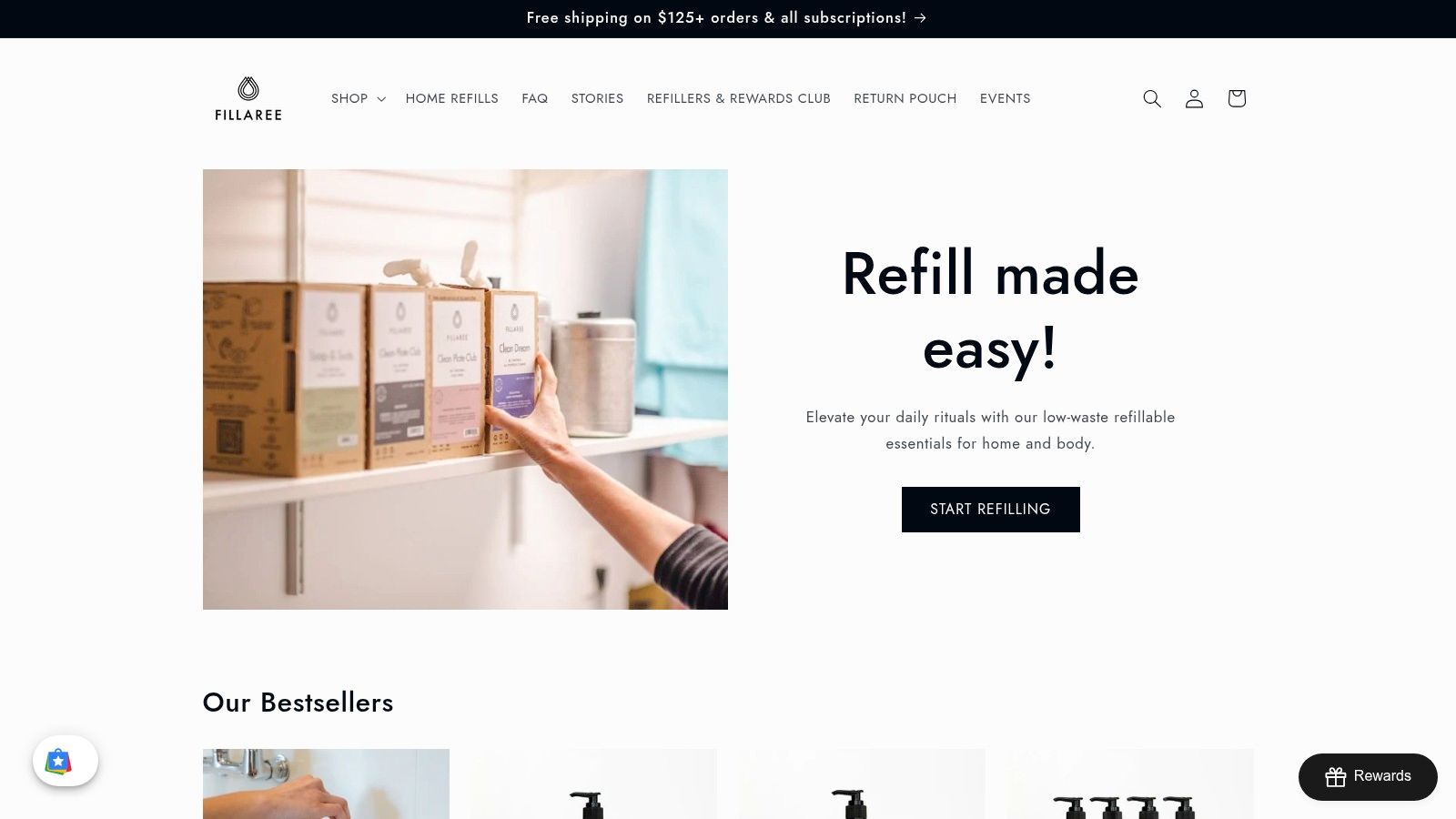
Fillaree offers refillable home and body products, including a plant-based all-purpose cleaner for nonporous surfaces such as porcelain and bathroom fixtures, making it an option for toilet exteriors rather than a substitute for a bowl-specific descaler. Its refill model includes partner stations, home refills, and used refill-bag take-back, according to the company's stated practices. Readers interested in how a refill station model can work in daily life can review this refill station and zero-waste overview.
Company-level accountability offers another useful evidence point. Certification bodies assess verified social and environmental performance at the company level, which complements ingredient-level checks. It can support, but not replace, checking a specific cleaner's ingredients, surface compatibility, packaging, and disposal instructions.
Your Low-Waste Bathroom Plan and Quick Answers
By now you know how each cleaner works, so the plan itself is short. Think of it as a recipe you repeat until it becomes muscle memory rather than a checklist you consult every time.
- Choose by soil: Acid for mineral scale, a labeled disinfectant for targeted disinfection, and a mild cleaner for everyday exterior grime.
- Apply precisely: Put product under the rim or on a cloth instead of spraying the whole room.
- Separate products: Rinse tools and surfaces thoroughly, and never mix cleaners.
- Protect the household: Ventilate, secure products, and keep children and pets away until rinsing is complete.
- Reduce packaging: Use a durable bottle and a verified refill route where it fits your area.
- Check the company: Look for ingredient transparency, clear directions, and meaningful accountability such as third-party certification, as noted earlier.
A few questions come up in almost every household.
Can I use the same brush for the bathroom and toilet? Keep a dedicated toilet brush. It reduces cross-contamination and makes storage straightforward.
How often should I disinfect? Clean routinely, but reserve disinfection for situations where it is needed and use a labeled product according to its directions.
Can septic systems handle standard toilet cleaners? Some systems may tolerate brief, correctly used products, but continuous-release tablets and concentrated chemicals deserve extra caution. Follow the product label and ask your septic professional about your specific system.
For larger or shared spaces, professional help such as Clean Space SA services can complement a household routine when regular maintenance isn't practical.
Fillaree offers refillable home-care products and a refill system designed to reduce single-use packaging, including options for nonporous bathroom surfaces. Visit Fillaree to explore refill choices, check whether a product fits your toilet's exterior, and build a lower-waste cleaning routine around the chemistry your household needs.