
Nontoxic Floor Cleaner: Safe Brands and DIY Recipes
You've just finished mopping, the floor looks clean, and then you notice the sharp fragrance still hanging in the room. Your child is playing on the surface, your dog is licking its paws, and the empty cleaner bottle is already headed for the bin. That routine deserves a better system.
A nontoxic floor cleaner should do three jobs well: remove soil without leaving a sticky film, limit unnecessary indoor emissions, and fit a low-waste routine you'll maintain. The practical options are pantry-based recipes, carefully screened commercial formulas, and refill systems that keep a durable bottle in use instead of sending another container out of the house.
Table of Contents
- Why Most Floor Cleaners Aren't as Safe as They Look
- DIY Nontoxic Floor Cleaner Recipes You Can Make Today
- How to Read a Nontoxic Floor Cleaner Label
- Surface-Specific Cleaning for Wood, Tile, and Laminate
- Refill Systems and the Low-Waste Switch
- Matching the Cleaner to the Mess
- Your Simple Weekly Nontoxic Floor Routine
Why Most Floor Cleaners Aren't as Safe as They Look
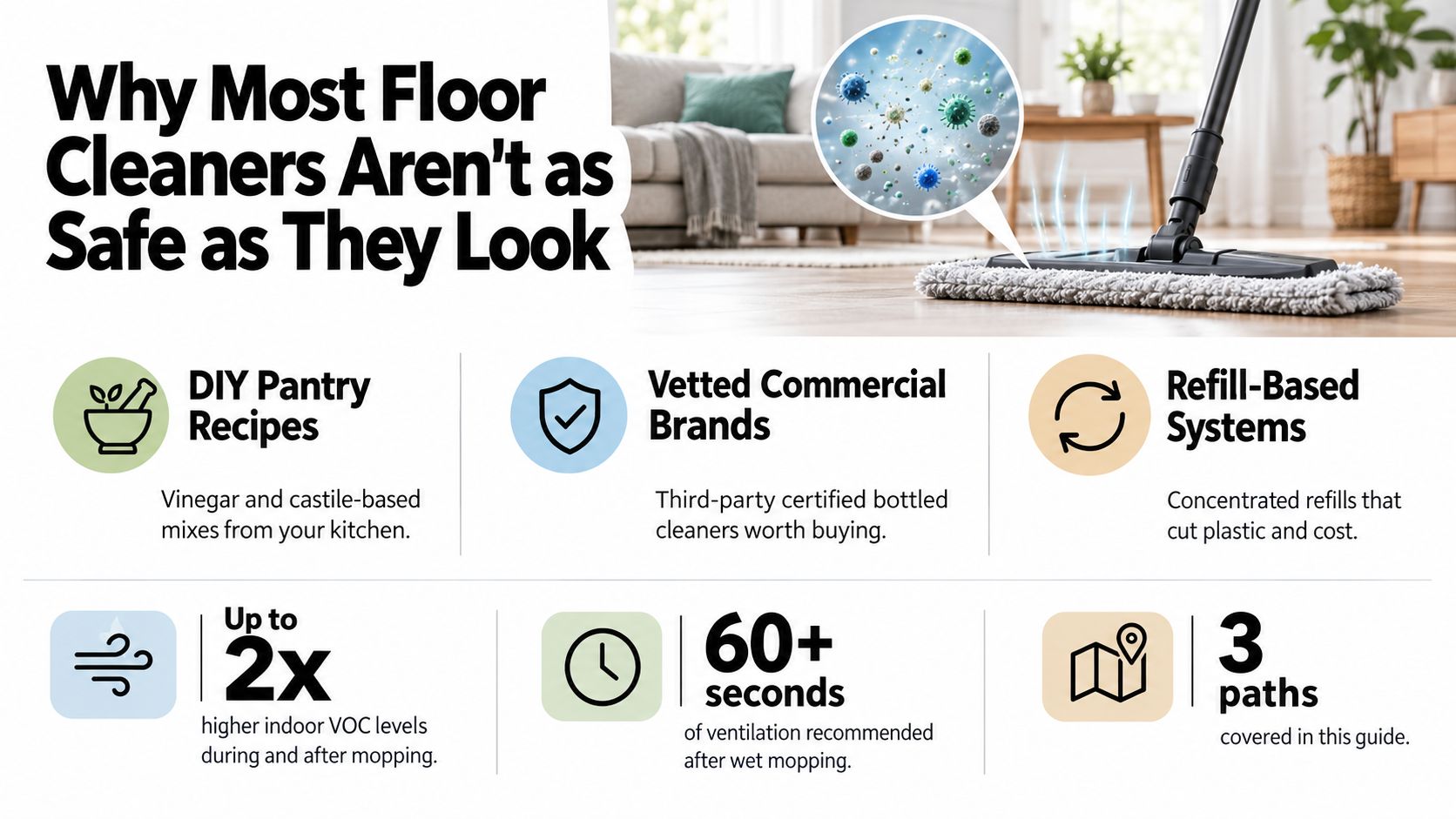
Mopping puts cleaning chemistry close to the air you breathe and the surfaces where children and pets sit. Common concerns include ethylene glycol ethers, optical brighteners, synthetic fragrance, and quaternary ammonium compounds, especially when labels disclose little about the full formula. A 2023 study discussed by The New Lede's report on hazardous compounds in household cleaners found nearly 200 hazardous VOCs in common household cleaning products, with more than 500 VOCs across the products analyzed. Products labeled green or fragrance-free were less likely to contain VOCs.
That doesn't mean every conventional cleaner creates the same exposure or that every plant-based product is automatically safe. It means repeated use deserves scrutiny. Floors receive frequent cleaning, and residue can remain where toddlers crawl, pets lie down, and bare feet make contact.
The bottle is part of the formula
A 32 oz bottle emptied in a week creates a waste problem as well as a cleaning problem. Recycling helps only after the packaging exists. A lower-waste routine starts by buying less packaging, choosing concentrates, or using a durable bottle repeatedly.
The market context matters too. The global floor-cleaners market was estimated at USD 15.18 billion in 2024 and is projected to reach USD 25.64 billion by 2035, with a projected 4.88% compound annual growth rate from 2025 to 2035, according to Market Research Future's floor cleaners market analysis. Demand for biodegradable and nontoxic formulations is part of that broader shift, not a tiny specialty corner.
Practical rule: Treat “green” as a starting point, not proof. Look for disclosed ingredients, a credible certification, and instructions that match your floor.
A good routine has three workable paths. DIY recipes give you control over ingredients and packaging. Vetted commercial brands save time when you want consistent dilution and surface guidance. Refill systems make the lower-waste choice easier to repeat. For broader ideas on safer methods and professional green practices, J.G. Carpet Cleaning green solutions is a useful resource.
DIY Nontoxic Floor Cleaner Recipes You Can Make Today
DIY works when you use the right ratio and respect the surface. My biggest homemade-cleaner mistake was assuming more soap meant more cleaning. It meant streaks, dullness, and a floor that attracted fresh dust.
Use a clean microfiber mop, remove loose grit first, and mix only what the surface needs. Store prepared solutions in a labeled glass bottle, away from children and pets, and use them within six months.
Four formulas worth keeping
For sealed hardwood, combine 1 tablespoon castile soap, 1 teaspoon olive oil, and 1 gallon of warm water. Castile soap lifts everyday soil, while the small amount of olive oil can support a soft finish. Use a barely damp mop, not a saturated one, and buff dry.
For tile and grout, combine 1 cup distilled white vinegar, 1 cup water, and 10 drops of tea tree oil. Vinegar helps dissolve mineral and soap deposits, while tea tree oil adds scent and a limited antimicrobial role. Don't use this on natural stone, waxed wood, or finishes that react badly to acid.
For laminate, mix 2 tablespoons castile soap with 1 gallon of warm water and skip the vinegar. Laminate needs controlled moisture, and the soap provides enough cleaning power for routine traffic without introducing unnecessary acidity.
For a greasy patch, add 1 tablespoon of baking soda per gallon to an appropriate water-based mix. Baking soda helps with soil and odor, but too much can leave powdery residue or create a dull film.
| Recipe | Ingredients | Ratio | Best For | Avoid On |
|---|---|---|---|---|
| Daily hardwood mix | Castile soap, olive oil, warm water | 1 tablespoon soap + 1 teaspoon oil per gallon | Sealed hardwood | Unsealed wood, heavily waxed floors |
| Tile and grout spray | Distilled white vinegar, water, tea tree oil | 1 cup vinegar + 1 cup water + 10 drops oil | Ceramic tile and grout | Natural stone, waxed wood |
| Laminate bucket | Castile soap, warm water | 2 tablespoons soap per gallon | Laminate and sealed hard surfaces | Soaking, steam cleaning |
| Degreaser boost | Baking soda and the compatible base mix | 1 tablespoon baking soda per gallon | Small greasy areas | Delicate finishes and excess application |
Hard-water spots can make a good formula look bad. If your floor dries with cloudy marks, use less product, wring the mop more thoroughly, and finish with a dry microfiber pad. For ingredient choices and practical cleaning updates, Arelli company updates offers another useful reference. If you prefer a ready-made castile base, Fillaree's unscented liquid castile soap fits the same ingredient-conscious approach.
How to Read a Nontoxic Floor Cleaner Label
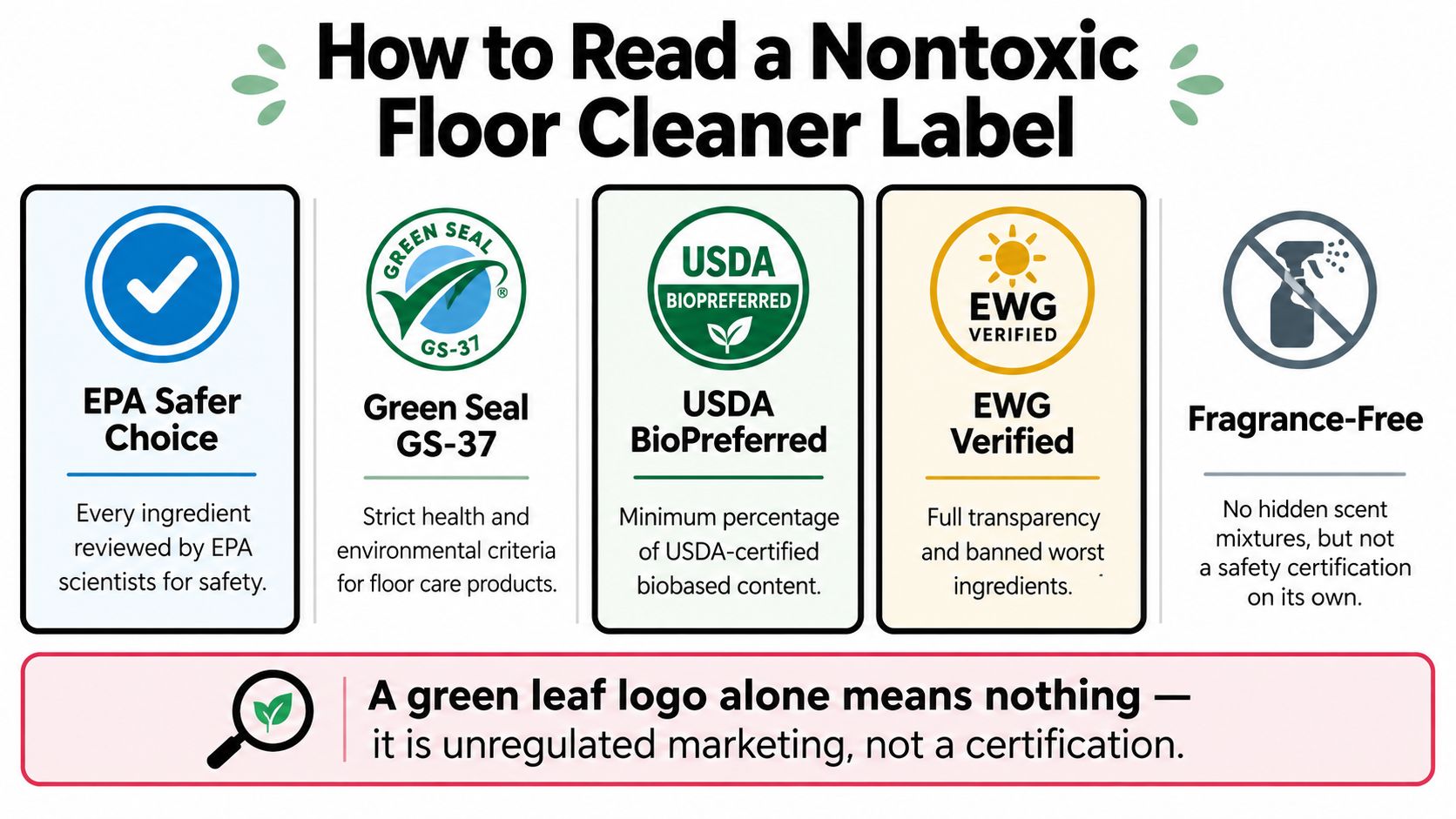
A green leaf on the front of a bottle doesn't tell you enough. Some products use plant imagery while hiding fragrance blends, offering vague “biodegradable surfactant” language, or making disinfecting claims that the formula can't support.
Compare the claims, not the color
EPA Safer Choice is the strongest general signal among the labels listed here. The EPA says every ingredient must meet strict criteria covering carcinogenicity, reproductive and developmental toxicity, aquatic toxicity, and environmental persistence, as described in the EPA Safer Choice criteria document. The program also lets shoppers search by product type, including floor cleaner, through the EPA product directory.
Green Seal GS-37 adds performance and environmental requirements. The standard requires effective cleaning with cold tap water at no more than 50 °F, and it sets limits including 1% VOCs by weight for general-purpose and bathroom cleaners and 0.5% total phosphorus by weight, according to CleanLink's overview of Green Seal certification.
USDA BioPreferred signals biobased content, while EWG Verified focuses on ingredient transparency and restricted substances. Those can help, but neither replaces reading the actual use directions.
The 30-second scan
Look for these cues before buying:
- Full ingredient disclosure: Skip formulas that give only broad chemical categories.
- No “fragrance” or “parfum”: Essential-oil blends can still add volatile compounds and scent chemicals.
- A surface-specific use statement: “For all floors” is less useful than clear instructions for sealed wood, tile, or laminate.
- A pH near neutral: A stated pH between 6 and 9 is a practical screening cue for many routine hard-surface cleaners, though the floor manufacturer's instructions come first.
- No casual disinfecting language: A plant-based cleaner can remove soil without disinfecting.
Be cautious with “biodegradable surfactants,” which may still refer to anionic or nonionic petroleum-based ingredients. Quat-based disinfectants also deserve a separate decision because they're antimicrobial formulas, not ordinary daily floor cleaners. For a clearer explanation of misleading environmental language, use Fillaree's guide to avoiding greenwashing.
Surface-Specific Cleaning for Wood, Tile, and Laminate
The same cleaner can behave beautifully on tile and leave hardwood dull. Surface care starts with water control, not scent.
Hardwood
Sweep or vacuum first, then use a well-wrung microfiber mop. The floor should look damp, never wet. Work in the direction of the boards, make light passes, and allow roughly five minutes of dwell time before drying when the finish can tolerate that contact. The diluted castile and olive-oil formula from the DIY section is a sensible starting point for sealed wood.
Skip vinegar and other acidic formulas on hardwood. They can dull some finishes, and straight oil-based products can leave a slippery film. For a ready-made option, choose a floor-specific, fragrance-free cleaner with surface directions rather than an all-purpose spray.
Tile and grout
Tile tolerates more moisture, but grout still benefits from targeted treatment. Apply a baking soda paste to a stubborn spot, or use a hydrogen peroxide mix for a localized stain, agitate with a soft brush, and remove the loosened soil before mopping.
Finish with a pH-neutral solution. Certified products that disclose their ingredients and specify hard floors are preferable to heavily scented formulas. Vinegar works for compatible ceramic tile, but it isn't appropriate for marble, limestone, or other acid-sensitive stone.
Laminate
Laminate is unforgiving when water gets under seams. Wring the microfiber pad thoroughly, avoid soaking and steam, and dry the surface within two minutes. The castile-and-water bucket mix is enough for ordinary footprints and kitchen traffic.
| Surface | Mop Dampness | Dwell Time | Best DIY Base | Recommended Store Formula |
|---|---|---|---|---|
| Sealed hardwood | Barely damp | About 5 minutes before drying | Castile soap with a small amount of olive oil | Fragrance-free, wood-specific cleaner |
| Ceramic tile and grout | Damp, with targeted spot treatment | Follow the product label | Compatible vinegar mix or baking soda spot treatment | pH-neutral certified hard-floor cleaner |
| Laminate | Lightly damp | Dry within 2 minutes | Castile soap and warm water, no vinegar | Low-residue laminate cleaner |
Always check the flooring manufacturer's care instructions. “Nontoxic” doesn't make a formula suitable for every finish.
Refill Systems and the Low-Waste Switch
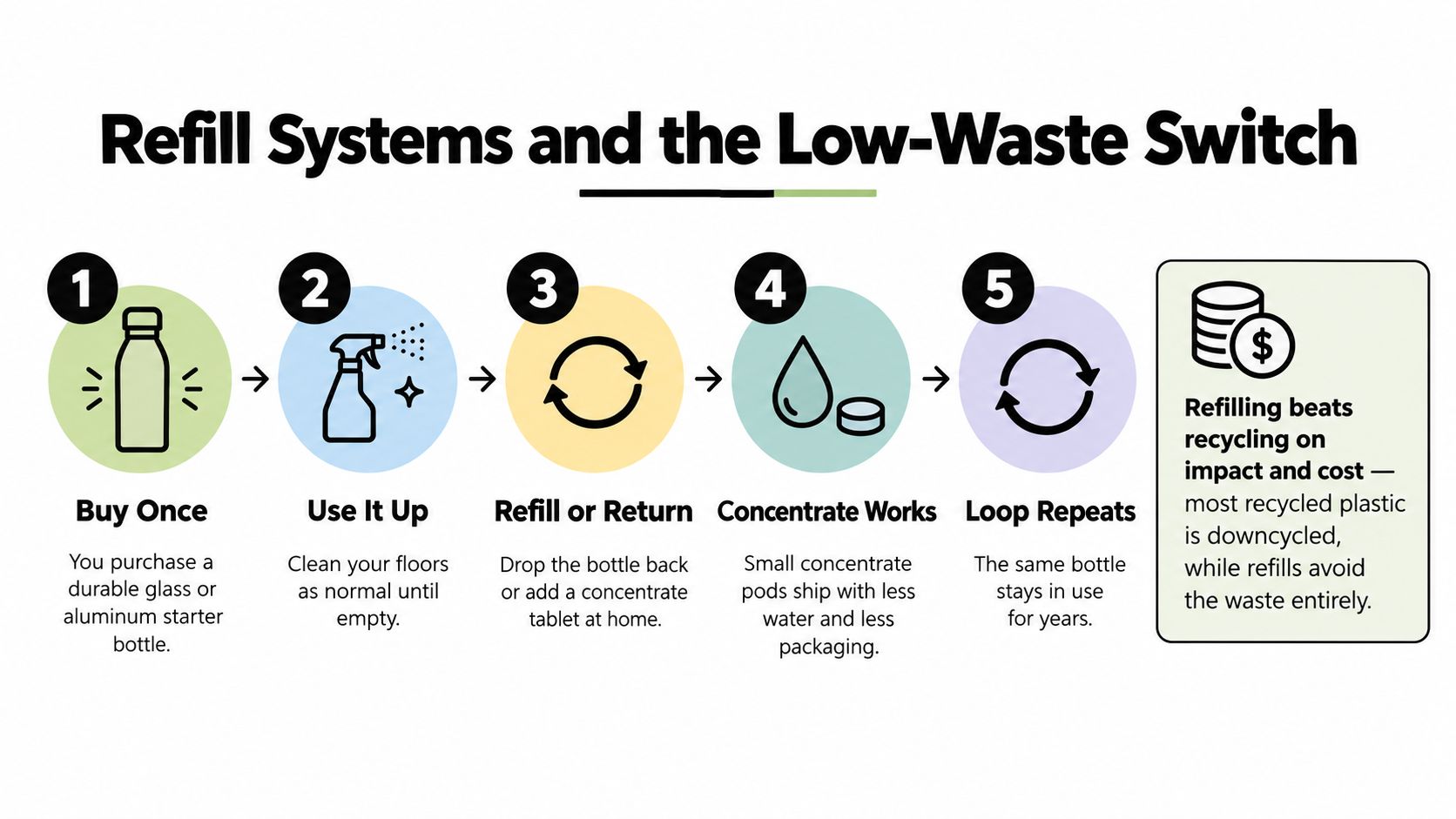
A refill routine works best when the bottle is easy to keep, the concentrate is simple to measure, and the formula performs on your floor. Recycling still matters, but it requires collection, sorting, processing, and new packaging. Reusing one durable bottle keeps those single-use containers out of that cycle for longer.
How the loop works
A practical refill system follows five steps:
- Buy a durable bottle. Glass or aluminum replaces a stream of thin disposable containers.
- Use the formula normally. Save the empty bottle instead of throwing it away.
- Refill at home or in a shop. Concentrates reduce the amount of water and packaging shipped. For dilution guidance, see Fillaree's guide to floor cleaner concentrate.
- Measure carefully. Too much cleaner causes streaks and leaves unnecessary residue.
- Repeat. The bottle stays in your cleaning kit instead of becoming rubbish.
Choose a system with a plan for used refill packaging, too. Take-back or washing-and-reuse practices extend the low-waste benefit beyond the first purchase.
In our experience, one refill bottle can replace roughly ten disposable spray bottles, while refills can cost 30% to 50% less per ounce than typical single-use spray bottles. Treat those figures as practical estimates, since dosing, bottle size, and purchase format change the result. The savings disappear quickly if you overmix concentrate or buy more product than your floors require.
Fillaree's plant-based concentrates show how this model works in a household. Reusable bottles pair with concentrated refills, letting you control the ingredients and use the correct dilution each time. Used refill bags can also enter take-back practices, giving the packaging a longer route than immediate disposal. That combination makes the safer cleaning choice easier to repeat, not just an occasional DIY project.
Matching the Cleaner to the Mess
A full mop is often the wrong response to a tiny spill. Choose the smallest effective intervention, then reserve stronger chemistry for a real reason.
A juice drip on tile
You spot a fresh orange-juice drop near the table. Wipe it with water first. If the sugar leaves a tacky patch, use a quick castile spritz and wipe again. There's no reason to mix a full bucket or disinfect the entire room.
Toddler handprints on laminate
Sticky hands have left a trail across the hallway. Use the gentle castile-based DIY mix, dampen the microfiber mop lightly, and make one controlled pass. Dry the surface within two minutes so moisture doesn't reach the seams.
Muddy paws on sealed hardwood
Wet mud spreads; dry mud becomes loose soil. Let the paw prints dry fully, vacuum the powder away, then use the olive-oil-boosted wood formula with a barely damp mop. This approach removes grit before mopping and reduces the chance of dragging abrasive particles across the finish.
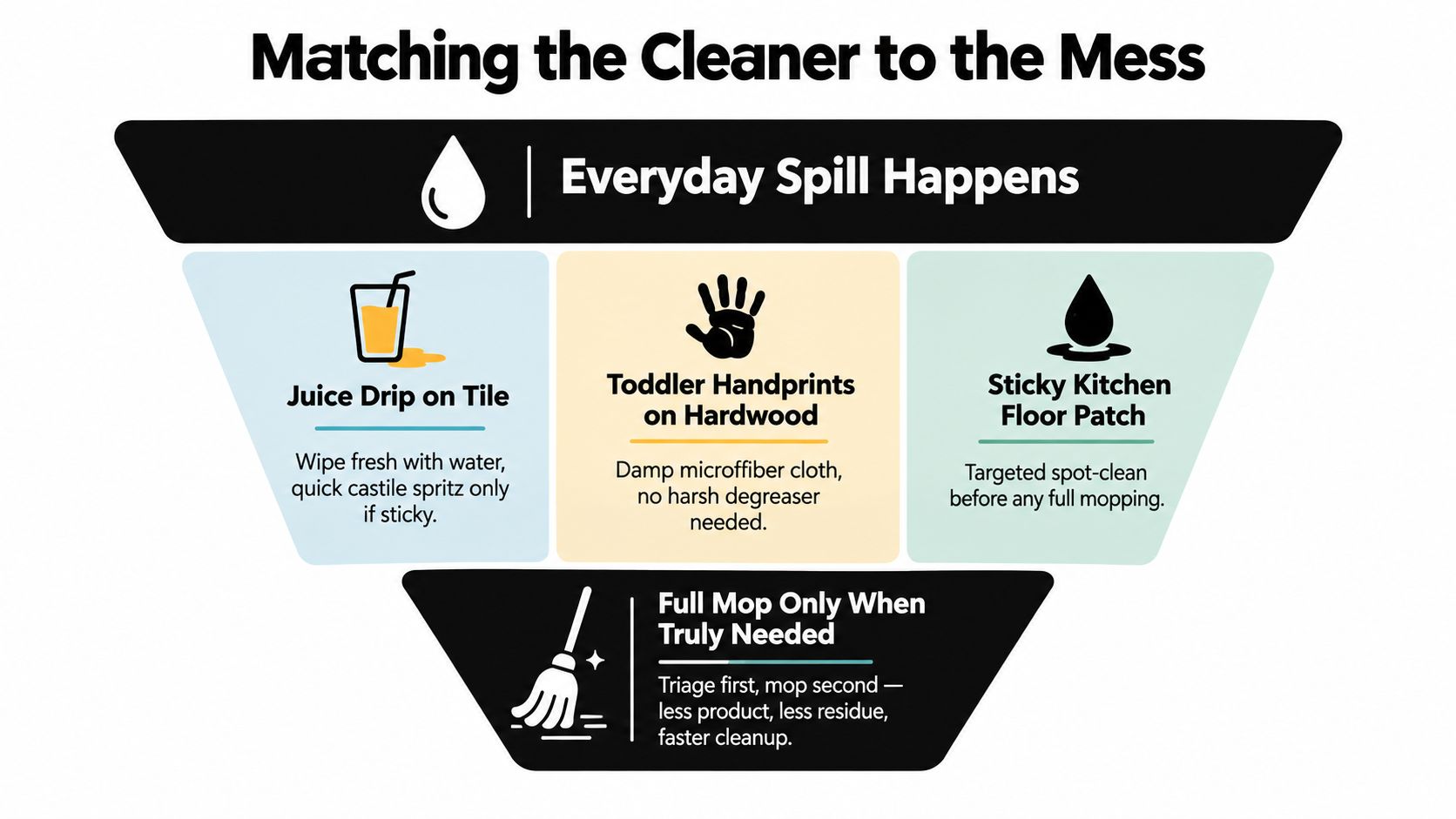
Use this decision rule:
- Small spill: Spot-clean with water, then a mild cleaner only if residue remains.
- Routine traffic: Vacuum or sweep first, then damp mop with a low-residue formula.
- Visible contamination: Clean away soil before considering an antimicrobial product.
- Disinfection claim: Use only the exact EPA-registered product according to its label, including the required wet contact time.
A tested thymol-based disinfectant in one professional evaluation carried a 99.99% kill claim against listed pathogens, while most plant-based cleaners were described as soil removers that reduce bacterial load through surfactant action and wiping rather than true disinfection, as detailed in the green-cleaning product evaluation. Keep that distinction clear. A cleaner that leaves the floor visibly clean isn't automatically a disinfectant.
Your Simple Weekly Nontoxic Floor Routine
The best system is short enough to repeat when life gets busy. Don't chase a spotless showroom. Keep grit off the floor, remove sticky residue quickly, and use the least product that solves the mess.
A repeatable week
Monday, dry clean. Vacuum or sweep hardwood, tile, and laminate with a reusable tool. Focus on entryways and under the dining table, where grit causes the most wear.
Midweek, damp mop. Use the sealed-hardwood mix for wood, the castile bucket for laminate, or a pH-neutral commercial formula for tile and stone. Wring the microfiber pad until it's damp, not dripping.
Kitchen and bathroom, target twice. Spot-clean around sinks, toilets, and cooking areas before deciding whether the whole floor needs mopping. Use the baking soda boost only where grease or residue calls for it.
Sunday, reset the bottles. Rinse and dry mop pads, check labels, and prepare only the solution you'll use. If you use a refill system, top up the appropriate bottle and record the dilution on a removable label.
The routine that works is the one that removes grit early and keeps cleaner concentration low.
Save this checklist:
- Daily: Wipe spills, remove visible grit, and keep outdoor dirt at the door.
- Daily: Use a small spritz for isolated sticky spots instead of mopping the whole room.
- Weekly: Dry-clean every floor before wet cleaning.
- Weekly: Damp mop by surface, using the correct recipe or certified formula.
- Weekly: Wash reusable microfiber pads and let bottles dry fully.
- Monthly: Inspect finishes, seams, grout, and bottle labels.
- Monthly: Deep-clean only high-traffic or visibly soiled areas, then reset your refill supplies.
A nontoxic floor cleaner isn't a magic label. It's the combination of transparent ingredients, surface-appropriate technique, restrained dosing, and a packaging system you can keep using.
Fillaree offers refillable home-cleaning products, including Clean Dream Spray and concentrated refills designed to reuse the same bottle instead of replacing it. Visit Fillaree to explore its refill options and build a lower-waste floor-care routine around products you'll keep in circulation.