
Shampoo Without Perfume: The Complete Guide
Shoppers are often told to choose unscented shampoo if they want to avoid perfume. That advice sounds sensible, but it can send you toward the wrong bottle. “Unscented” may describe a product whose raw-material smell has been covered with masking ingredients, while fragrance-free shampoo is intended to contain no added fragrance materials, including masking scents.
That difference matters for anyone dealing with an itchy, burning, reactive, or migraine-sensitive scalp. It also matters for conscious shoppers who want a simpler formula and less disposable packaging. A shampoo without perfume can support a gentler routine, but the label, ingredient list, cleanser system, and refill model all deserve a closer look.
Table of Contents
- Understanding the Real Difference Between Fragrance-Free and Unscented
- Identifying Who Actually Needs Perfume-Free Hair Care
- Spotting Hidden Irritants and Ingredients to Avoid
- Transitioning to a Gentle Fragrance-Free Hair Routine
- Building a Low-Waste Refillable Bathroom Routine
- Supporting Values-Driven and Women-Led Brands
- Frequently Asked Questions About Perfume-Free Hair Care
Understanding the Real Difference Between Fragrance-Free and Unscented
“Unscented” and “fragrance-free” aren't interchangeable terms. An unscented formula may still contain a masking fragrance, an ingredient added to hide the natural smell of surfactants, preservatives, or plant extracts. The product smells neutral because another scent has covered the original one.
Think of it as painting over a stain rather than removing it. The surface looks different, but the underlying issue hasn't necessarily disappeared. A fragrance-free shampoo should exclude added fragrance materials altogether, while an unscented shampoo can still contain ingredients that matter to someone trying to reduce fragrance exposure.
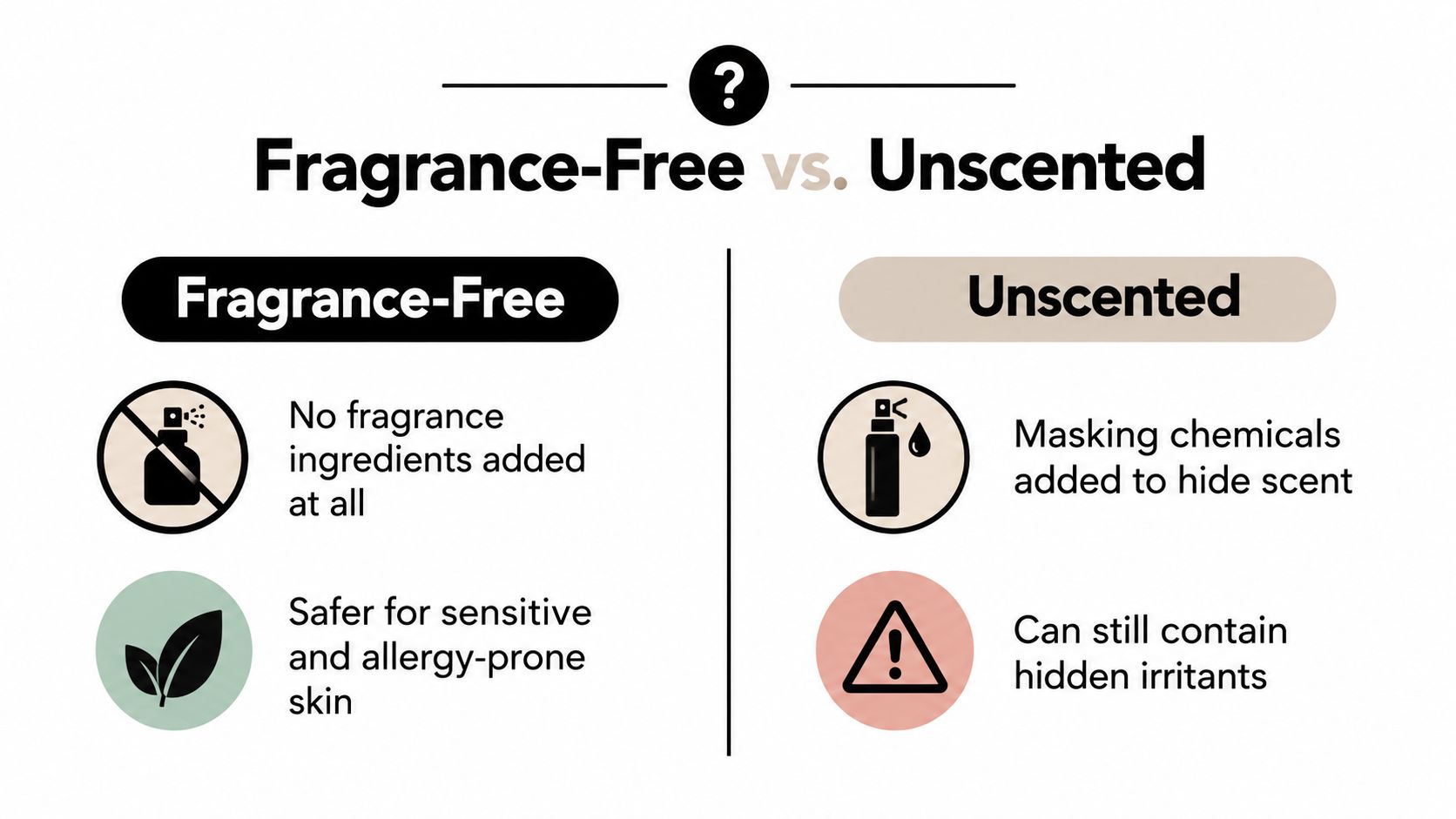
Independent beauty and health coverage of fragrance-free shampoo notes that unscented products can use masking ingredients, while fragrance-free products should exclude added fragrance materials. This distinction matters because fragrance exposure can contribute to contact dermatitis, irritation, and migraine flares in sensitive users.
How to read the front of the bottle
Start with the claim, but don't stop there. Look for terms such as fragrance-free, perfume-free, or no added fragrance, then check whether the brand explains what it means. A transparent company should make clear whether the formula contains parfum, fragrance, essential oils, or scent-masking ingredients.
The word “natural” doesn't settle the question. Lavender, citrus, peppermint, rosemary, and other aromatic plant materials can add scent and may still cause a reaction. “Clean,” “botanical,” and “gentle” are also broad marketing descriptions, not universal guarantees.
Why the distinction affects real routines
Suppose your scalp feels calmer after removing scented products. If you switch to an unscented shampoo that contains masking fragrance, you may conclude that fragrance isn't the problem. That can prolong the trial-and-error cycle and make it harder to identify the ingredient your skin dislikes.
For an elimination routine, choose a formula with a short, clearly disclosed ingredient list. If symptoms continue, consider other possible irritants rather than assuming the product failed. Fragrance-free means less guesswork, not an automatic guarantee that every scalp will tolerate the formula.
Identifying Who Actually Needs Perfume-Free Hair Care
A shampoo without perfume isn't reserved for people with a confirmed fragrance allergy. It can be a reasonable choice for people with recurring scalp itch, burning, redness, eczema-prone skin, psoriasis-prone skin, or a history of reacting to personal-care products. Some people also avoid fragrance because airborne or lingering scents contribute to migraine flares.
The most useful clue is often the pattern. If your scalp becomes uncomfortable after changing shampoo, conditioner, styling products, or hair dye, removing added fragrance can simplify the investigation. The same applies when symptoms appear without an obvious cause and your routine contains several scented products layered together.
Fragrance sensitivity is also a documented public-health concern. European authorities cite population estimates of about 1–3% fragrance-related contact allergy in Europe, while one German estimate places fragrance allergy at roughly 15–20% of contact-allergy cases, second only to nickel. These figures are reported in the European Commission's explanation of fragrance-allergen labeling.
Why regulation helps shoppers
European rules for rinse-off cosmetics such as shampoo have become progressively stricter. Since 2003, 26 allergenic fragrances have required declaration when they exceed 0.01% in rinse-off products, and Regulation (EU) 2023/1545 expanded the listed group from 24 to more than 80 fragrance allergens, as explained by the European Commission.
That doesn't turn a label into a medical test. It does give shoppers more information when a declared allergen is present above the applicable threshold. It also shows why perfume-free shampoo has become a meaningful response to a mass-market exposure, rather than a niche product category created only for a small group of allergy patients.
A practical audience for the switch
You might consider perfume-free hair care if:
- Your scalp itches or burns: A simpler routine can make it easier to identify a trigger.
- You have reactive skin elsewhere: Eczema-prone or psoriasis-prone skin may respond poorly to unnecessary fragrance exposure.
- You get fragrance-related headaches: Removing scent from products used close to your face can reduce one potential source.
- You're testing a suspected allergy: A fragrance-free shampoo gives you a cleaner baseline than an unscented product with unclear masking ingredients.
- You want fewer ingredients: Reduced sensory additives can fit a broader simplified-ingredient routine.
For a practical look at how this choice can fit sensitive-skin care and a lower-waste household, see this guide to fragrance-free shampoo for sensitive skin.
Spotting Hidden Irritants and Ingredients to Avoid
Removing perfume is only one part of scalp-friendly formulation. A product can be fragrance-free and still contain a cleanser, preservative, dye, botanical extract, or essential oil that doesn't suit you. The right question isn't “Does this bottle smell neutral?” It's “What has the manufacturer put in the formula?”
Start with the complete ingredient list
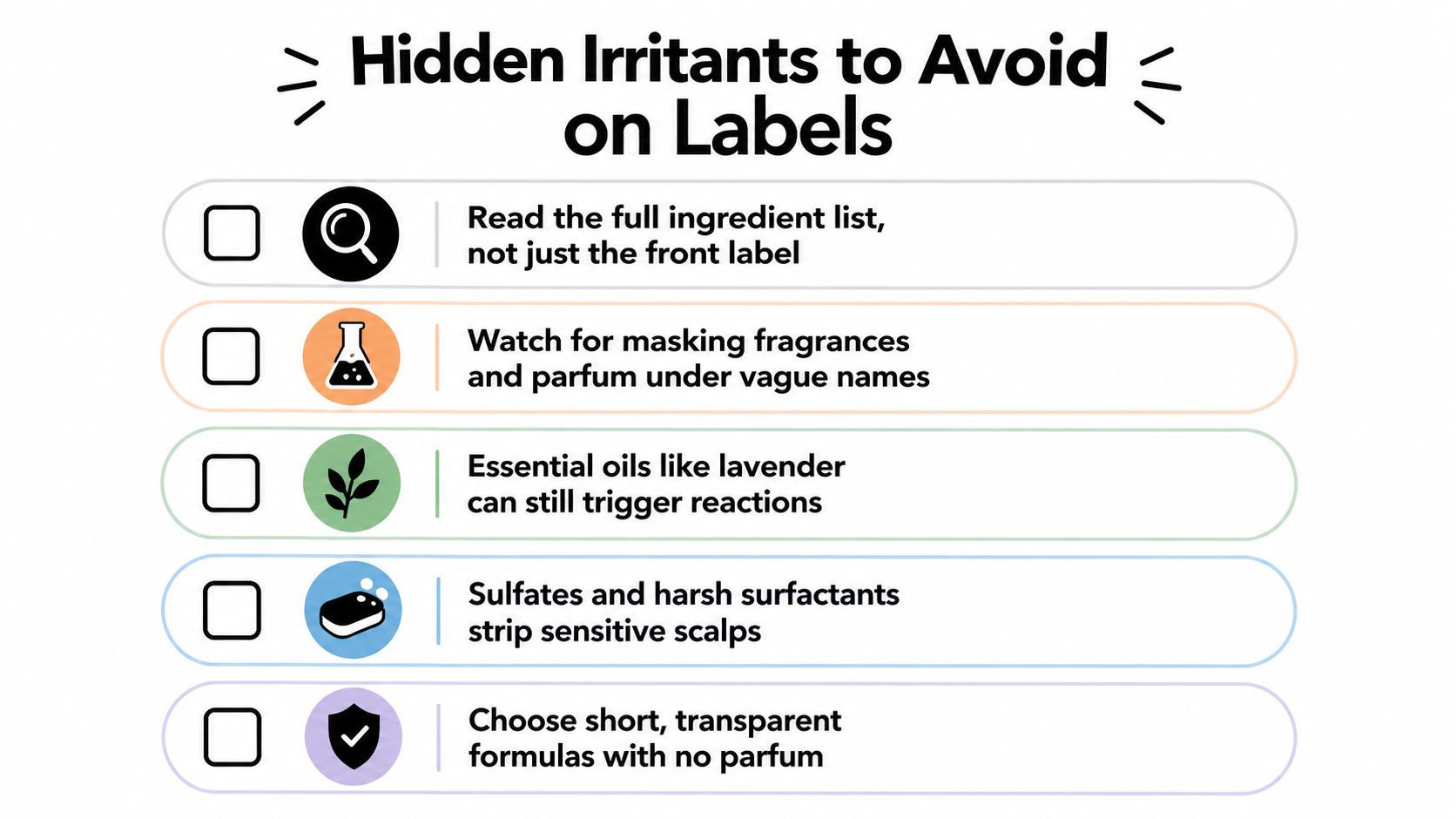
Read the back label rather than relying on claims printed across the front. Watch for fragrance, parfum, or vague scent descriptions. If the brand says a product is unscented but doesn't explain whether it contains masking fragrance, ask the company before buying.
Essential oils deserve the same care. Lavender, peppermint, tea tree, citrus, and other aromatic oils may sound gentler because they come from plants, but “natural” doesn't mean non-allergenic. A fragrance-free routine should generally avoid added aromatic oils when you're trying to isolate fragrance as a possible trigger.
Look beyond perfume
Independent dermatology-oriented guidance notes that fragrance-free shampoos are often also made without sulfates, dyes, parabens, phthalates, silicones, and formaldehyde-releasing preservatives, as described by the National Psoriasis Foundation's shampoo ingredient guidance. That doesn't mean every person must avoid every ingredient on that list. It means these are useful screening points when you already know your scalp reacts easily.
Preservatives deserve particular attention because removing perfume doesn't remove the need to keep a water-based shampoo safe from microbial growth. A well-made formula still needs an effective preservation system. If you have repeated reactions, a dermatologist or patch-test specialist can help identify whether fragrance, preservatives, surfactants, or another ingredient is responsible.
Use this quick label routine:
- Read the full list: Don't judge a formula by “gentle” or “natural” on the front.
- Find scent terms: Look for fragrance, parfum, masking fragrance, and essential oils.
- Assess the cleanser system: Notice whether the shampoo relies on strong or potentially drying surfactants.
- Check extras: Dyes, botanical blends, and multiple active ingredients make troubleshooting harder.
- Keep the first trial simple: Change one product at a time so you can observe your scalp.
Label rule: A short ingredient list isn't automatically safer, but a transparent ingredient list gives you a much better starting point.
Transitioning to a Gentle Fragrance-Free Hair Routine
A switch to fragrance-free shampoo doesn't need a dramatic reset. Start by replacing the product you apply directly to your scalp, then keep your conditioner and styling products stable long enough to notice how your skin responds. Changing everything at once may feel decisive, but it makes a reaction difficult to trace.
You may notice a different lather or after-wash feel. Some shampoos built around milder surfactants create a softer, less dramatic foam. That doesn't necessarily mean they aren't cleansing. Work the product through wet hair and scalp, use enough water, and rinse thoroughly before deciding whether the texture suits you.
Patch-test before a full wash
Apply a small amount of the new product to a limited area of skin, then observe it for 24–48 hours before using it across your scalp. DermNet's guidance on cosmetic contact reactions recommends this approach to help identify whether a product may cause a reaction.
A patch test isn't a substitute for professional allergy testing, and a clear result doesn't guarantee that repeated scalp use will be comfortable. Still, it gives you a cautious first step, especially if you've experienced burning, itching, or a previous reaction to hair care.
Make the transition easier
Keep a simple note on your phone. Record the shampoo name, wash date, how your scalp felt during the following day, and whether you used any new styling product. This is more useful than relying on memory after several washes.
If your hair feels less coated, more squeaky, or oilier than expected, don't call it a “detox” automatically. Your hair may be responding to a different conditioning system, cleansing strength, water quality, or washing frequency. Adjust gradually:
- Use less product first: More shampoo doesn't always mean cleaner hair.
- Add water while lathering: Water helps spread cleanser across the scalp.
- Keep conditioner on the lengths: Avoid placing a rich conditioner directly on an oily or irritated scalp unless the product is designed for that use.
- Change one variable: Give yourself a clear comparison rather than switching shampoo, conditioner, mask, and oil together.
For shoppers building a matching routine, a fragrance-free conditioner can keep added scent out of the next step as well.
Building a Low-Waste Refillable Bathroom Routine
Sensitive-scalp care can create an awkward environmental problem. People often buy specialty products in new plastic bottles, discover that one doesn't suit them, and move on to another. A refill system changes the decision from “Which disposable bottle should I try next?” to “Which formula works well enough to keep in regular rotation?”
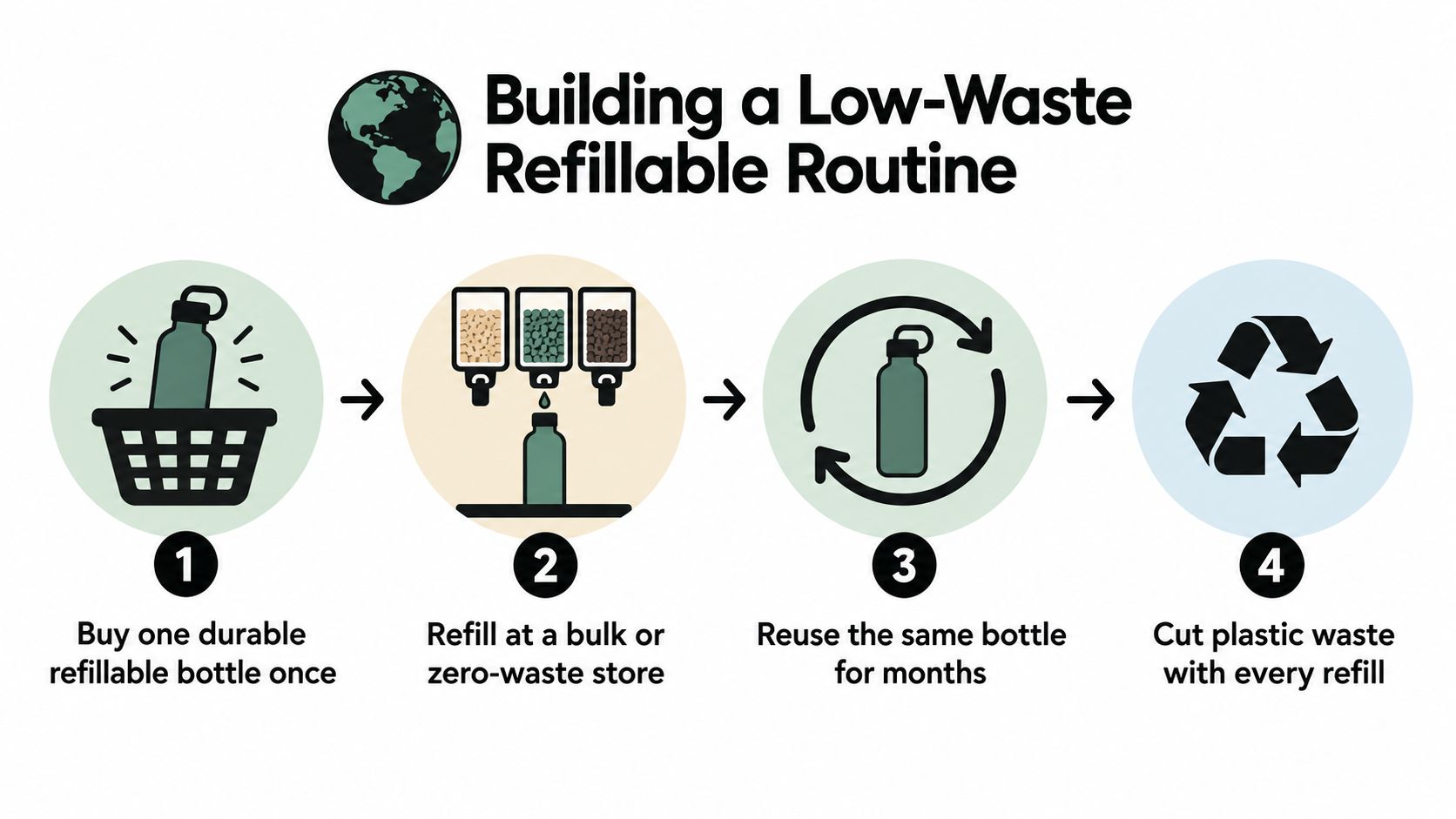
The environmental benefit comes from reusing the durable dispenser while purchasing the formula in a larger format. That approach can be especially practical for households that have already tested a shampoo and know it works for their scalp. You aren't treating sustainability as a separate project. You're building it into a product you use repeatedly.
How the refill loop works
Fillaree takes back used refill bags, washes and sanitizes them, and reuses them at no cost to the customer. Its home refill system uses 0.5-gallon boxes that can top up standard 8 oz bottles up to eight times. Those details come from the publisher's stated refill program, not from a general assumption that all refill systems operate in the same way.
A practical routine might look like this:
- Choose the formula first: Confirm that the shampoo is completely perfume-free and compatible with your scalp.
- Keep one durable bottle: Label it clearly so nobody confuses shampoo with conditioner.
- Buy a larger refill: Store the box somewhere cool and dry, away from direct heat.
- Refill clean equipment: Rinse and dry the bottle as directed by the brand before adding more product.
- Return the bag where applicable: Use the manufacturer's take-back process instead of placing the packaging in a bin without checking its instructions.
For ideas on choosing a reusable dispenser and fitting it into a bathroom setup, see this guide to a refillable shampoo dispenser.
The important distinction is between buying less packaging and buying more product than you can use. A bulk format only makes environmental sense when the formula suits your household and the refill remains usable before it expires.
Supporting Values-Driven and Women-Led Brands
Your shampoo purchase supports more than a formula. It supports the people who formulate, manufacture, package, ship, and explain that product. If your values include ingredient transparency, fairer local economies, responsible packaging, and community investment, those factors belong in the buying decision alongside scalp comfort.
Women-owned manufacturing businesses deserve particular attention because they connect product development with ownership and decision-making. Supporting them isn't a guarantee of a perfect formula or ethical supply chain, so you should still check the ingredients and claims. It is, however, a way to direct money toward companies whose structure and priorities may better reflect the kind of economy you want to strengthen.
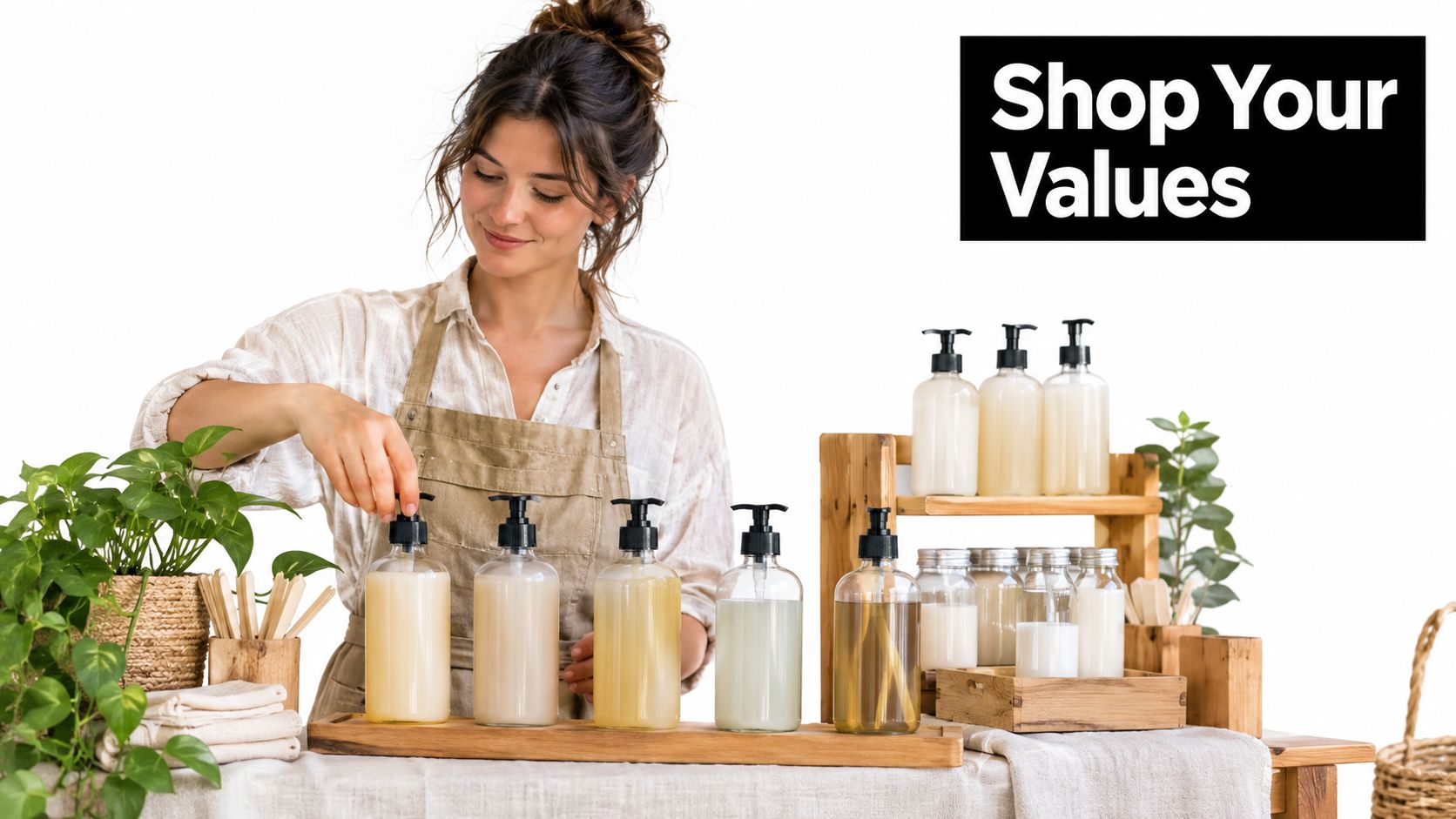
What responsible buying can look like
Look for companies that explain where products are made, how packaging moves through the system, and what happens after use. A brand that offers refills but gives no guidance for washing, returning, or disposing of refill packaging leaves an important part of the sustainability story unfinished.
You can also consider how a company serves its community. Local production, accessible refill points, subscriptions, wholesale options, and educational resources can make low-waste habits easier to maintain. Convenience matters because a sustainable routine that requires constant extra effort often gets abandoned.
Buy with both standards and curiosity
Good products should meet two tests. First, the formula must work for your hair and scalp. Second, the company should communicate openly about ingredients, packaging, and limitations.
Avoid treating “women-led,” “natural,” or “eco-friendly” as a replacement for evidence. Ask practical questions:
- Is the product clearly labeled fragrance-free rather than merely unscented?
- Can the full ingredient list be found before purchase?
- Does the brand explain its refill or take-back process?
- Can you buy only the amount your household will use?
- Does the packaging system fit your actual bathroom habits?
That approach supports good products and good companies without turning conscious shopping into blind loyalty. Your money can reward thoughtful manufacturing, but your scalp still gets the final vote.
Frequently Asked Questions About Perfume-Free Hair Care
Can fragrance-free shampoo help with dandruff?
It can be part of a gentler routine, but it isn't automatically a dandruff treatment. Dandruff, dryness, irritation, and buildup can have different causes, so removing perfume may reduce one source of discomfort without addressing flaking itself.
If flakes continue, choose a product designed for that concern or speak with a healthcare professional. Avoid assuming that every scalp problem requires a stronger cleanser. A fragrance-free formula can still be selected for its cleansing ability, but the treatment claim and active ingredients matter separately.
Can it clean oily hair?
Yes, a perfume-free shampoo can cleanse oily hair if its surfactant system matches your scalp and washing habits. “Fragrance-free” describes what the formula leaves out, not how powerful or mild its cleansing action must be.
Try adjusting application before rejecting the product. Wet the scalp thoroughly, work cleanser into the roots, and rinse well. If oil remains, the formula may be too gentle for your needs, or conditioner and styling residue may be collecting near the scalp.
Do fragrance-free shampoos lather?
They can. Lather depends on the surfactants, water, product amount, and application technique, not on perfume. A shampoo without perfume may produce a softer or smaller foam, but foam isn't a reliable measure of cleaning power.
Use enough water and massage the scalp rather than piling product onto the hair lengths. If you need a very high-foam wash, compare formulas carefully instead of adding more shampoo. More lather can also mean more dryness for some people.
Is “hypoallergenic” enough?
No. The FDA states that the United States has no federal standard or definition for “hypoallergenic,” “fragrance-free,” or “for sensitive skin,” as discussed in FDA information about cosmetic fragrance and labeling terms. Treat these words as clues, then inspect the ingredient list and the manufacturer's explanation.
Can I use a fragranced conditioner with perfume-free shampoo?
You can, but it may undermine an elimination trial. Conditioner sits on the hair and can touch the neck, ears, and scalp, so fragrance exposure doesn't stop when shampooing ends. If you're trying to determine whether fragrance contributes to symptoms, keep both shampoo and conditioner free from added fragrance during the test.
What else should I check?
Experts advise looking for pH-balanced and hypoallergenic formulas, then checking whether the product is also sulfate-free, dye-free, and free of botanical extracts that may irritate some users. This guidance is summarized in expert coverage of sensitive-scalp shampoo and conditioner choices. If symptoms persist, worsen, or involve significant inflammation, get individual medical advice rather than continuing to experiment indefinitely.
Fillaree offers fragrance-free hair-care options alongside refillable, low-waste systems, including home refills in larger boxes and a take-back process for used refill bags. Visit Fillaree to explore a shampoo without perfume and build a simpler bathroom routine that supports both sensitive-scalp care and thoughtful packaging choices.