
Unscented Body Soap Guide for Sensitive Skin Care
You step out of the shower feeling clean, but your skin feels tight, itchy, or oddly hot. Maybe the soap smells pleasant in the store, yet the fragrance lingers on your towel and seems to bother your skin all day. If you have eczema, dry skin, or a known fragrance allergy, that familiar routine can turn a basic shower into a process of elimination.
Unscented body soap can help reduce one common source of exposure, but the label needs a closer look. “Unscented” and “fragrance-free” aren't interchangeable, and a soap without perfume can still leave skin dry if its pH or surfactant system is too harsh. The most useful choice considers the whole formula, not just the absence of a noticeable smell.
This guide brings those pieces together in practical terms. You'll learn how to read scent claims, understand pH and cleansing agents, compare ingredients, and choose lower-waste options that fit your values. For a Durham household, that can mean caring for sensitive skin while also supporting good products, good companies, and habits that keep containers in use rather than sending them straight to the bin.
Table of Contents
- Introduction to Unscented Body Soap and Why It Matters
- What Unscented Really Means and How It Differs From Fragrance Free
- How Gentle Cleansing Works for Sensitive Skin
- Ingredients to Seek and Avoid When Choosing Unscented Body Soap
- Sustainable Choices and Fillaree Refill Options That Align With Your Values
- How to Use and Store Unscented Body Soap for Best Results
- Building a Gentle Low Waste Routine You Can Stick With
Introduction to Unscented Body Soap and Why It Matters
A body soap can seem mild at the sink and feel rough in the shower. A bottle marked clean or sensitive may have barely any smell, yet leave your arms dry, your neck stinging, or a child's skin itchy after washing. That mismatch makes label literacy more useful than a quick sniff.
Fragrance is a common source of skin sensitivity. A clinical review discusses estimates ranging from 1.8% to 4.2% in the general population (clinical review on fragrance sensitivity). A reaction is not guaranteed with every scented product, but reducing added scent can matter for people whose skin regularly protests after bathing.
Scent is only one part of the formula. A product without obvious perfume may still include botanical ingredients that concern someone with allergies, or cleansing agents that remove too much protective oil. The formula's pH and surfactant system can affect comfort and the skin barrier, even when the front label says nothing about fragrance.
A useful starting point
An unscented body soap is a starting point, not a complete skin-care diagnosis. People with fragrance sensitivity, eczema-prone skin, very dry skin, or a history of allergic contact dermatitis may benefit from reducing added scent. Persistent symptoms call for advice from a qualified medical professional.
Four practical questions can guide a purchase:
- Does the label say fragrance-free, or only unscented?
- Does the ingredient list include masking fragrance, essential oils, or many botanicals?
- Does the cleanser use a skin-compatible pH and milder surfactants?
- Can you buy and store it while reducing unnecessary packaging?
Soap has served people for thousands of years, from early fat-and-ash preparations in Mesopotamia around 2800 BC to commercial soapmaking in Europe and later synthetic cleansing systems (history of soap and modern cleansing products). Modern fragrance-free choices connect that familiar ritual with more careful formulation and clearer label reading. For a Durham household, refillable options such as Fillaree can also keep containers in use, linking gentler body care with a practical low-waste habit.
What Unscented Really Means and How It Differs From Fragrance Free
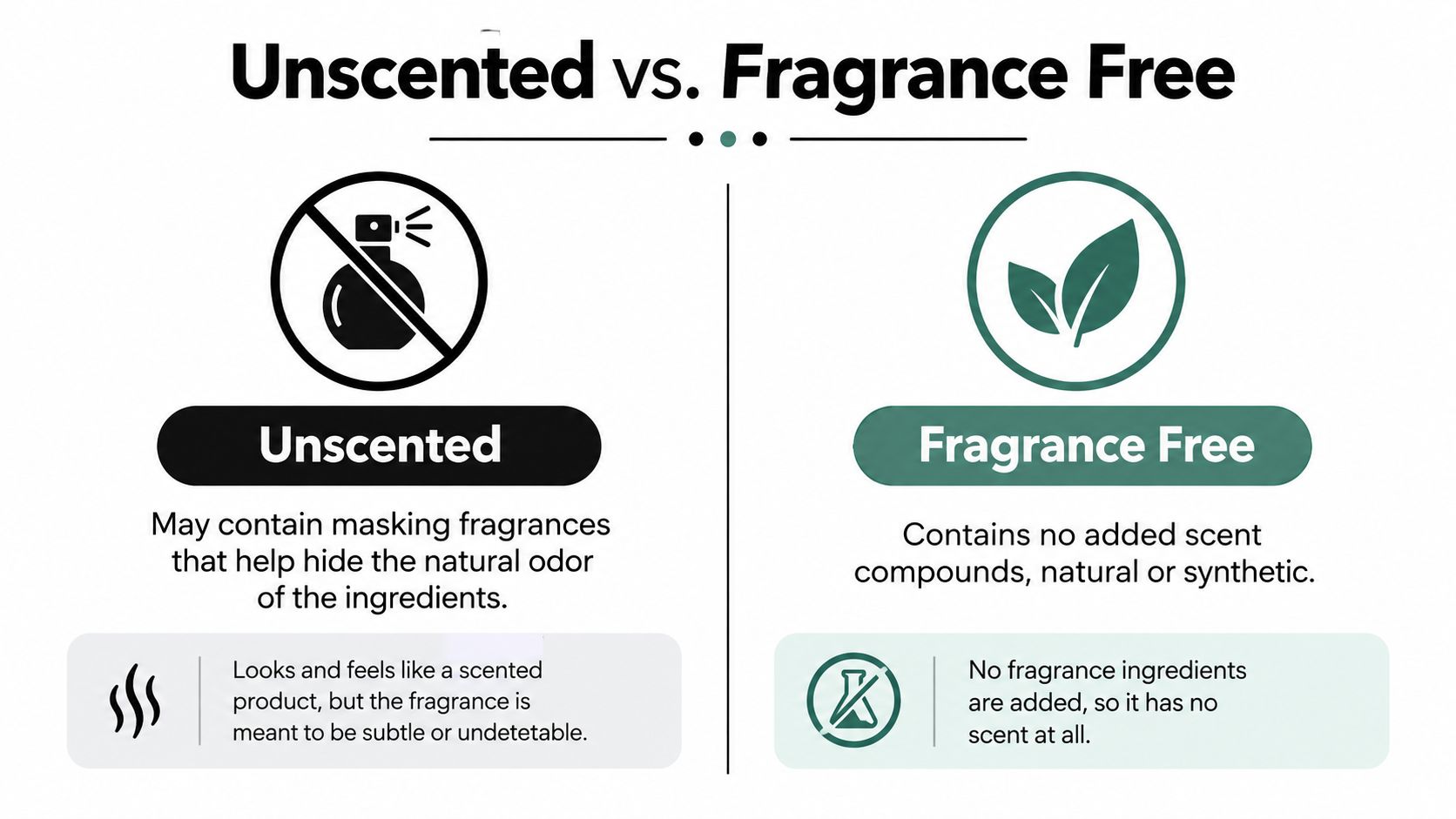
A cleanser can have no added perfume and still smell like its ingredients. Soup makes the distinction clear: its aroma comes from the ingredients unless someone adds perfume. An “unscented” cleanser may work similarly, or it may contain a masking fragrance that hides the natural smell of oils, preservatives, or other raw materials.
Unscented doesn't reliably mean fragrance-free. Dermatology guidance notes that unscented products may contain masking fragrances, which can still trigger allergic contact dermatitis in fragrance-sensitive users (cosmetics and fragrance guidance from WebMD). The useful question is whether fragrance chemicals are present, not whether perfume is noticeable.
Read the claim beside the ingredient list
| Label language | What it may mean | Safer shopping response |
|---|---|---|
| Unscented | The product has little or no noticeable scent, but masking fragrance may still be present. | Check the full ingredient list instead of relying on the front label. |
| Fragrance-free | The product is intended to avoid added fragrance materials. | Look for transparent ingredients and confirm that essential oils aren't being used as scent. |
| No perfume | The maker may not have added conventional perfume, but the phrase doesn't explain every aromatic ingredient. | Treat it as a prompt for more questions, not a final answer. |
| Natural scent | The smell may come from oils, extracts, or other raw materials. | Consider whether your skin reacts to specific botanicals or essential oils. |
A 2024 analysis of 33 products marketed as “fragrance-free” or “unscented” found that 58% still declared fragrance or botanical ingredients. Only 20 products were fragrance-free, and the products averaged 1.8 screened contact allergens each. Those findings make ingredient-list review more useful than scent detection.
For reactive skin, start with explicit fragrance-free wording. Then scan the INCI list for fragrance, parfum, masking fragrance, essential oils, and aromatic botanical extracts. A short ingredient list is not automatically harmless, while full disclosure makes it easier to identify a possible irritant.
Fillaree's fragrance-free soap guidance offers another practical reference for comparing how makers explain scent claims. That kind of clear labeling supports a lower-waste choice too: you can assess the formula before committing to a refill or reusing a container.
How Gentle Cleansing Works for Sensitive Skin
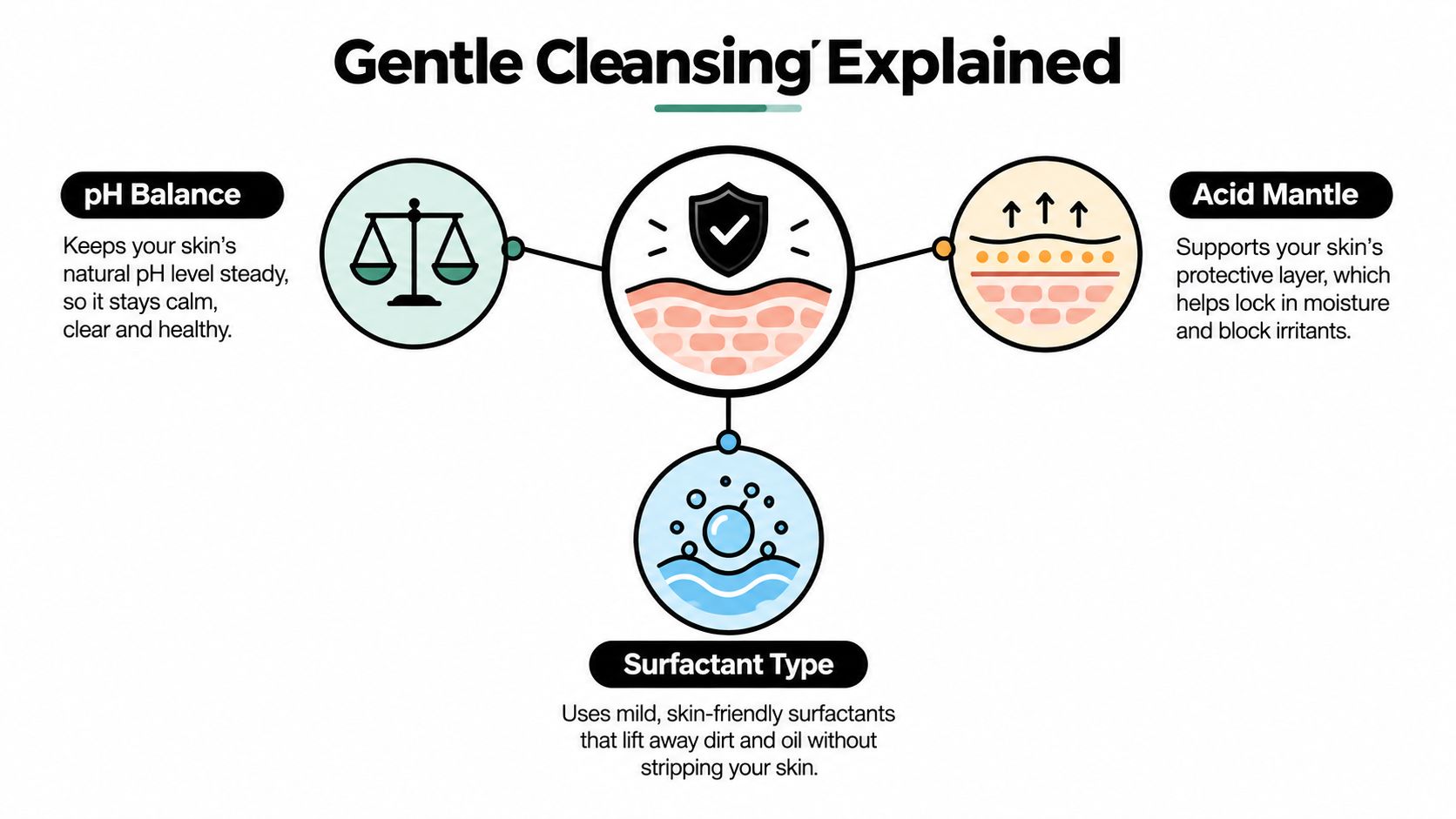
Removing dirt and excess oil requires a cleanser that can lift substances from the skin and let water carry them away. The same chemistry can also remove some of the lipids and moisture that help the outer skin barrier stay comfortable. Fragrance status matters, but it isn't the whole comfort equation.
pH describes how acidic or alkaline a product is. Skin naturally has an acidic surface environment often called the acid mantle. Research on skin cleansing reports that high-pH cleansers can swell the stratum corneum, change lipid rigidity, and worsen barrier disruption compared with neutral or acidic systems near pH 4.5 to 5.5 (skin-cleansing research on pH and surfactants).
Practical rule: Fragrance-free is a useful filter, but pH and surfactant type help determine whether the cleanser feels comfortable after the rinse.
Why surfactants change the after-wash feel
Surfactants are cleansing agents. They help water interact with oils and particles so those materials can leave the skin. Different surfactant families produce different experiences, and products built mainly with anionic surfactants can still increase dryness and irritation even when they contain no fragrance.
You may notice the result as tightness across the shoulders, a squeaky feeling, roughness around the elbows, or itching that starts soon after the shower. Those sensations don't prove which ingredient caused the problem, but they are useful signals to take seriously. A rich lather isn't a reliable measure of gentleness, either.
A cleanser designed for sensitive skin often combines a milder surfactant system with a pH approach that better supports the skin barrier. Product descriptions can help, but transparent ingredient lists and your own response matter more than words such as pure, clean, or natural.
For a concrete comparison, Loyaltie unscented soap is one product page you can inspect while learning to compare unscented formulas, ingredient details, and the kind of after-wash experience a maker describes. If your skin is persistently inflamed, cracked, or painful, pause experimentation and speak with a clinician rather than cycling through increasingly complicated products.
Ingredients to Seek and Avoid When Choosing Unscented Body Soap
A short ingredient list can make shopping easier, but “short” doesn't automatically mean safe for every person. A Stanford Medicine summary reported that more than 94% of surveyed natural skin products contained at least one known contact allergen, with fragrance identified as the most common allergen and fragrance mix appearing in 36.6% of products (Stanford Medicine summary of allergens in natural skin products). Natural and gentle aren't synonyms.
Start at the end of the marketing claim and move to the ingredient list. Look for a clear cleansing base, explicit fragrance-free wording, and enough information to understand what creates the formula's scent, texture, and preservation. If the company hides behind broad language, choose a maker that answers direct questions.
Unscented Body Soap Ingredient Quick Check
| Ingredient or Claim | What It Means for Sensitive Skin | What to Do |
|---|---|---|
| Fragrance, parfum, or masking fragrance | May add scent compounds even when the product is called unscented. | Avoid if fragrance sensitivity is a concern. |
| Essential oils | They can provide aroma and may contain components that bother reactive skin. | Treat scented essential oils as fragrance for a sensitive-skin routine. |
| Botanical extracts | Plant-derived ingredients can still include contact allergens. | Check the specific plant and your known allergy history. |
| Harsh or mainly anionic surfactant system | Can increase dryness or irritation depending on the overall formula. | Look for information about milder surfactants and observe your after-wash feel. |
| pH-balanced claim | Suggests the maker has considered acidity and alkalinity, though the claim alone doesn't reveal the exact pH. | Prefer transparent product details and avoid assuming fragrance-free means pH-balanced. |
| Third-party seal | Shows that an outside organization has evaluated the product against its own criteria. | Understand what the seal covers, then compare the actual ingredients. |
| Full ingredient disclosure | Gives you the information needed to avoid known triggers. | Make transparency a deciding factor. |
One ingredient category that may appear in lower-irritation cleansing systems is a glucoside surfactant. You can read Fillaree's caprylyl capryl glucoside explainer as an example of the kind of ingredient-specific information a transparent maker can provide. The presence of one familiar ingredient doesn't guarantee that the whole product will suit you, so consider the complete formula.
Patch-test before a full switch
Apply a small amount of the product to a limited area, then watch how your skin responds over time. Don't test several new products together, because you'll lose the ability to identify the likely trigger. Keep the packaging or take a photo of the ingredient list so you can compare it with products you've tolerated.
If you already know you have a fragrance allergy, ask a dermatologist about formal testing and personalized product guidance. A patch test at home can't replace medical evaluation, especially if you develop swelling, widespread rash, blistering, or breathing symptoms.
Sustainable Choices and Fillaree Refill Options That Align With Your Values
Sensitive-skin care often creates a practical tension. You want a product your skin can tolerate, but you don't want to buy a new plastic bottle every time you find one that works. The most useful routine solves both problems at once by choosing a suitable formula and keeping its container in circulation.
A refill system works best when it fits normal life. You can refill at a local station, top up a bottle at home, or use a take-back program that gives the packaging another use. That model reduces the pressure to choose between personal comfort and environmental responsibility.
What a circular refill habit looks like
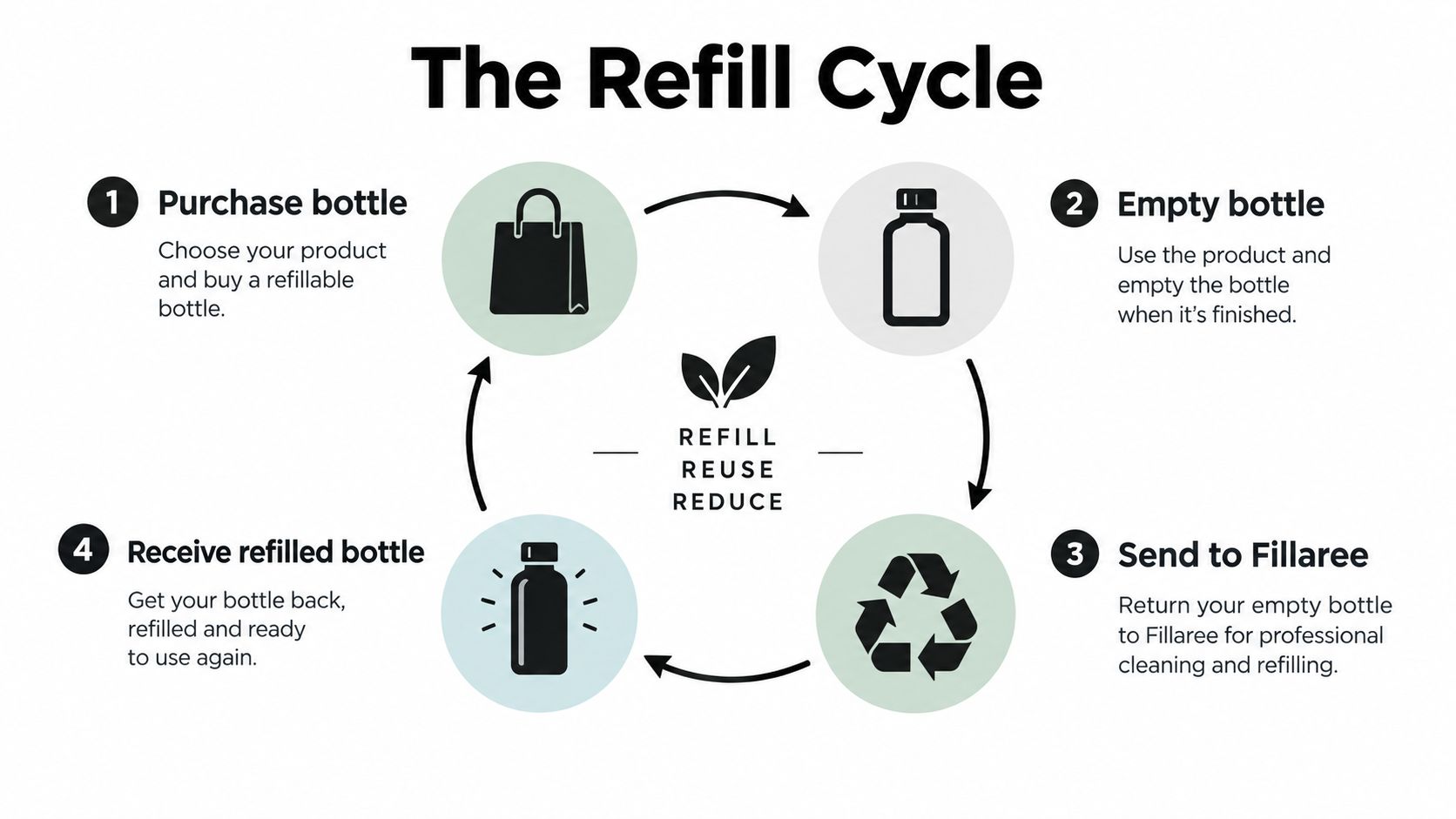
Fillaree, a women-owned manufacturer based in Durham, North Carolina, offers refillable low-waste essentials for home and body, including an unscented Soap + Suds liquid product that can serve as body wash or hand soap. Its system includes partner refill stations, home refills in 0.5-gallon boxes that top up standard 8 oz bottles up to eight times, and a take-back loop for used refill bags. The company says it washes and sanitizes returned bags, then reuses them at no cost to customers.
Those details matter because they describe a specific reuse pathway rather than stopping at recyclable packaging. Customers can learn about Fillaree's zero-waste refill station approach and decide whether the available options suit their household, location, and preferred shopping rhythm.
The U.S. EPA also explains that fragrance-free and unscented aren't the same. Unscented products may contain chemicals used to mask odor, while fragrance-free products are intended to avoid fragrance materials (EPA guidance on fragrance-free and unscented products). Apply that same label rule when choosing a refill. A lower-waste container still needs a formula you can use comfortably.
Spend with your values in mind
Supporting good companies that care can be an everyday vote for transparency, reuse, and community investment. Look for makers that explain their ingredients, state what their scent claims mean, describe how packaging moves through the system, and make refilling practical rather than aspirational.
You don't need to replace every product at once. Start with the cleanser you use most often, keep the bottle, and build a repeatable refill habit around it. That approach keeps the change manageable and helps you learn what works before expanding the routine.
How to Use and Store Unscented Body Soap for Best Results
Even a well-chosen cleanser can feel uncomfortable if you use very hot water, scrub aggressively, or leave a bar sitting in a puddle. Gentle cleansing depends on the daily method as much as the label.
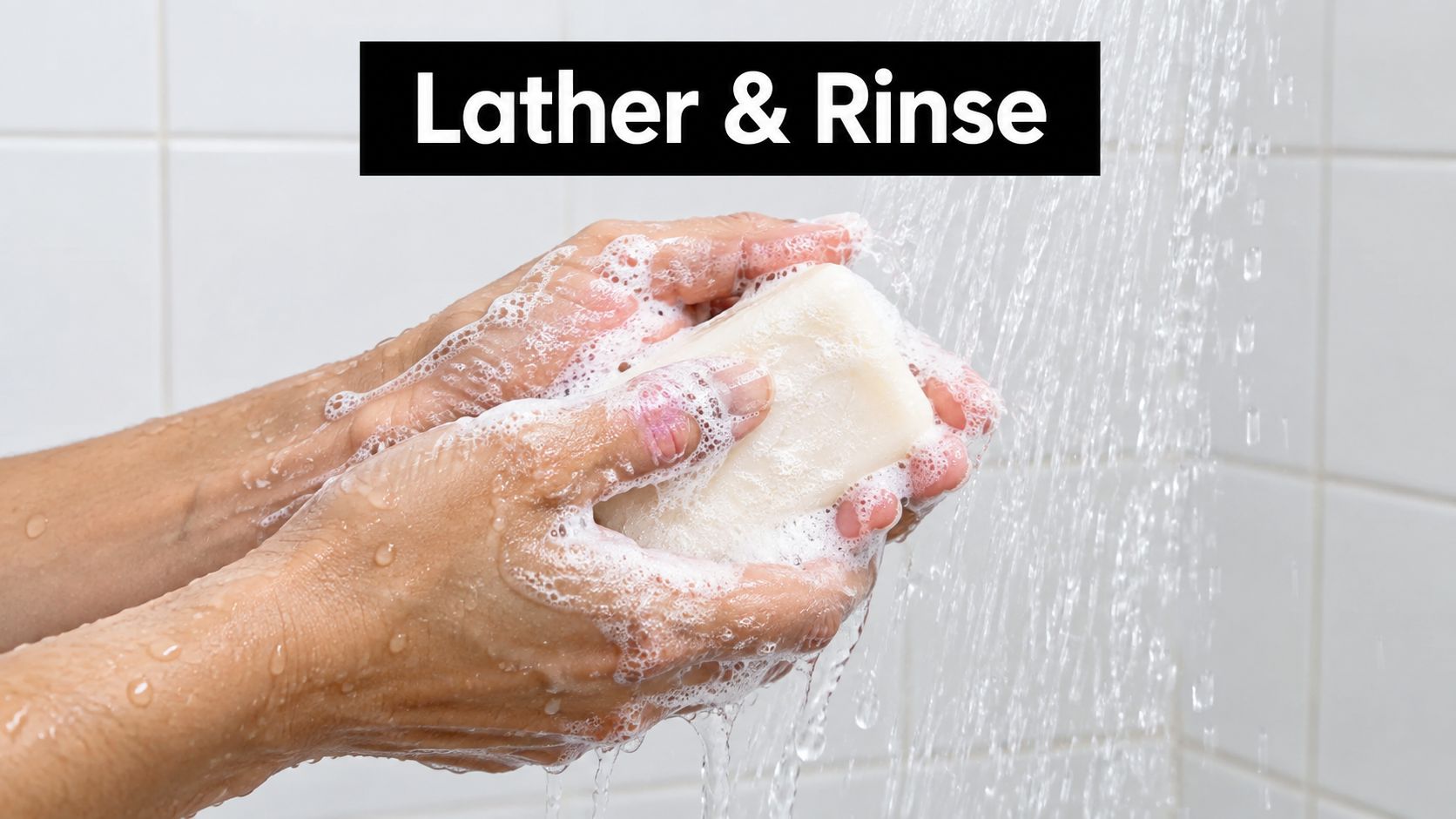
A calmer shower routine
- Use comfortably warm water: Very hot water can leave dry skin feeling tighter.
- Lather in your hands or on a soft cloth: You don't need rough scrubbing to remove everyday sweat and soil.
- Wash the areas that need it: Let the cleanser do the work, then rinse thoroughly.
- Keep showers sensible: Long exposure to hot water can make dryness more noticeable.
- Moisturize after patting dry: Apply a plain moisturizer while skin still has a little surface moisture if your routine needs extra barrier support.
Bar users should place the soap on a draining dish or raised rack so air can reach the underside. Letting a bar dry between uses helps it stay firm and prevents the soft, dissolving mess that happens when it rests in standing water.
For liquid refills, wash and fully dry a reusable bottle before changing products, follow the maker's handling directions, and don't introduce wet hands or used pumps into bulk containers. A clean, dry setup helps protect the product from avoidable contamination.
A demonstration can make the lathering and handling process easier to visualize:
Building a Gentle Low Waste Routine You Can Stick With
A lasting routine doesn't require perfect shopping. It needs a few dependable checks that you can remember when you're standing in a store or preparing a refill.
First, separate the scent claim from the skin claim. Fragrance-free is a more useful starting point than unscented for someone avoiding fragrance, but pH, surfactants, botanicals, and personal tolerance still matter. A peer-reviewed review found an association between sensitive skin, exposure to scented products, and fragrance allergy, supporting fragrance avoidance for people seeking fewer everyday irritants (peer-reviewed review on sensitive skin and fragrance).
Next, make the routine observable. Notice whether your skin feels comfortable after rinsing, whether tightness appears later, and whether a new symptom began after changing products. Keep one cleanser in rotation while testing, so your notes remain useful.
Finally, connect the product to a refill habit. Keep one bottle or bar in active use, store it properly, and return or refill the container through a system you can realistically access. A Durham shopper might visit a local station or storefront, while another household may prefer home delivery and bulk refills. The right system is the one you'll continue using.
Good products become more meaningful when good companies explain their choices and take responsibility for what happens after purchase. Choose transparency over soothing adjectives, comfort over scent expectations, and reuse over automatic disposal.
Fillaree offers refillable, low-waste body-care options, including an unscented Soap + Suds liquid for body washing and hand care, along with refill stations, home refills, and a take-back loop for used refill bags. Visit Fillaree to explore a fragrance-conscious cleansing routine that supports reuse and community-minded manufacturing.