

Zero Waste Shampoo and Conditioner: A Practical Guide
You're standing in the bathroom with three nearly empty shampoo bottles lined up beside the recycling bin, plus a conditioner bottle that still contains product you can't quite coax out. The shelf looks like a small record of good intentions. You wanted cleaner hair and less waste, but the packaging kept arriving faster than you could manage it.
That frustration is exactly where zero waste shampoo and conditioner becomes practical rather than aspirational. The right choice isn't just the product with the smallest package. It's the format that cleans or conditions your hair properly, works with your water, fits your travel and shower habits, and stays easy enough to use until the container, bar, or refill is completely finished.
Table of Contents
- What Zero Waste Shampoo and Conditioner Actually Means
- Comparing Bars, Concentrates, Refill Liquids, and Solids
- Transitioning Your Hair Without the Adjustment Drama
- The Environmental and Ingredient Story
- How Fillaree's Circular Refill System Works in Practice
- Building a Refill and Disposal Routine That Sticks
- Choosing the Format That Fits Your Life
What Zero Waste Shampoo and Conditioner Actually Means
Zero-waste hair care isn't one rigid product category. It's a design approach that tries to reduce packaging, transport unnecessary water, and avoid disposable containers through formats such as bars, concentrates, powders, tablets, and refill liquids. Some products arrive nearly package-free. Others use a durable bottle with a refill pouch or bulk container. The environmental result depends on what happens after the first purchase.
A shampoo bar, for example, isn't automatically the same thing as bottled shampoo with the water removed. Some bars use synthetic cleansing agents pressed into a solid format. Others are true soap, made through saponification. Those formulas can behave very differently on colored, curly, or mineral-exposed hair.
The useful question isn't “Does this look natural?” It's “What is the formula, how is it packaged, and will I keep using it?”
The modern solid shampoo story has a clear milestone. Lush says its co-founder Mo Constantine and cosmetic scientist Stan Krysztal invented the first solid shampoo bar in 1987, and the bar was patented in 1988. Lush also says it has sold 57.6 million shampoo bars worldwide since 2005, preventing the use of 167.5 million plastic bottles and eliminating about 4,275 tonnes of plastic. The brand estimates that one bar lasts for about 80 washes, roughly the same as three 250 mL shampoo bottles. These figures come from Lush's account of solid shampoo history and impact.
What the label doesn't settle
“Eco,” “clean,” and “natural” don't tell you enough by themselves. A biodegradable formula still needs ingredients that are appropriate for wastewater and local treatment systems. A plastic bottle may be refillable, while a pouch marketed as a refill may use several bonded layers that your local recycling program can't accept.
Ingredient terminology also causes confusion. A sulfate-free liquid can still cleanse effectively, and a solid bar can contain modern synthetic surfactants rather than soap. Conditioner deserves separate attention because it has a different job. Shampoo removes oil, sweat, and styling residue. Conditioner deposits lubricating ingredients that improve slip, reduce tangling, and make damaged or textured hair easier to handle.
Start by treating zero waste as a system, not a visual style. Look at the formula, package, refill path, drying and storage needs, and what disposal will look like in your area. That system determines whether the swap reduces waste or moves it into a less convenient container.
Comparing Bars, Concentrates, Refill Liquids, and Solids
Four formats cover most low-waste hair-care routines. Each solves a different problem, and none wins for every household.
| Format | Packaging Waste | Typical Cost per Wash | Best For | Hard-Water Performance | Tradeoffs |
|---|---|---|---|---|---|
| Solid shampoo or conditioner bar | Usually very low, especially with paper packaging | Often economical after the upfront purchase | Travel, compact bathrooms, simple routines | Can leave residue when minerals interact with the formula | Drying, technique, and hair-type fit matter |
| Concentrated liquid | Small container, often designed for controlled dosing | Depends heavily on dosing accuracy | Minimalist counters and people who prefer liquid texture | Usually easier to adjust than soap-based bars | Over-pouring defeats the concentration benefit |
| Refill liquid | Reduces new bottle use when the main container is reused | Can be practical for regular household use | Families, mixed hair needs, familiar liquid routines | Often a manageable choice for hard-water homes | Pouches may not be curbside-recyclable |
| Powder or tablet solid | Very low transport weight and packaging potential | Varies by formula and dilution method | Small storage spaces and experimenters | Performance depends on activation and formula chemistry | Water temperature, mixing, and consistency can complicate use |
Bars
Bars travel well because they don't spill and take up little space. They're especially convenient for carry-on luggage, gym bags, and households that want to remove bottles from the shower entirely. Fine or oily hair may respond well to a cleansing bar, but coarse, curly, or color-treated hair usually needs a conditioner bar with enough slip and a careful application technique.
Hard water is the main caution. Mineral-heavy water can combine with some bar formulas and leave hair rough, coated, or dull. A practical explanation of shampoo bar ingredients and soap chemistry can help you distinguish a syndet-style shampoo bar from true soap before buying.
Concentrates and refill liquids
Concentrated liquids feel most familiar to people who dislike the drag of a bar. A small pump or dropper can deliver a controlled amount, but only if you use it consistently. Adding too much product raises cost per wash and can make rinsing harder.
Refill liquids suit families with different hair textures because each person can keep a familiar application routine. They're also useful when conditioner performance matters more than eliminating every bottle immediately. The outer container must be reused repeatedly, though. Buying a new “refill” pouch and discarding the bottle after one use only changes the shape of the waste stream.
Powders and tablets
Powders and tablets can reduce the need to ship water and may work well for people who enjoy a measured, minimalist routine. They demand more attention than a ready-to-use liquid. You may need to dissolve, activate, or dilute the product properly, and an inconsistent mixture can affect both cleansing and conditioning.
Choose the format that matches your actual habits. A perfectly packaged tablet that you dislike using won't outperform a refill liquid you finish completely.
Transitioning Your Hair Without the Adjustment Drama
The waxy, flat-hair phase scares many people away from bars. It doesn't always mean the product is defective. Your hair may be carrying silicone, styling residue, or mineral buildup, or you may be applying too much product while learning the new method.
Start with a short hair audit before changing anything. Note your scalp's oiliness, curl pattern, density, chemical treatments, current styling products, and whether your home has soft or hard water. A person with fine, oily hair may need a lighter conditioner than someone with coarse curls. A color-treated routine may need gentler cleansing and less friction.
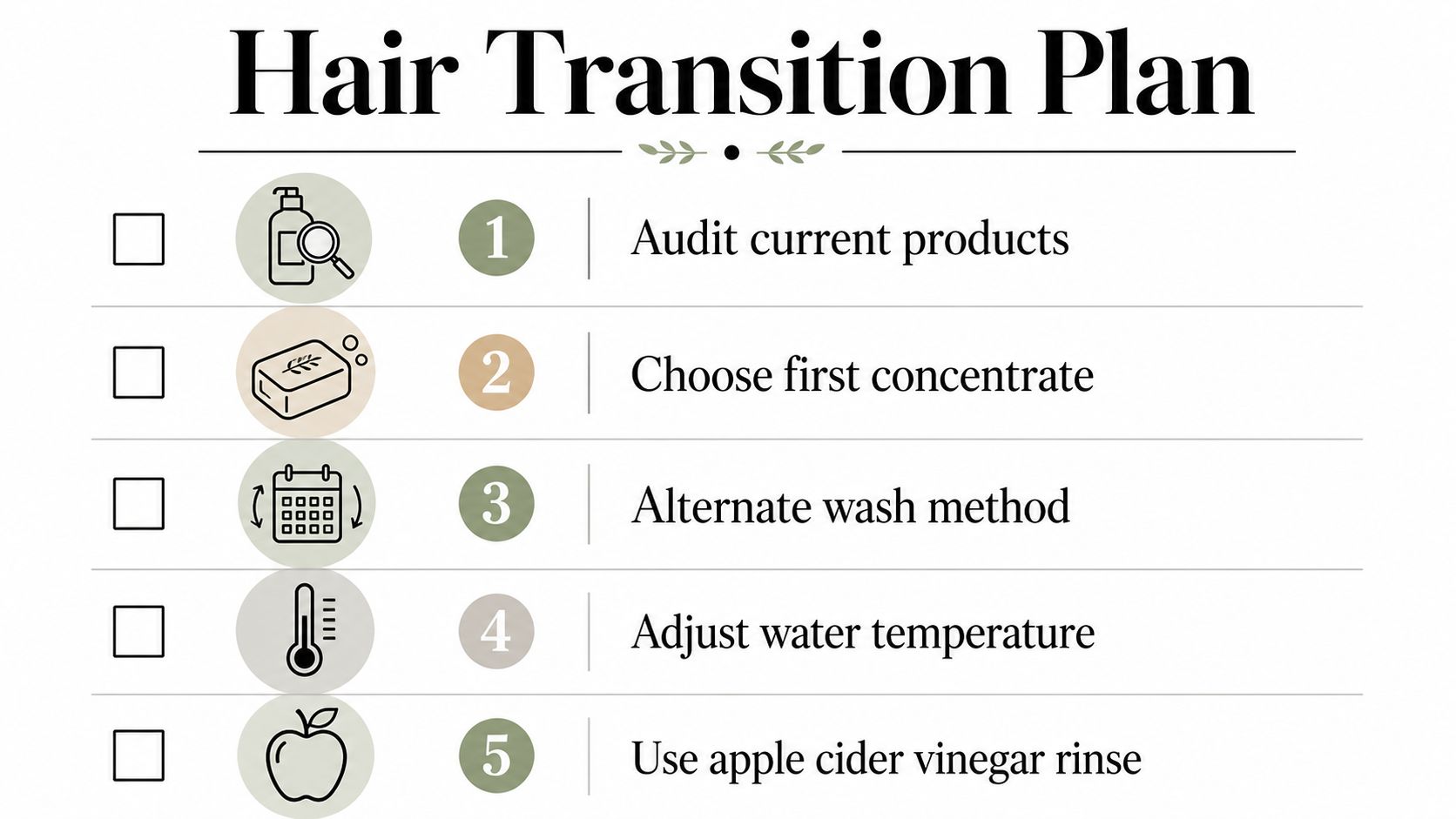
A calmer three-week switch
- Change one product first. Start with shampoo or conditioner, not both. You'll know which product is helping or causing trouble.
- Pre-soak your hair. Let water reach the scalp and lengths before applying a bar. This reduces drag and helps the product spread.
- Choose your lather method. Work the bar between wet hands for a gentler application, or lather it directly on the scalp with light passes. Don't scrub the lengths aggressively.
- Dilute liquid concentrate carefully. Use a small, clean bottle and follow the product's directions. Guessing the ratio can create a weak or overly concentrated wash.
- Clear buildup during weeks one through three. A rinse-out apple cider vinegar treatment or a suitable chelating wash can help remove residue and minerals. Rinse thoroughly, and avoid using acidic treatments on irritated or broken skin.
Use lukewarm rather than very hot water. Hot showers can worsen dryness, while a thorough rinse matters more than producing a dramatic amount of foam. If the hair feels coated after several washes, reassess the formula and water rather than adding more product.
If your scalp feels irritated, your color shifts, or your hair keeps breaking, stop the experiment and return to a familiar gentle routine while you reassess.
Some adjustment is normal as your technique changes, but persistent roughness isn't a badge of commitment. Try a second format if the first one fails. A refill liquid may suit your hair better than a soap-based bar, and a richer conditioner may be essential for curls or chemically treated lengths.
The Environmental and Ingredient Story
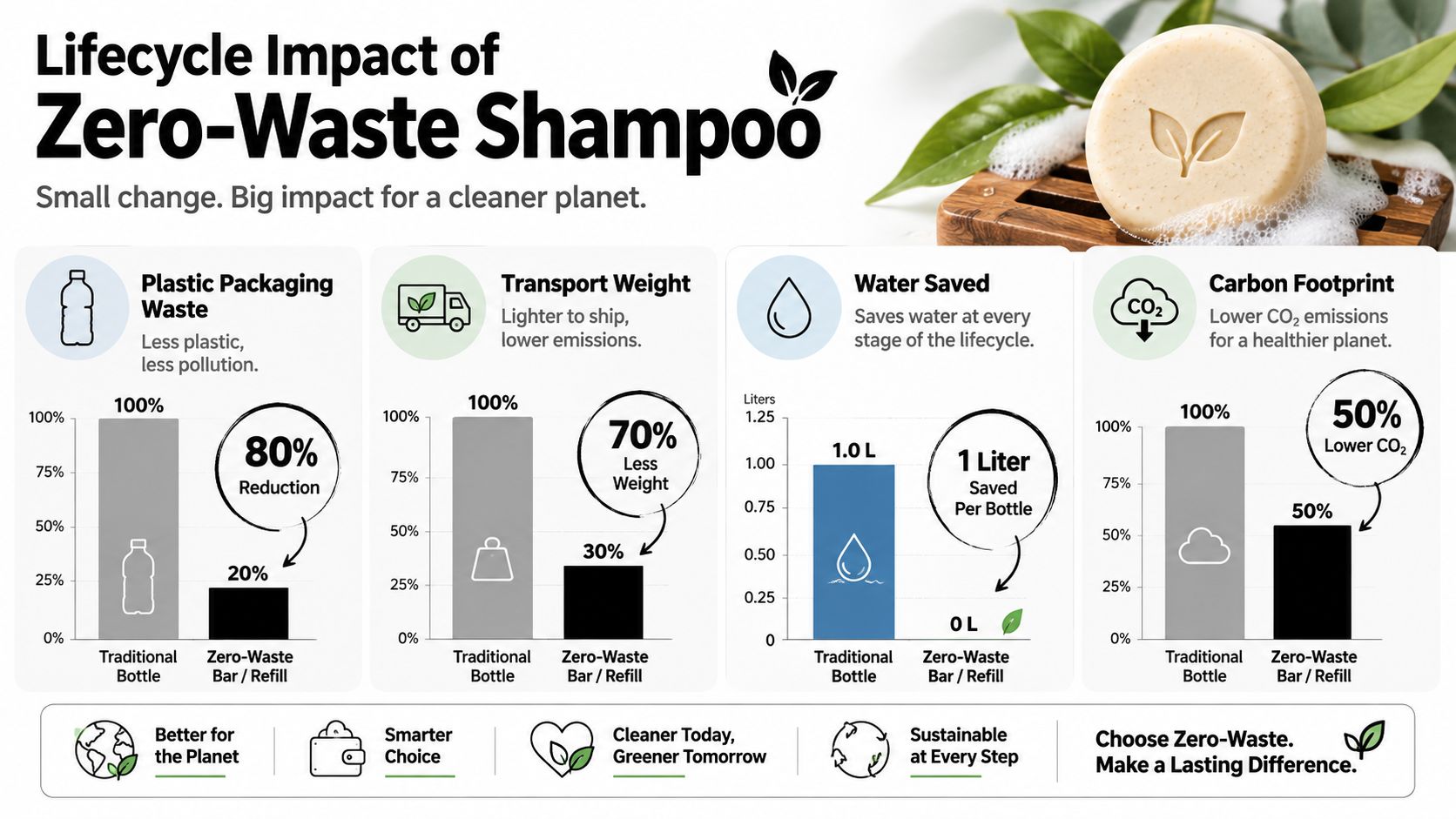
If you are choosing between a shampoo bar and a refill, the package is only one part of the decision. A cradle-to-grave assessment of a plant-based shampoo, using ISO 14040 boundaries, associated one hair wash with 161 g CO2e and 2.5 MJ of non-renewable energy use. It covered sourcing, production, transport, consumer use, and disposal, and identified shower-water heating as a major hotspot. The full life-cycle assessment of shampoo impacts explains why less packaging does not automatically determine the overall result.
A separate packaging-focused study reported 0.25 kg CO2e for a shampoo bar in a cardboard box. Shampoo in a standard plastic bottle measured 1.25 kg CO2e, compared with 1.56 kg CO2e for an aluminum bottle and 1.01 kg CO2e for a concentrate in plastic packaging. Bars can avoid shipping water and reduce primary packaging. Reusable metal packaging still needs enough reuse cycles to balance the impact of producing it.
Ingredients need the same scrutiny
A sulfate-free cleanser may use a different synthetic surfactant system, while a soap-based bar depends on saponified oils. Neither label predicts how your scalp or hair will respond. Check the full ingredient list, directions for hard water, and information about wastewater safety. A product can be plant-based and still perform poorly in mineral-rich water or leave residue that makes the cost per wash feel higher because you need more product or an extra cleansing step.
Conditioner deserves the same attention. Review the ingredient functions commonly found in hair conditioner, especially when detangling and friction protection matter for curls, dry lengths, or treated hair. “Natural” ingredients may still raise sourcing concerns, and some solid formulas contain palm-derived ingredients. A refill pouch may use less packaging than a new bottle, yet multilayer construction can make recycling difficult.
For material comparisons, MSP Packaging sustainable packaging examples covers recyclable, reusable, compostable, and reduced-material approaches. Certification terms require careful reading. “Certified compostable,” “plastic-free,” and “EWG-verified” describe different properties, and none guarantees that local facilities accept the finished material.
P&G Beauty announced a reusable aluminum bottle and recyclable refill pouch system in 2020, saying it used 60% less plastic per milliliter than a standard bottle. The company also aimed to reduce virgin plastic in shampoo and conditioner bottles by 50% by the end of 2021, equivalent to 300 million fewer virgin plastic bottles produced each year, as described in its sustainability announcement. Choose the format you will reuse or refill, then account for water heating, hair compatibility, and disposal.
How Fillaree's Circular Refill System Works in Practice
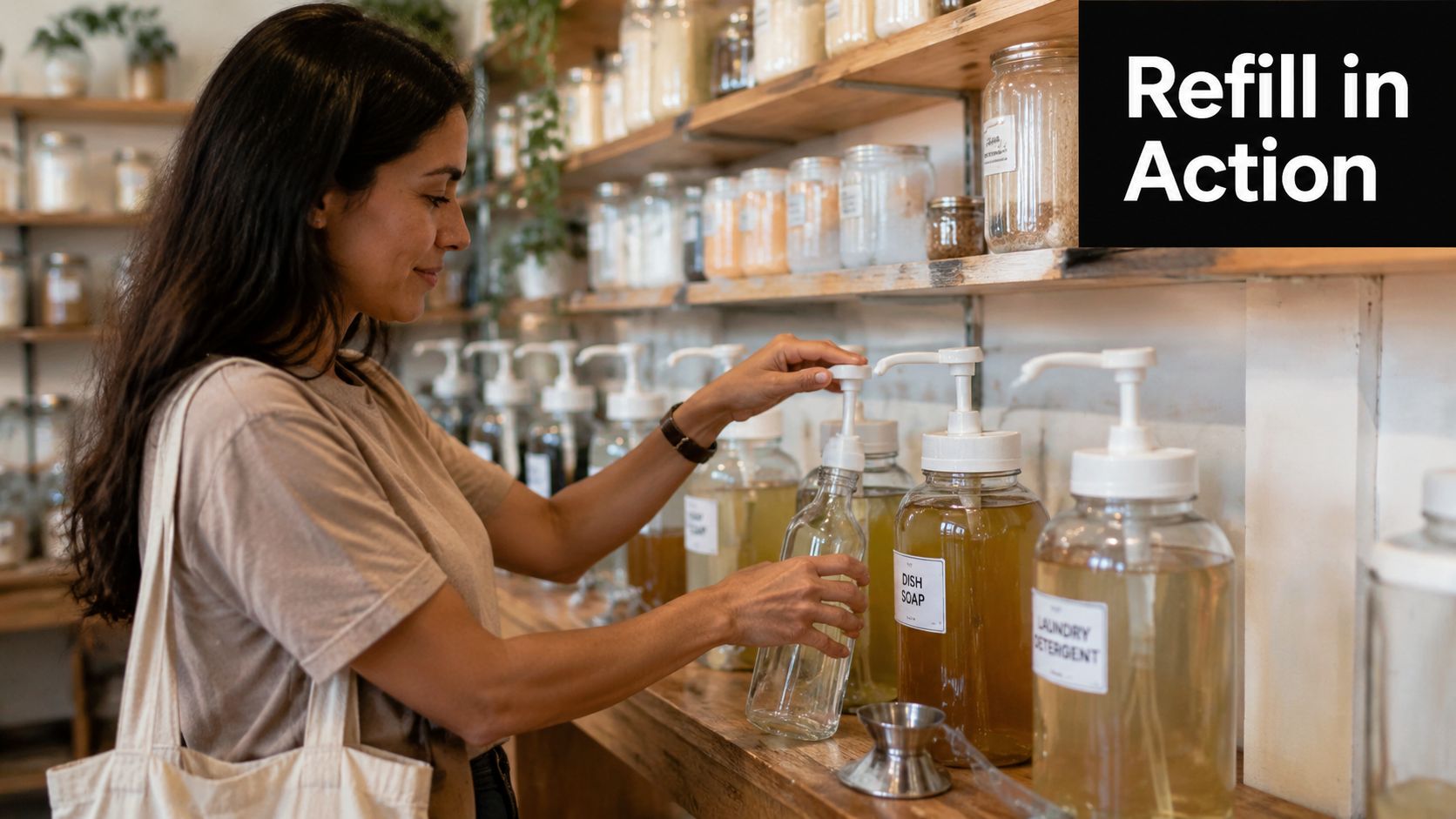
A station-based refill system feels different from buying a bottle labeled “eco.” You bring a clean container to a participating shop, identify the product, and refill the container instead of replacing it. The useful part is the loop, not just the material used for the bottle.
Fillaree's model gives that loop a concrete shape. Customers can bring their own containers to a refill station, use the available pump or pour setup, and pay for the amount they take. The container's tare weight is recorded or deducted, so the customer pays for the product rather than the weight of the empty bottle. A label identifies the contents, and the container returns to the household for the next refill.
What happens at home
The same concept can work without a nearby store. Fillaree offers home refills for products including Shampoo, Natural Hair Cleanser and Conditioner, Natural Hair Repair, allowing customers to top up reusable bottles. The company describes its process, product handling, and refill options in how the Fillaree system works.
For online orders, the practical questions are packaging, storage, and return handling. A good refill system needs containers that can be cleaned, labeled, and used repeatedly, along with clear directions for keeping pumps hygienic and products protected between uses. Reusable glass or aluminum bottles can make sense when households keep them in circulation for years, while a bulk delivery only earns its environmental advantage when the receiving package has a credible reuse, take-back, or recycling route.
This differs from a mail-back deposit scheme. A deposit model asks you to return a specific container through a company's logistics network. A station model works best when you already visit participating stores. Home refills suit people who value delivery and have space for bulk storage. Choose according to your location and routine, not the most attractive photograph of a refill wall.
Building a Refill and Disposal Routine That Sticks
Low-waste hair care becomes much easier when the next refill has a designated place and disposal isn't a last-minute puzzle. Start by searching the Refill App, Zero Waste Home, and Litterless for nearby stations. Independent shops, salons, co-ops, and makers' markets may also offer bulk options, even when they don't appear in a directory.
Ask specific questions before you travel. Does the shop refill shampoo and conditioner, or only household cleaners? Do containers need to be glass? Can the store handle pump bottles? Clear answers prevent a wasted trip and help local businesses understand what customers want.
Set up the home system
Keep one small tray or shelf for refill supplies. Use durable containers, label each one with the product name and a batch or refill date, and store powders or concentrates in a cool, dry place. Clean pump tops regularly, let washed containers dry fully, and rotate older stock forward so nothing sits forgotten behind the newer refill.
Disposal depends on the material and your local rules:
- Soap bars: Compost only if the complete product and packaging meet your local composting requirements. Don't assume every solid bar belongs in a backyard pile.
- Aluminum tins: Empty and clean tins may be recyclable where your program accepts them.
- Refill pouches: Use a brand take-back scheme when one exists. Multilayer bags often aren't accepted in curbside recycling.
- Paper and cardboard: Keep them clean and dry, then follow local recycling guidance rather than relying on the front-of-pack claim.
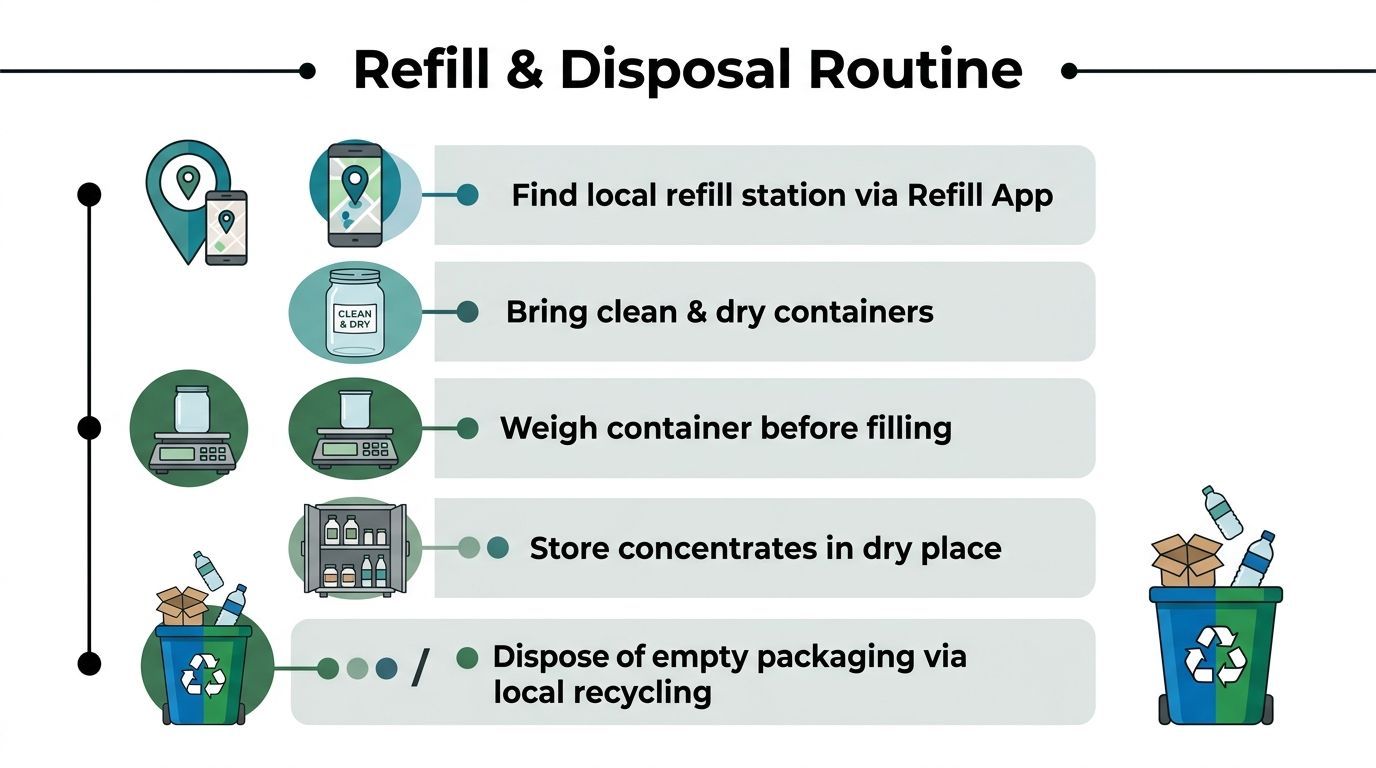
Try a one-week starter plan. On the first day, choose one product to replace. During the week, find a station or order a refill, wash your current bottle, and place it where you'll remember it. Before the next wash, check whether the bar can dry between uses or whether the pump needs cleaning. A routine that removes small points of friction is more durable than a dramatic bathroom overhaul.
Choosing the Format That Fits Your Life
Your best starting point depends on three variables: hair texture, water hardness, and shower habits. Someone with short hair, soft water, and frequent travel may love a bar. A household with curly, straight, color-treated, and oily heads under one roof may find refill liquids easier to customize. Hard-water homes often need to be cautious with soap-based bars and may prefer a liquid or a formula designed specifically for mineral conditions.
Use this as a starting framework, not a permanent rule:
| Reader Profile | Best Format | Why It Works | Estimated Cost per Wash |
|---|---|---|---|
| Frequent traveler with short or medium hair and soft water | Shampoo and conditioner bars | No spills, compact storage, simple packing | Often economical after the initial purchase |
| Household with varied hair textures | Refill liquids | Easier to choose different formulas and control application | Depends on refill price and amount used |
| Hard-water household with recurring residue | Concentrated or refill liquid | Usually easier to adjust than a soap-style bar | Depends on dosing and refill frequency |
| Small bathroom with little storage | Concentrates or powder solids | Reduces counter clutter and stored packaging | Varies with accurate dilution |
| Curly or chemically treated hair | Rich conditioner bar or refill conditioner | Prioritizes slip and controlled application | Higher use may affect the total cost |
Cost per wash should be measured over six months, not guessed from the shelf price. Record how many washes you get from a bar, how many pumps you use per liquid wash, and how often you buy conditioner. Market reporting suggests shampoo bars can last two to three times longer than a 250 mL liquid bottle and may offer 25% to 40% lower per-wash costs, even with a higher upfront price, according to market coverage of shampoo bar costs and durability. Treat that as a comparison point, not a promise for every formula or hair length.
The strongest choice is the one you'll keep using without compromising scalp comfort or hair health. Supporting companies that care about refill logistics, ingredient transparency, worker values, and community access makes the habit more meaningful than counting bottles.
Fillaree offers refillable shampoo and conditioner through station-based and home refill options, including reusable containers designed for repeat use. Visit Fillaree to explore a low-waste hair-care system that can fit your hair routine while supporting a women-owned company committed to circular refills.