
All Purpose Cleaner Concentrate: The Smart, Low-Waste Choice
A single 5-liter container of all-purpose cleaner concentrate can replace approximately 500 conventional 750-milliliter trigger bottles, avoiding more than one-third of a ton of packaged water being transported through the supply chain. That makes concentrate a smart low-waste choice, but only when the dilution, surface instructions, and cleaning claims are just as carefully designed as the packaging.
You reach under the kitchen sink for a spray bottle and find a crowded collection of plastic containers instead. One is for glass, one is for the bathroom, another is labeled for floors, and an older bottle has no label at all. The appeal of an all purpose cleaner concentrate is obvious: keep one reusable bottle, add water at home, and avoid repeatedly buying the same water-filled package.
The less obvious part is what happens after the refill. A concentrate only works as a responsible system when people can measure it accurately, understand whether it cleans or disinfects, and dispose of or return the packaging properly. After years of working with refillable products, the practical lesson is simple: good sustainability depends on good instructions.
Table of Contents
- The Hidden Cost of Every Trigger Bottle
- How Concentrate Systems Reduce Waste
- Dilution and Safety Rules That Matter
- Cleaning Versus Disinfecting: What Your Concentrate Does
- Supporting Companies That Align With Your Values
- How Fillaree Is Closing the Loop on Cleaner Waste
- Building a Low-Waste Cleaning Habit That Sticks
The Hidden Cost of Every Trigger Bottle
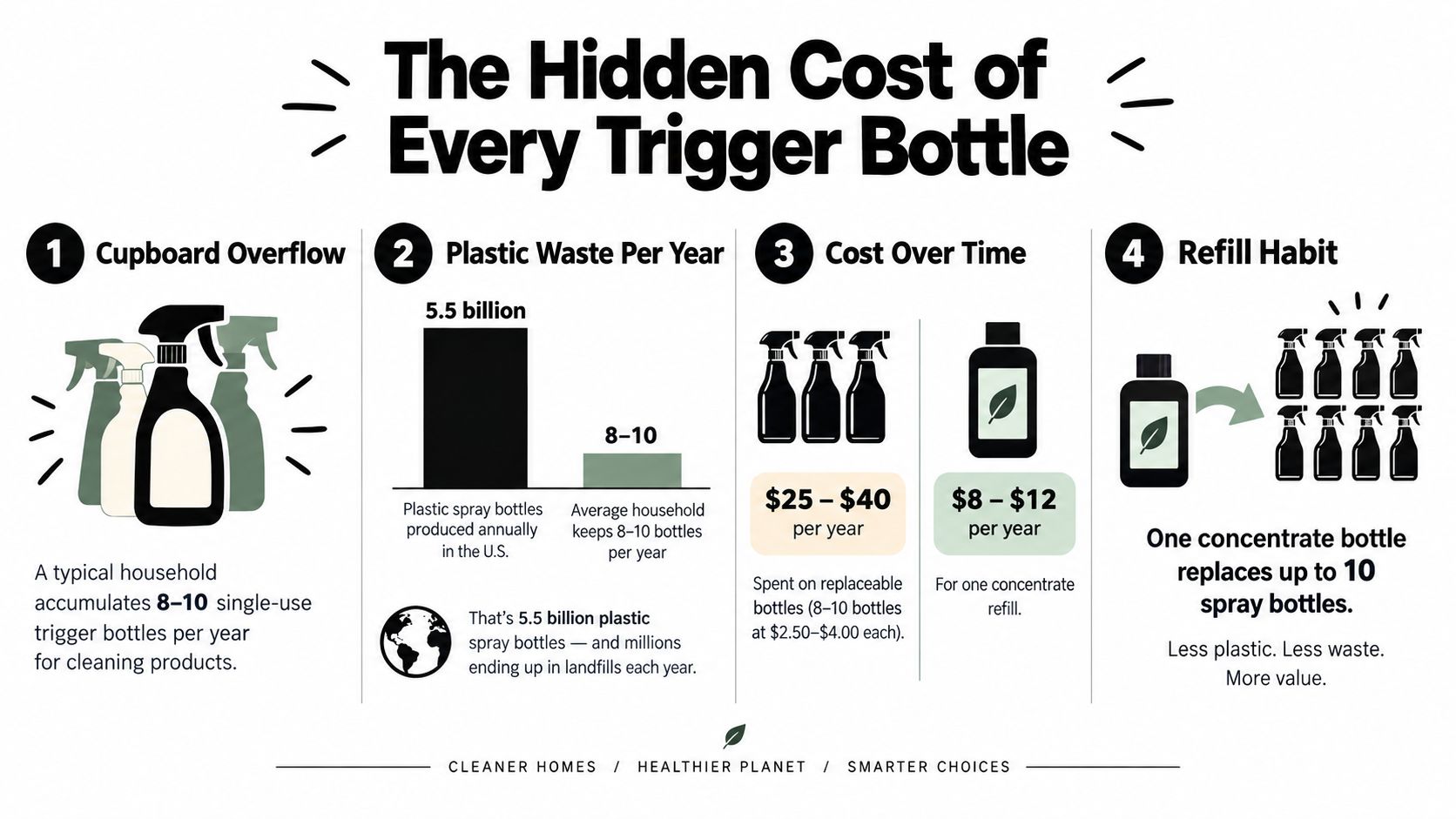
A spray cleaner seems simple until the empty bottle reaches the recycling bin and the replacement arrives mostly filled with water. Repeat that purchase across homes, offices, and commercial cleaning cupboards, and the supply chain keeps moving small containers of diluted product instead of concentrating transport on the active formula.
A UK cleaning-industry case study estimates that one 5-liter container of concentrate can replace approximately 500 conventional 750-milliliter trigger bottles. Those bottles would hold about 375 liters of packaged product, including roughly 370 liters of water packaged in small containers and transported. The case study also describes that avoided water as more than one-third of a ton, or over 330 kilograms. The UK cleaning-industry case study explains the comparison.
The bottle is only part of the decision
Concentrate shifts some responsibility to the home, workplace, or refill station. The bottle must withstand repeated use, the water must suit the formula, and the instructions must make measuring straightforward. If those details are weak, a refill can leave residue, waste product, or send a reusable container to the bin before its intended lifespan.
The cleaning task also matters. Concentrate can be enough for routine soil, grease, and surface dirt when the formula is diluted correctly. A disinfectant is the appropriate choice when a product label specifically calls for pathogen reduction and gives contact-time instructions. Treating every cleaner as a disinfectant creates a safety and performance gap that packaging alone cannot solve.
Travel kits create a similar choice. A compact reusable container can reduce purchases of disposable miniatures, provided it seals reliably and is filled, labeled, and stored safely. Anyone assembling a portable cleaning or personal-care setup may find choosing a leakproof travel spray bottle useful.
The practical benefit is straightforward: concentrate keeps water out of the package until the point of use. The system performs best when the formula, reusable bottle, dilution method, and cleaning claim are designed together, with clear instructions that work in real homes rather than only on a product page.
How Concentrate Systems Reduce Waste
A concentrate system keeps water out of the package until the product reaches the point of use. Manufacturers ship the cleaning ingredients in a smaller format, and the customer adds water at home or at a refill station. That can reduce transport weight and the number of new bottles brought into a household.
Packaging efficiency also depends on container size. The UK cleaning-industry comparison cited earlier indicates that a 2-liter pack uses about two-thirds as much packaging per liter as a 1-liter pack, while a 5-liter pack uses approximately one-third as much packaging per liter. These figures describe packaging efficiency, not a universal recommendation.
| Container Size | Packaging per Liter | Relative Efficiency |
|---|---|---|
| 1 liter | Baseline | Lowest efficiency of the three formats |
| 2 liters | About two-thirds as much as the 1-liter format | More efficient |
| 5 liters | Approximately one-third as much as the 1-liter format | Most efficient of the three |
The larger format still has practical limits. A household that cleans slowly may struggle to store a large container or use it before contamination becomes a concern. An office, café, or cleaning team may have enough demand to justify larger packs. Choose the format that reduces packaging without creating storage, handling, or dosing problems.
Waste reduction needs operating controls
Concentrate shifts part of waste prevention from the manufacturer to the user. Accurate dilution matters because excess product increases consumption and may leave residue, while an under-dosed solution can clean poorly and require another application. Clear instructions, marked bottles, measured dispensing, and a consistent refill routine make the intended environmental benefit more likely in real homes.
Businesses can record concentrate purchases, refill containers, and disposal routes using accounting basics for waste management. That view helps teams account for packaging as an operating cost rather than treating it as an invisible by-product.
A refill program can separate the durable application bottle from the replenishment format. Fillaree floor cleaner concentrate illustrates this model: the user keeps the container and replaces the concentrate after it has been used.
The practical test is simple. A smaller package supports waste reduction only when the full system also prevents over-dosing, failed cleaning, premature bottle replacement, and avoidable disposal. Concentrate works best when packaging design, formula performance, bottle durability, and user instructions support one another.
Dilution and Safety Rules That Matter
At the sink, with the bottle in hand, dilution instructions must answer one practical question: what should the user do next? A printed ratio is not enough when the bottle lacks measurement marks, hard water affects results, or the concentrate is mistaken for a disinfectant.
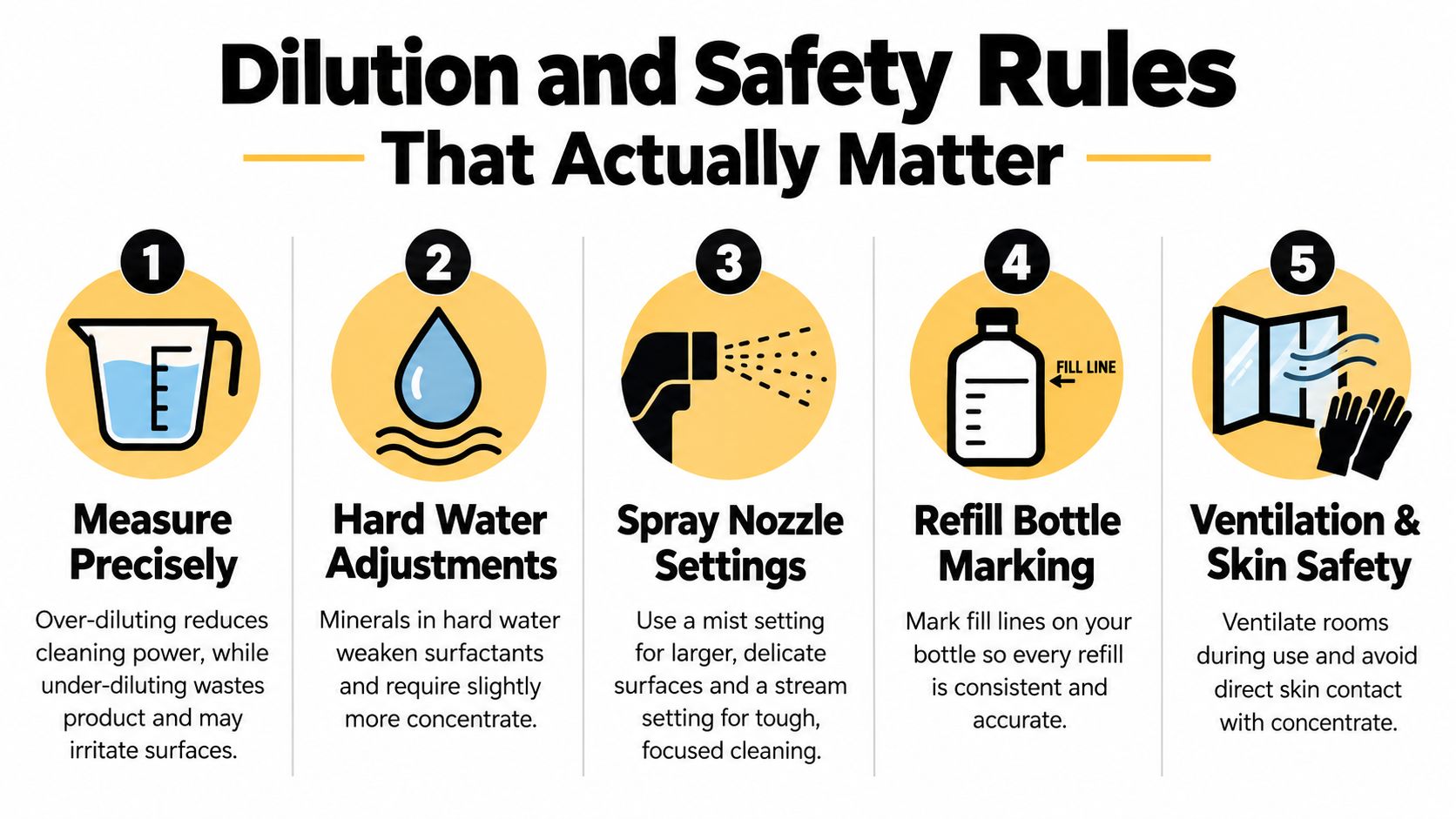
Begin with the bottle's final volume. Check whether the directions specify the amount of concentrate followed by water, or the total finished solution. Use a marked measuring cup, dosing cap, or household-measurement syringe. If the bottle has no fill line, measure its capacity once and mark the correct level.
A dependable refill routine
- Read the product label first. Confirm the intended dilution, compatible surfaces, and whether the formula is for routine cleaning or has a disinfecting claim.
- Use room-temperature water when dilution is required. Public-health guidance recommends room-temperature water, labeling diluted solutions, and following product directions. The USDA APHIS cleaning and disinfection guidance explains dilution and handling precautions.
- Add the measured amount carefully. Keep concentrate away from your eyes and skin while pouring. Ventilate the space and use protective equipment when the label requires it.
- Fill to the marked final volume. Do not estimate by sight when the formula depends on a specific concentration. Add the preparation date or relevant use guidance when the product instructions call for it.
- Never mix cleaning chemicals. A different product will not correct an inaccurate refill. Empty, rinse, and prepare the bottle according to the manufacturer's directions.
The water-to-concentrate ratio affects residue, surface compatibility, and cleaning performance. Hard-water minerals can also change how surfactants behave. If film or poor results persist, check the water, nozzle, surface, and measuring method before adding more product.
For specialized equipment, dilution charts for foam guns can clarify how to calculate a finished solution. The same principle applies to a household spray bottle: more concentrate isn't automatically better. Excess product can increase exposure, harm sensitive surfaces, leave residue, and force a second cleaning pass.
Cleaning Versus Disinfecting: What Your Concentrate Does
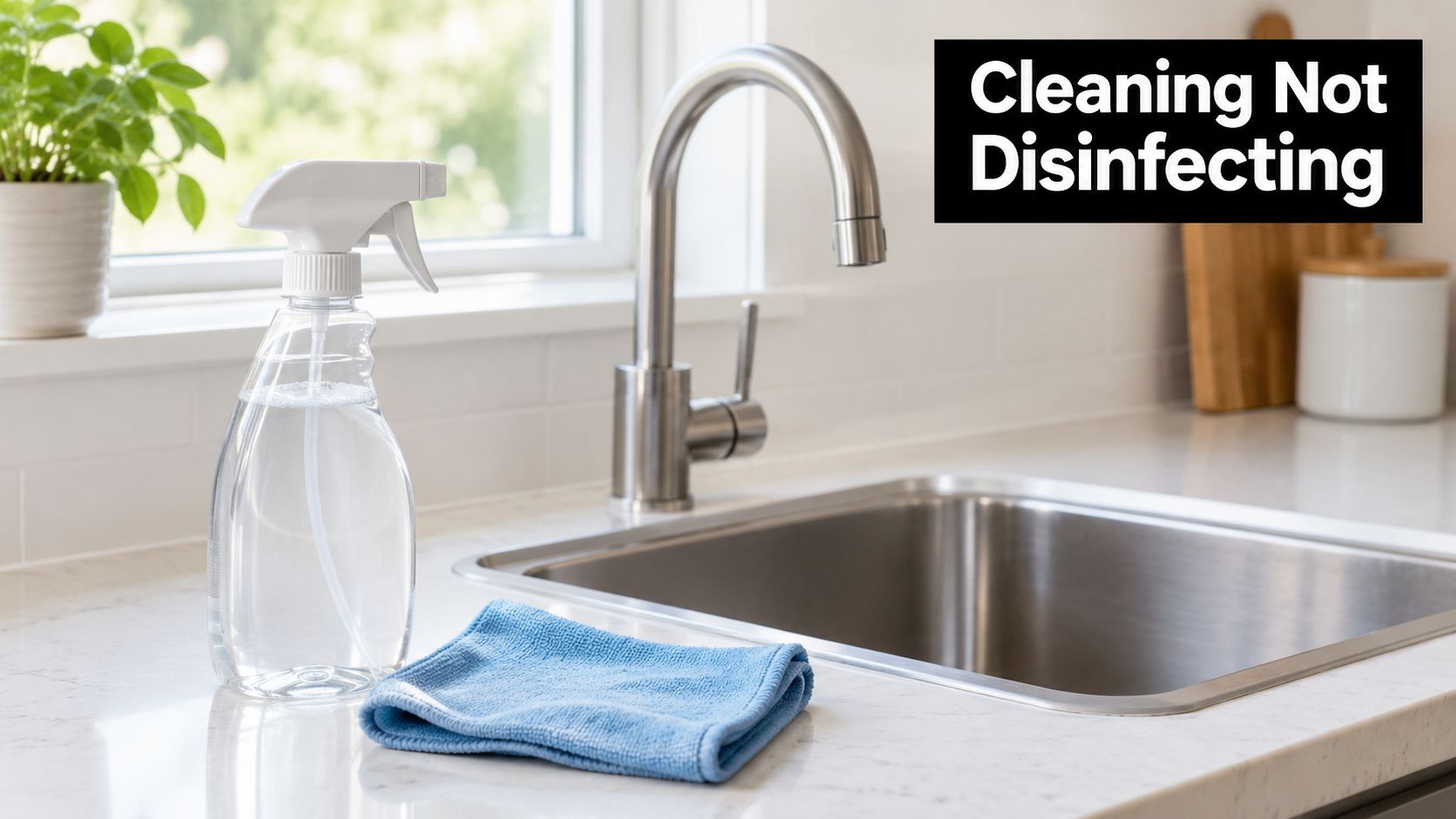
A general-purpose cleaner removes soil. Concentration, fragrance, or wording such as “antibacterial” does not turn it into a disinfectant. Surfactants, solvents, builders, and mechanical action lift and remove grime. Disinfection requires a registered antimicrobial product supported for the relevant pathogens and surfaces.
The U.S. EPA defines a disinfectant as a substance that destroys or irreversibly inactivates bacteria, fungi, and viruses on inanimate surfaces. The treated surface must remain visibly wet for the full labeled contact time. EPA's selected disinfectants guidance describes the registration and contact-time requirement.
Use the situation, not fear, to choose the product
For routine kitchen counters, bathroom fixtures, and other nonporous surfaces, a correctly diluted all purpose cleaner concentrate can be enough when the job is removing dust, grease, soap residue, or everyday soil. Cleaning first also prepares a surface for any later sanitizing or disinfecting step, since dirt can interfere with chemical action.
Raw-meat preparation calls for more care. Remove visible soil, check the product label for the surface, and use a registered disinfectant when the situation and label support it. A cleaner's general-purpose wording does not confirm pathogen control.
If someone is sick or has recently visited, selected high-touch surfaces may warrant disinfection. CDC guidance says routine home disinfection is generally unnecessary unless someone is sick or has recently visited, and recommends cleaning surfaces before sanitizing or disinfecting. CDC's cleaning and disinfecting guidance provides the household decision context.
A disinfectant label sets the concentration, application method, compatible surfaces, and wet contact time. If the surface dries before that time ends, reapply according to the label. A generic concentrate dilution chart cannot replace disinfectant directions.
For a side-by-side explanation, all-purpose cleaner versus disinfectant clarifies the distinction. Use a cleaner for soil removal. Choose an EPA-registered disinfectant only when the situation calls for it and the label supports the intended use.
Supporting Companies That Align With Your Values
A good product is only one part of an ethical purchase. If a brand makes broad claims about recycling, circularity, or environmental care, ask what happens to each component after use. A reusable bottle, a recyclable box, a refill pouch, a label, and a pump may all follow different disposal routes.
The Federal Trade Commission says an unqualified “recyclable” claim can mislead shoppers when the package isn't collected, separated, and recovered through an established recycling program. Its guidance also says recycled-content claims should clarify whether they apply to the product, its packaging, or both, and should identify the amount when the item isn't entirely made from recycled material. The FTC Green Guides summary explains how to evaluate environmental packaging claims.
Look beyond the front label
I look for evidence that can be checked without relying on a green color palette or a vague phrase such as “planet friendly.” Useful questions include:
- What returns? Can the company explain whether refill bags, bottles, or shipping materials are reused, recycled, or discarded?
- Who verifies the claims? Ingredient certifications and independent audits carry more weight than unsupported language.
- What does the company disclose? Look for formula information, packaging assumptions, refill instructions, and impact reporting.
- How are people treated? Environmental commitments should sit alongside attention to workers, suppliers, customers, and communities.
B Lab describes B Corp Certification as an assessment of a company's social, environmental, and governance impact against its standards. The certification process is independently audited and verified by a third party under ISO 17021-1 requirements. B Lab explains the certification process and its scope.
Certification doesn't prove that every product in a range has the same formula or packaging outcome. It does offer a more substantive company-level signal than a single marketing claim. A practical buyer should still inspect the cleaner itself, the dilution instructions, the refill route, and the local recovery options. Fillaree's guidance on avoiding greenwashing offers another way to assess whether environmental language connects to specific actions.
How Fillaree Is Closing the Loop on Cleaner Waste
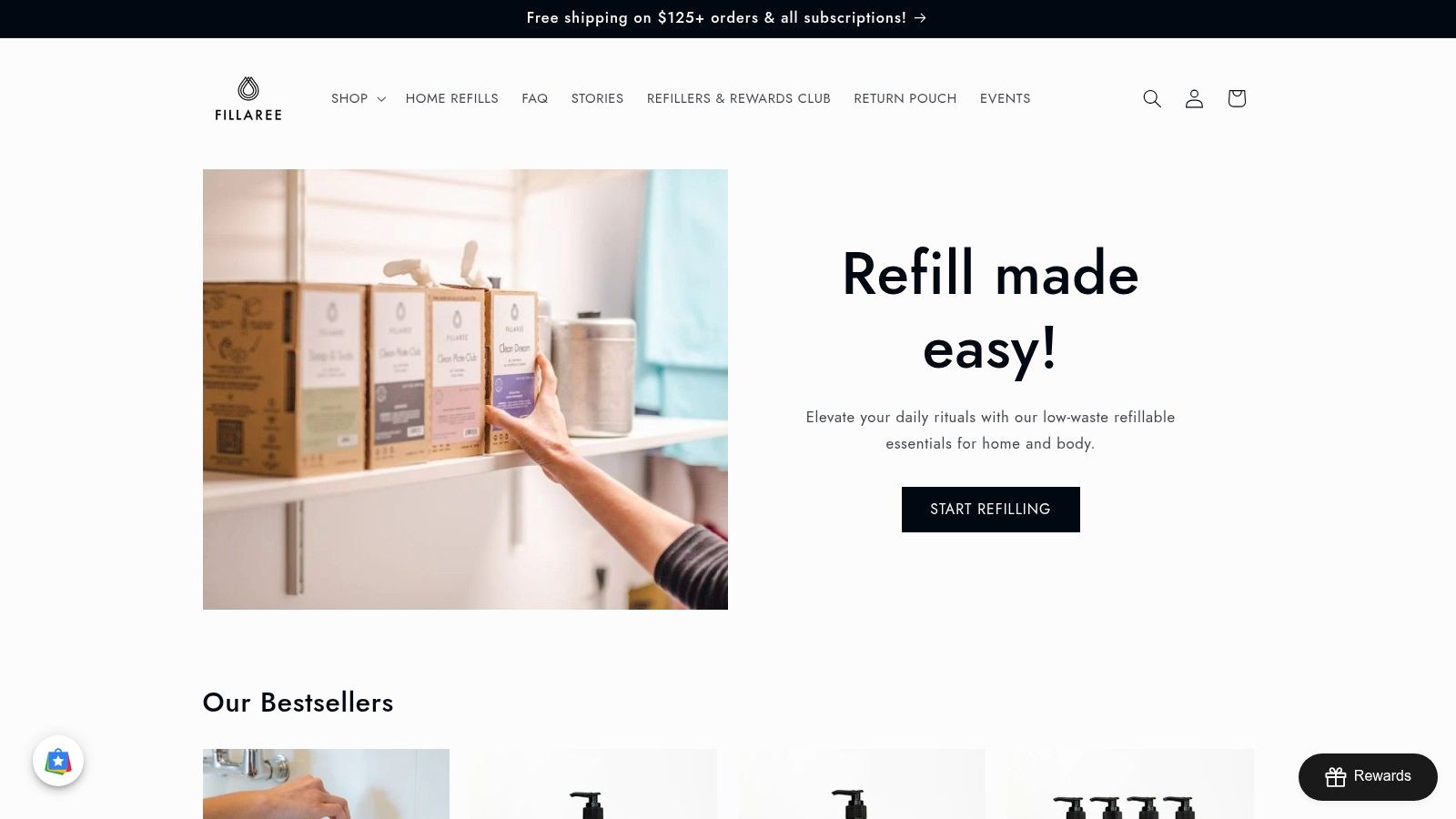
A refill program earns trust through its second and third use, not just the first purchase. Fillaree says it takes back used refill bags, washes and sanitizes them, then reuses them at no cost to customers. Customers can also refill at 70+ partner stations across the United States. Fillaree describes its refill and bag-reuse approach
“Refillable” covers different systems. A customer may buy a new pouch for every refill and manage disposal alone. Another program creates a return route, cleans the packaging, and puts it back into service. The environmental result depends on which system exists locally and whether customers can use it consistently.
Fillaree's Clean Dream Spray is an all-purpose cleaner for nonporous surfaces, including countertops, porcelain, and bathroom fixtures. Its home refill system uses a half-gallon returnable refill to replenish spray bottles repeatedly. That arrangement can reduce packaging waste, provided the bottle remains compatible with the formula and the refill instructions support accurate dilution.
A useful test applies to every brand: can it explain what happens to the refill packaging, how the product is diluted, and which surfaces the cleaner suits? Those details matter more than sustainable-looking packaging. Companies that support responsible products and communities should make their reuse process and product limits easy to find.
Building a Low-Waste Cleaning Habit That Sticks
The right all purpose cleaner concentrate should pass four practical tests. First, the environmental case should be specific: less packaged water, durable bottles, and a refill route that doesn't create a new disposal problem. Second, the formula should come with clear ingredient, surface, and dilution information.
Third, the label should distinguish cleaning from disinfecting. Use ordinary cleaning for routine soil removal, and reserve registered disinfectants for situations that justify them. Fourth, the company should show how it treats packaging, workers, suppliers, customers, and communities rather than making a claim about the bottle alone.
A short shopping checklist helps:
- Measure the refill: Confirm the finished bottle volume and use a marked tool.
- Check the claim: Determine whether the product cleans, sanitizes, or disinfects.
- Review the package: Separate reusable, recyclable, returnable, and special-handling components.
- Test the routine: Make sure the bottle, nozzle, water, and storage method work in your home.
- Assess the company: Look for certification, ingredient transparency, refill infrastructure, and impact reporting.
B Lab's standards connect credible company values with stakeholder governance and circular-economy practices, including minimizing negative impacts while pursuing positive impacts for people and the planet. B Lab Europe outlines those standards and their broader accountability.
The goal isn't perfect sustainability. It's a cleaning habit that people can repeat without guessing, overdosing, or discarding a bottle every time the product runs out. A good concentrate system makes the lower-waste choice convenient, measurable, and compatible with real homes, offices, cafés, and cleaning routines.
Fillaree offers refillable home-care products, including all-purpose cleaner, with refill stations, home refill options, and returnable packaging practices designed to reduce single-use waste. Visit Fillaree to explore subscriptions, wholesale options, and a refill system that can fit your household or workplace.